
Positioning Flights: The Underused Tactic That Opens Up Better Routes
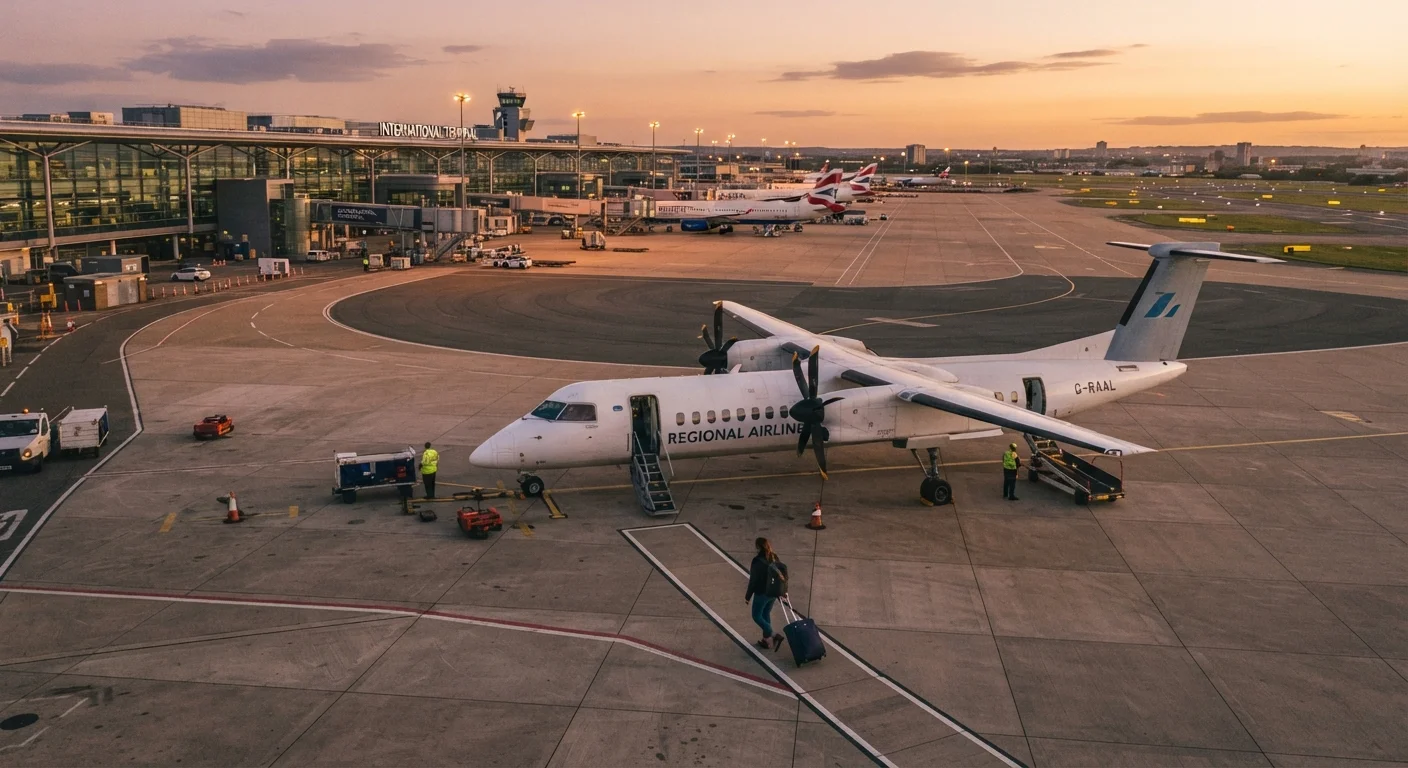
Photo credit: ExploreRoute.net | Travel Made Simple
In this article
Sometimes flying to a different departure airport unlocks cheaper or more direct routes. Learn when and how positioning flights make strategic sense.
Key Takeaways
- Your nearest airport is not always your best departure option for a given route.
- Positioning flights can unlock nonstop routes, lower base fares, or better award availability.
- The tactic requires calculating total cost, transit time, and connection risk honestly.
- Positioning works best when the hub advantage significantly outweighs added complexity.
- Open-jaw ticketing and separate bookings each carry distinct risks that must be understood in advance.
Why Your Home Airport Is a Variable, Not a Constant
Most travelers open a booking tool, enter their nearest airport, and never question that default. For routine domestic trips, that's efficient. For complex international itineraries — especially those involving nonstop versus one-stop routing, award redemptions, or specific carriers — treating your departure city as fixed can mean leaving meaningful options on the table.
Airport networks are not uniform. A mid-size regional airport may have strong domestic coverage but limited or no long-haul departures. A nearby major hub, reachable by a short drive or a one-hour regional flight, might offer a nonstop to your destination that would otherwise require an additional connection and several added hours. This asymmetry in route coverage is precisely what the positioning flight tactic exploits.
Understanding this starts with understanding how airline pricing and scheduling work. Fare structures vary significantly by departure market, meaning the same destination can carry a different price depending entirely on which airport you originate from.
How to Evaluate Whether Positioning Makes Strategic Sense
The case for a positioning flight is never automatic. It requires a disciplined cost-benefit analysis across several dimensions simultaneously.
Total Price Comparison
Add up the positioning flight cost, any ground transportation to the hub airport, and — if an overnight buffer is necessary — accommodation. Compare this against the savings or routing improvement on the primary ticket. A $200 fare difference on the long-haul leg is not a net gain if the positioning flight and related costs total $250.
Time Budget
Calculate door-to-door travel time for both options. A nonstop departing from a hub two hours away may still deliver a shorter total journey than a connecting itinerary from your local airport — or it may not. Be precise rather than optimistic.
Connection Risk
When the positioning flight and the long-haul ticket are separate bookings, no interline agreement protects you. A delay on leg one is entirely your problem on leg two. Build in a buffer of at least three hours for same-terminal connections, and longer if you are clearing an international checkpoint. This risk calculus changes substantially if you consolidate everything onto one ticket — a trade-off worth understanding through resources like open-jaw ticketing strategies.
Build in a Buffer When Booking Separately
If your positioning flight and long-haul ticket are on separate bookings, airlines have no legal obligation to rebook you if the first leg is delayed. A connection buffer of three hours or more at the hub airport is a practical minimum. Consider whether the fare savings justify the added risk before splitting bookings.
Award Travel Positioning
Positioning can unlock premium cabin award availability that does not exist at smaller hubs. If a partner airline operates a desirable business-class redemption exclusively from a gateway city, a short paid positioning flight may be a worthwhile bridge. Check award availability at the target hub independently before assuming the routing advantage exists.
Real Scenarios Where Positioning Delivers Clear Value
The scenarios above illustrate a consistent pattern: positioning earns its overhead when the advantage at the hub airport is substantial and durable — not marginal or speculative. This principle ties directly into a broader framework for building a consistent personal flight strategy that works across many trips, not just one.
3–5x
More nonstop international routes at major hubs vs. regional airports
Analysis of U.S. airline route maps consistently shows that the top 10 gateway airports carry multiples of the long-haul route options available at mid-tier domestic airports.
30–50%
Fare variation between hub and non-hub airports on same corridor
Industry fare data shows that the same international destination can carry substantially different base prices depending on the departure market, driven by carrier competition levels at each airport.
Practical Considerations Before You Book
Several operational factors should inform your decision before committing to a positioning itinerary.
- Booking structure: Decide early whether to book the positioning leg separately or as part of a single itinerary. Separate bookings may offer lower fares but carry misconnection risk. A combined ticket provides protection but may require a different airline or alliance combination — worth reviewing against your frequent flyer alliance strategy.
- Timing your search: The advantage of a particular hub route can shift as airlines adjust schedules and inventory. Pairing your search with the right booking window matters — booking too early or too late both carry costs.
- Visa and transit requirements: If your positioning route passes through a foreign airport, confirm transit visa requirements with official government sources well in advance. Do not rely on secondhand accounts for entry rules.
- Flexibility value: Positioning itineraries have more moving parts. Prioritize tickets with clear change or cancellation terms, and understand what happens to each booking segment independently if plans shift.
Travelers who monitor specific routes systematically — using targeted price alerts rather than broad notifications — are often better positioned (in both senses) to identify when a hub advantage opens up and act on it efficiently.
This article provides general travel strategy information for educational purposes. Prices, schedules, visa requirements, and route availability change frequently. Always verify current conditions with airlines and relevant government authorities before booking.
Frequently Asked Questions

Author
Smart Air Travel Editorial Team
Smart Air Travel Editorial Team is the collective byline for our editorial team and contributor network. Articles published under this byline or an editorial pen name are researched, written, and reviewed according to our editorial standards for clarity, consistency, and independence before publication.
View all articles →