
Arriving in an Unfamiliar Small Town: How to Orient Yourself Without a Tour Group
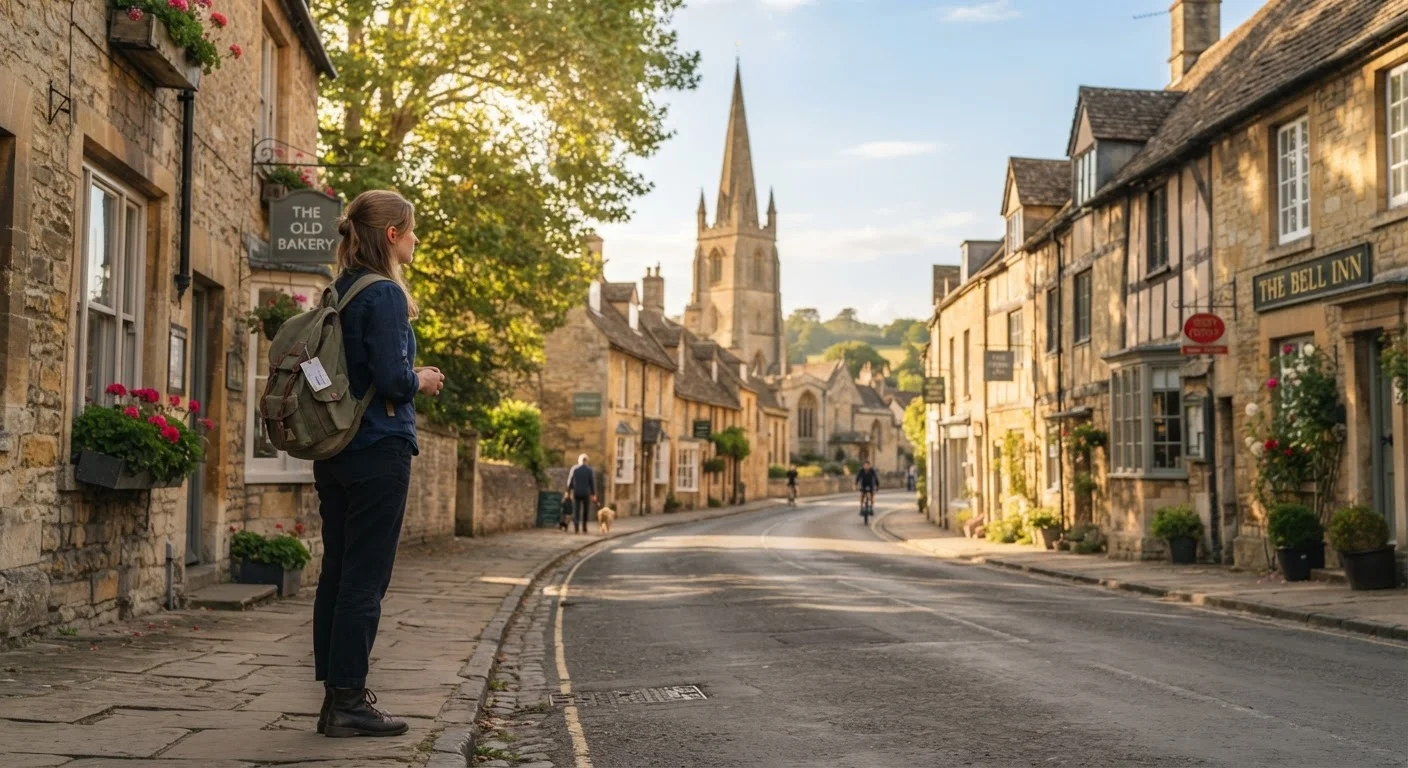
Photo credit: ExploreRoute.net | Travel Made Simple
In this article
No guided tour, no curated itinerary — just you and an unknown town. A practical approach to finding your footing and discovering what makes a place tick.
Key Takeaways
- Arriving without a guided tour lets you read a town on its own terms, not through a curated lens.
- Walking a simple loop on foot within the first hour is the fastest way to grasp a town's layout and rhythm.
- Local gathering spots — a market, a café, a central square — serve as the most reliable orientation anchors.
- Asking one open-ended question of a resident often yields more insight than a page of online reviews.
- Letting go of the itinerary mindset is itself a travel skill that deepens with each unfamiliar place.
Why arriving without a plan is actually an advantage
There is a particular kind of clarity available only to the traveler who shows up to an unfamiliar small town without a pre-loaded itinerary. No tour group schedule, no curated highlights list — just the town as it actually is on a Tuesday afternoon in October, or a Saturday morning in early spring. This is the condition that allows you to encounter a place on its own terms rather than through the organizing lens of someone else's priorities.
Frequent travelers already know what the famous version of a destination looks like. What they often haven't experienced is the slower, more demanding pleasure of figuring out a place from scratch. Small towns reward that effort disproportionately. Their stories are embedded in small gestures — the direction a market stall faces, the age of the trees in the square, the name painted above a closed shop — and reading those stories requires presence, not a pamphlet.
If you're weighing whether to anchor an entire trip around a lesser-known town, the pros and cons of trading the famous for the forgotten are worth thinking through before you commit. But once you've arrived, the approach below will get you oriented faster and more meaningfully than any app.
What you will need
What you'll need before you start walking
Orienting yourself in an unfamiliar small town is genuinely low-tech work — which is part of its appeal. The tools required are minimal, and the most important ones are attitudinal rather than physical. That said, a few practical items make the process significantly smoother, particularly in areas where mobile connectivity is unreliable.
Offline map app (e.g., Maps.me or Google Maps offline area)
Provides navigation in areas with weak mobile signal without consuming data.
Small notebook or notes app
Records street names, local tips from residents, and points of interest you spot on the walk.
Local currency in small denominations
Markets and small vendors in overlooked towns often do not accept cards; cash keeps you moving.
A basic phrasebook or translation app
Even a few words in the local language opens doors and signals genuine respect for the community.
Once you have these basics in place, you're ready to begin. The steps below move roughly in the order you'd follow from the moment you step off your transport — but they're flexible. Treat them as a framework, not a script.
Pause before you move
The moment you step off the bus, the train, or out of the car, resist the urge to open a map immediately. Stand still for two to three minutes. Observe the direction foot traffic flows, listen for sounds — a market, a school bell, a church clock — and note where the sun sits. These first unfiltered impressions are data. The direction most locals walk from an arrival point almost always leads toward the town's functional center.
Find the central square or main street on foot
Walk — do not drive — toward what feels like the gravitational center. In most small towns, a central square (plaza, piazza, place, or simply the main street) concentrates the post office, a café or two, a small market, and local notice boards. These are your primary orientation landmarks. The notice board alone — advertising community events, local services, lost pets — tells you more about a town's actual culture than any guidebook entry.
Do a slow, wide loop around the perimeter
Once you've located the center, walk a loose circle outward — covering as much of the town's edges as is safely and comfortably possible. This reveals where the town ends and the countryside begins, which neighborhoods feel residential versus commercial, and where locals actually spend time versus where visitors are expected to go. Pay attention to parked vehicles, laundry lines, small gardens, and the condition of buildings. These are not aesthetic details; they are social ones.
For more on how to read these spatial cues, see how markets, architecture, and public squares reveal local life.
Sit somewhere locals sit and order something local
Choose a café, a bar, or a small eatery that is clearly not oriented toward visitors — no English-language menus in the window, no obvious tourist signage. Order whatever is simplest and most local. You are not here primarily for the coffee; you are here to absorb the ambient rhythm of the place: who greets whom, how long people stay, what the pace of conversation feels like. This is orientation through immersion, and it takes no more than forty minutes.
Ask one genuine question of one resident
Not "what should I see?" — that question puts pressure on the person to perform as a tour guide. Instead, ask something specific and curious: "Is there a market day here?" or "Where do people go on Sunday mornings?" One well-placed question from a place of genuine interest tends to generate a small conversation that reveals more than any itinerary could. You may be directed to a bakery three streets over, a viewpoint nobody photographs, or a weekly event you'd never have found otherwise.
As you build these connections, keep in mind the principles covered in engaging respectfully with communities in undervisited towns — especially when you're among the very few outside visitors a place regularly sees.
Sketch a rough mental map and identify your anchors
By now — typically within two to three hours of arriving — you should have enough information to mentally map the town: where you sleep, where the center is, one or two places you want to return to, and the general shape of the streets. Write these down or sketch them loosely. This is your personal orientation map, built from direct experience rather than someone else's curation. It will feel more useful than any printed guide because it reflects what you noticed.
After the first day: building on what you've found
The orientation process doesn't end after the first loop. It deepens. By the second morning, you'll likely notice things you missed entirely on day one — a side street you overlooked, a sound at a certain hour, a pattern in when the square is full and when it empties. This layering of observation is what distinguishes a meaningful small-town stay from a quick pass-through.
Return to the same spot twice
The single most effective way to deepen your understanding of a small town is to revisit the same location at two different times of day. A square that felt sleepy at midday may be entirely transformed by the presence of schoolchildren, evening strollers, or a weekly gathering at dusk. Repetition reveals what a single visit cannot.
If your stay extends to a week or more, the planning considerations shift considerably. The end-to-end guide to spending a week in a town no one has heard of covers how to structure that kind of stay when there's minimal existing travel content to lean on.
For those who enjoy pairing a small-town stay with longer overland movement, the hidden scenic drives around lesser-known regions can connect these discoveries into a richer journey — especially when the towns themselves sit along routes most travelers skip entirely.

Author
Hidden Destinations Editorial Team
Hidden Destinations Editorial Team is the collective byline for our editorial team and contributor network. Articles published under this byline or an editorial pen name are researched, written, and reviewed according to our editorial standards for clarity, consistency, and independence before publication.
View all articles →