
Alpine Climbing vs. High-Altitude Trekking: Understanding the Difference Before You Choose
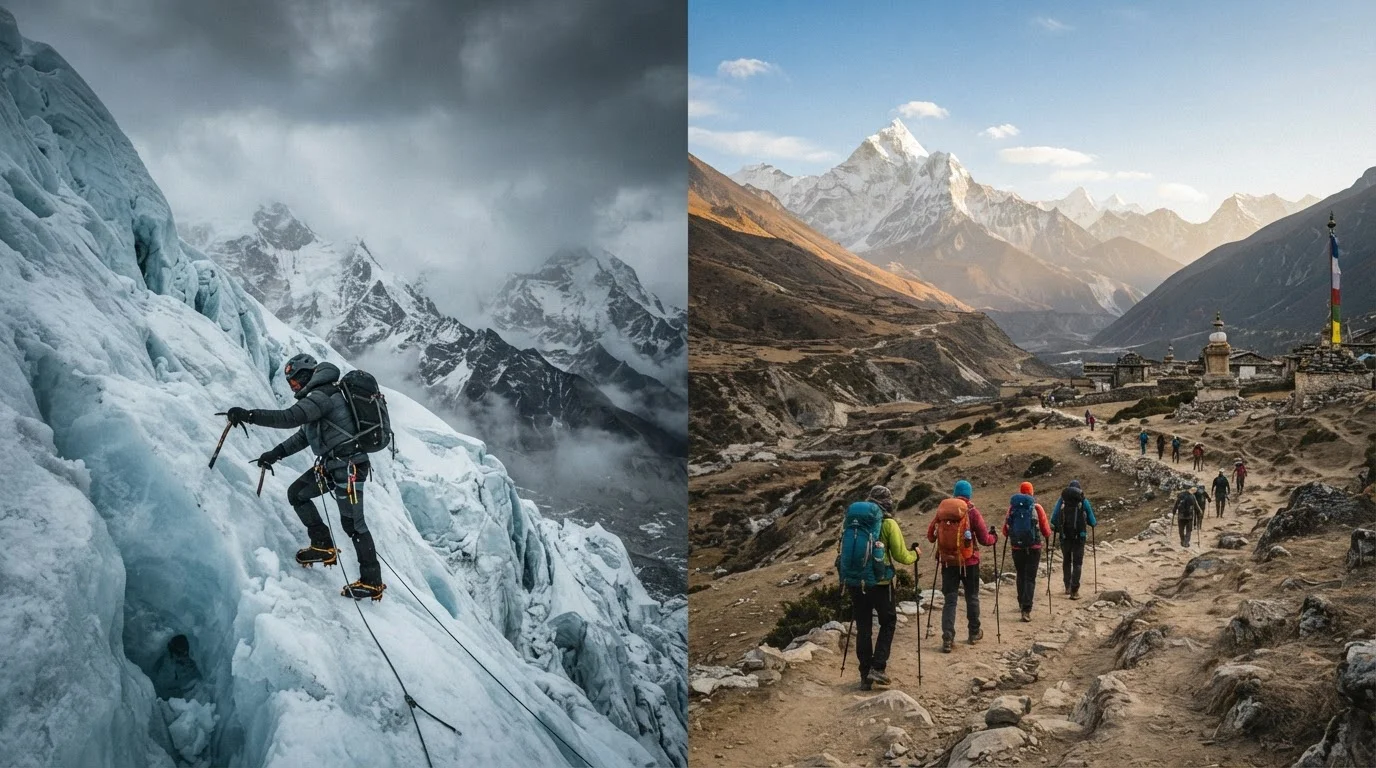
Photo credit: ExploreRoute.net | Travel Made Simple
In this article
Both take you into the mountains, but the skills, gear, and risks diverge sharply. A clear breakdown to help you pick the right challenge.
Key Takeaways
- Alpine climbing requires mastery of technical skills — rope work, crampon use, ice axe technique — that trekking does not.
- Both disciplines carry real altitude-related risk; acclimatization is non-negotiable for either.
- Gear lists diverge significantly: climbers carry specialized protection systems, trekkers prioritize layering and load management.
- A guided expedition can bridge the gap for those transitioning from trekking toward climbing.
- Choosing the right challenge depends on your existing skill base, risk tolerance, and available training time.
What Actually Separates the Two Disciplines
The confusion is understandable. Both involve remote mountain environments, sustained physical effort, and altitude exposure. But the dividing line is precise: technical terrain. Alpine climbing places you on glaciated, steep, or mixed rock-and-ice ground that requires ropes, harnesses, crampons, and ice axes as safety-critical tools — not optional accessories. High-altitude trekking follows established trails or straightforward ridgelines where the primary challenges are endurance, weather, and altitude physiology rather than technical movement.
Consider the difference between trekking to Everest Base Camp at 17,600 feet and attempting a technical summit like Denali or the Matterhorn. The former demands careful pacing and disciplined acclimatization; the latter demands all of that plus competence in anchor building, crevasse rescue, and route-finding on exposed ground where a fall has consequences. Neither is trivial. But conflating them leads to dangerous miscalculations about preparation.
| Criterion | Alpine Climbing | High-Altitude Trekking |
|---|---|---|
| Technical skills required | Rope work, ice axe, crampons, anchor building | Navigation, pacing, basic first aid |
| Typical terrain | Glaciers, steep snow/ice, exposed ridges | Established trails, rocky paths, moderate ridges |
| Gear complexity | High — full technical protection system | Moderate — layering, boots, poles |
| Altitude exposure | Often above 14,000 ft; summit objectives higher | Varies; commonly 10,000–18,000 ft |
| Training timeline | Months to years of progressive skill-building | Months of aerobic conditioning |
| Descent flexibility if ill | Limited mid-route; logistically complex | Generally accessible within hours |
| Guide requirement | Strongly recommended; often essential | Route-dependent; many trails independently feasible |
Skills, Training, and the Learning Curve
High-altitude trekking rewards fitness, patience, and sound judgment about your body's signals. You can prepare with a structured aerobic training program, load-bearing hikes, and — critically — a genuine understanding of altitude sickness. The acclimatization mistakes that end high-altitude trips early are well documented and largely preventable with the right protocol. Most competent trekkers can tackle routes like Nepal's Annapurna Circuit or Bolivia's Condoriri massif approaches through dedicated physical preparation alone.
Alpine climbing introduces an entirely separate skills curriculum. Before venturing onto glaciated terrain, climbers typically need formal instruction in crampon and ice axe technique, rope management on snow and ice, crevasse rescue systems, and objective hazard assessment — the ability to read avalanche risk, serac fall zones, and changing snow conditions. Organizations such as the American Alpine Club and accredited mountain guiding schools offer structured progression courses. Expect to invest months to years building these competencies before attempting serious alpine objectives.
~50%
Trekkers who report AMS above 14,000 ft
Research published in wilderness medicine literature consistently estimates that roughly half of unacclimatized individuals ascending rapidly to 14,000 feet experience some degree of acute mountain sickness.
6–18 months
Typical alpine skills progression timeline
Most accredited mountaineering programs and guiding schools estimate this range for developing foundational technical competency from a non-climbing background to readiness for moderate alpine objectives.
Gear: Where the Lists Diverge Sharply
A well-equipped trekker carries moisture-wicking base layers, insulated mid-layers, a waterproof shell, sturdy broken-in boots, trekking poles, and a sleeping bag rated for expected temperatures. Altitude adds supplemental oxygen as a potential emergency option and a first-aid kit that addresses acute mountain sickness. The system is straightforward and the gear widely available.
Alpine climbing adds a second gear universe on top of this base. Technical boots compatible with step-in crampons, a harness, helmet, ice axe (often two for steeper terrain), a rope and a full rack of snow anchors and protection, a crevasse rescue kit, and an avalanche beacon-probe-shovel set are all standard. This gear is heavier, more expensive, and meaningless without the training to deploy it correctly under stress. For those weighing solo adventure travel against guided expeditions, hiring a certified mountain guide also means access to their technical systems — a meaningful consideration for a first alpine objective.
Altitude Physiology: Shared Risk, Different Context
Both disciplines expose you to altitude-related illness, and the physiology is identical regardless of whether you're on a trail or a glacier. Acute Mountain Sickness (AMS), High-Altitude Pulmonary Edema (HAPE), and High-Altitude Cerebral Edema (HACE) are risks above roughly 8,000 feet and escalate significantly above 12,000 feet. The standard prevention principle — ascend gradually, allow adequate rest days, descend immediately if symptoms worsen — applies universally.
Where alpine climbing amplifies the risk is in its commitment levels. A trekker who develops AMS symptoms can typically descend to a lower village within hours. A climber mid-route on a technical objective may face far more complex descent logistics in deteriorating conditions. This asymmetry means alpine climbers must apply an even more conservative acclimatization approach during the pre-climb trek and base camp period. Consider pairing either pursuit with well-researched accommodation choices — the mountain lodge vs. valley hotel base camp comparison can help you think through where to stage your acclimatization days effectively.
Altitude sickness is a medical condition. Consult a qualified healthcare provider before traveling to high altitude, particularly if you have cardiovascular or respiratory conditions. This article is for general informational purposes and is not medical advice.
Crossing from Trekking into Climbing
Many accomplished high-altitude trekkers consider transitioning to alpine climbing after completing major routes. The fitness and altitude tolerance transfer well, but the technical gap is real. Structured introductory mountaineering courses — often offered in accessible ranges like the Cascades or Colorado's Fourteeners circuit — provide a practical on-ramp. Starting with non-glaciated peaks before advancing to full alpine objectives is a widely recommended progression.

Author
Specialty Travel Editorial Team
Specialty Travel Editorial Team is the collective byline for our editorial team and contributor network. Articles published under this byline or an editorial pen name are researched, written, and reviewed according to our editorial standards for clarity, consistency, and independence before publication.
View all articles →