
Engaging Respectfully with Communities in Undervisited Towns
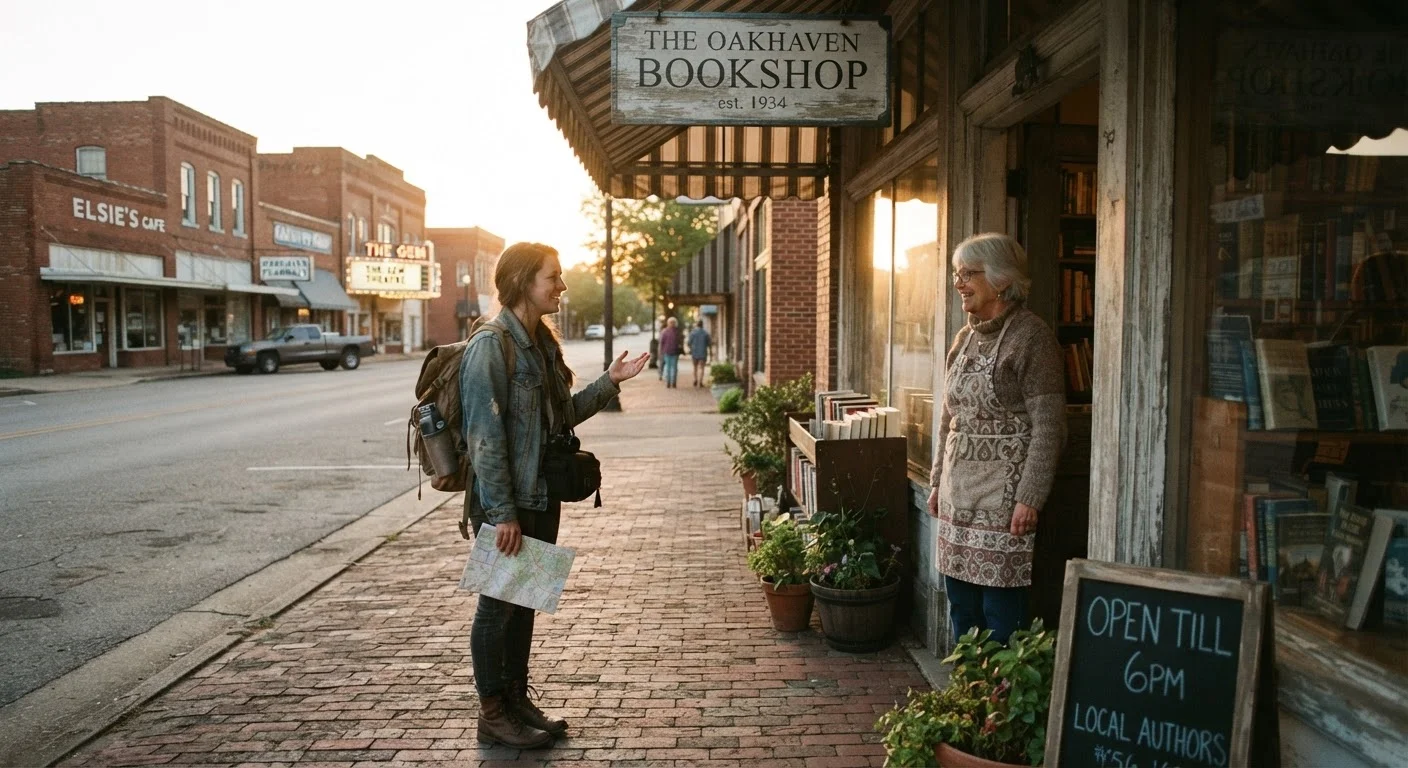
Photo credit: ExploreRoute.net | Travel Made Simple
In this article
When you're one of very few outside visitors, how you show up matters. Practical principles for curious, considerate travel in towns unaccustomed to tourism.
Key Takeaways
- In towns unaccustomed to outside visitors, your behavior sets a precedent that shapes future community attitudes toward travelers.
- Genuine curiosity and active listening open far more doors than any guidebook recommendation ever will.
- Spending locally and asking permission before photographing people or private spaces are foundational courtesies.
- Researching a community's history and current concerns before you arrive demonstrates respect and enriches your experience.
- Moving slowly and accepting moments of awkwardness is part of authentic travel in places not built for tourism.
Why Your Presence Carries Extra Weight
When a town sees only a handful of outside visitors each month, every traveler becomes a kind of ambassador — for better or worse. Your questions, your camera, your spending choices, and even your body language leave an impression that lingers long after you've driven away. Unlike heavily touristed destinations, where the sheer volume of visitors creates a buffer of anonymity, an undervisited town remembers you.
That asymmetry is worth sitting with before you arrive. The community hasn't built its routines around accommodating strangers. There's no tourism infrastructure to absorb missteps, no hospitality industry to smooth things over. What you get instead is something far more valuable: the possibility of a genuine, unscripted encounter with how people actually live. But that possibility comes with responsibility.
Understanding a place before you set foot in it is a meaningful act of respect. Researching your destination thoroughly — its economic realities, its history, any ongoing community concerns — signals that you regard residents as whole people, not as backdrop. It also protects you from well-meaning but clumsy questions that can unintentionally sting.
Core Practices for Considerate Engagement
The principles below aren't a checklist so much as a posture — a way of moving through a place that prioritizes relationship over extraction.
Ask before you photograph people, storefronts, or private property.
In communities where outsiders rarely appear, a camera can feel intrusive or even threatening — particularly if residents have experienced their image or their town used without context. Asking permission transforms a potentially extractive act into a small moment of connection.
Spend money locally, even in small amounts.
Tourism dollars flowing to large, external platforms do little for the towns that make travel meaningful. Directing spending toward locally owned businesses — a bakery, a hardware-turned-gift shop, a community meal — is one of the most concrete contributions a visitor can make.
Listen more than you talk, especially early in a conversation.
Genuine curiosity signals respect. When residents see that you're interested in their perspective rather than eager to share your own impressions of their town, conversations become richer and more honest.
Acknowledge what you don't know about the community's history.
Undervisited towns often carry complex histories — economic decline, cultural displacement, unresolved tensions — that outsiders can be tempted to skip past in pursuit of a charming narrative. Admitting your ignorance honestly invites residents to fill in the picture on their own terms.
Leave the place as quiet as you found it.
Noise, foot traffic, and social media exposure can each accelerate change in communities that haven't asked for attention. Being thoughtful about what you post, where you park, and how much space you take up protects the very qualities that drew you there.
One pattern worth actively avoiding: arriving with assumptions shaped by viral content or a single aesthetic image rather than a real understanding of the place. Common trip-planning habits can steer travelers toward the wrong expectations — and misaligned expectations are often the root cause of disrespectful behavior, even when intentions are good.
Reading the Room — and the Town
Every small town communicates its values and rhythms through its physical spaces if you learn to look. The condition of the public square, the notices posted at the hardware store, the hours kept by the diner — these details tell you what the community prioritizes and what pace of life it keeps. Learning to decode a town's spaces like a local transforms wandering into genuine understanding.
Slow Down to Actually Arrive
Undervisited towns reward travelers who stay longer and move slower. A single afternoon spent returning to the same café twice, or watching the rhythm of a town square across two different times of day, yields more authentic insight than a full-day itinerary of 'must-sees.' Build in intentional unscheduled time — not as a luxury, but as a core part of respectful travel.
The same attentiveness applies to interactions. If residents seem reserved, don't interpret that as hostility — it may simply be unfamiliarity with visitors, or a community that values privacy. Match the energy of the space. Patience and a willingness to let conversations develop at their own pace will serve you far better than enthusiasm that overwhelms.
For travelers drawn to heritage sites within these towns, the stakes are particularly high. Visiting forgotten historic sites before they're widely known means encountering local custodians who may feel protective — and rightfully so. Treat that protectiveness as an invitation to listen rather than an obstacle to navigate.
Quick Wins You Can Act on Today
Respectful community engagement doesn't require elaborate preparation. A few deliberate choices before and during your trip can shift the entire character of your visit.
If your travels take you through smaller communities along lesser-known scenic backroads, the same principles apply at every stop. Even a brief fuel-and-coffee pause is an opportunity to leave a small, positive trace — or an indifferent one. The choice is always yours.

Author
Hidden Destinations Editorial Team
Hidden Destinations Editorial Team is the collective byline for our editorial team and contributor network. Articles published under this byline or an editorial pen name are researched, written, and reviewed according to our editorial standards for clarity, consistency, and independence before publication.
View all articles →