
Cruise Itinerary Terms Decoded: A Quick-Reference Glossary
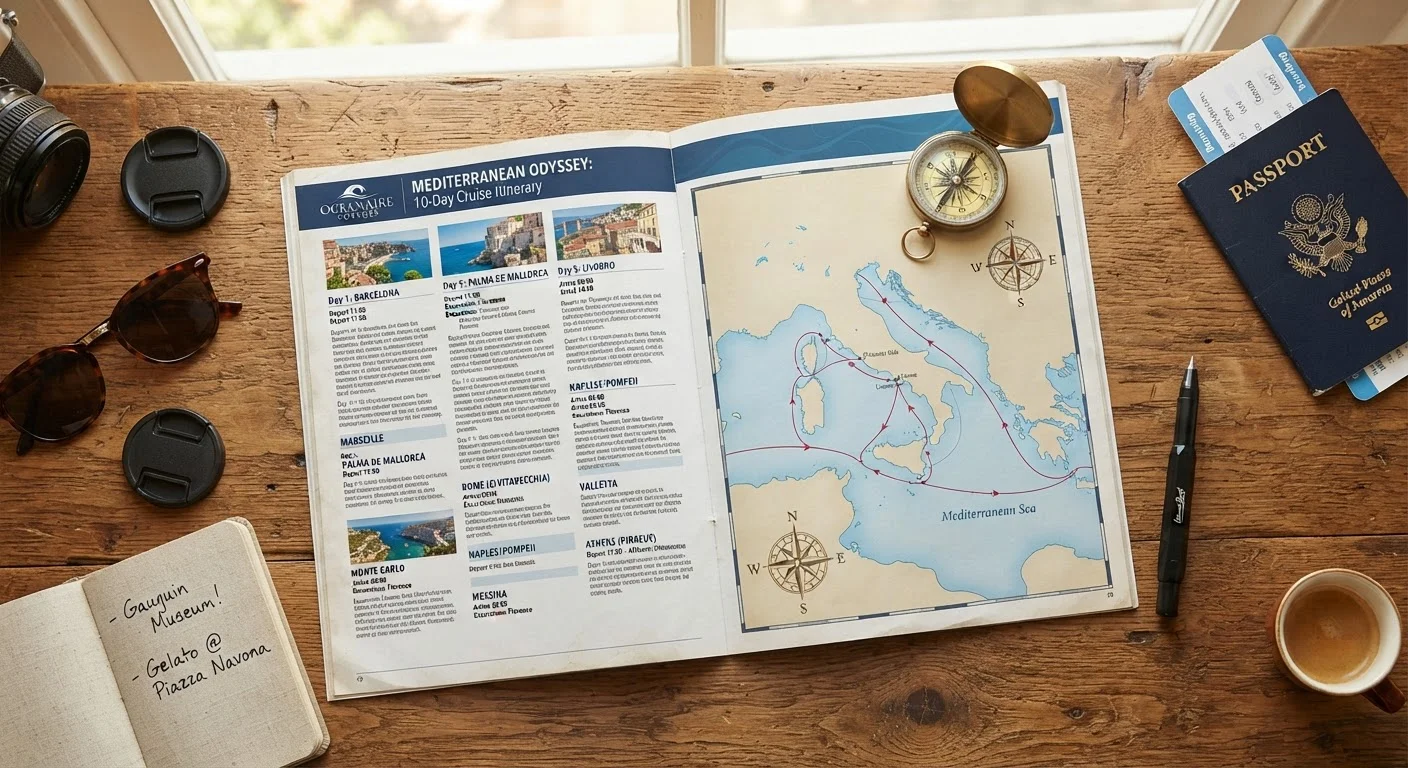
Photo credit: ExploreRoute.net | Travel Made Simple
From homeport to turnaround day, this reference glossary defines the key terms that appear on cruise itineraries and booking documents.
Why Cruise Itinerary Terminology Matters
Cruise booking documents read like a dialect of their own. Terms like tendering, transit call, and back-to-back sailing carry precise operational meanings that shape every aspect of your voyage - how much time you'll actually spend ashore, how boarding works, and what happens if plans change. Misreading even one of these terms can lead to missed excursions, logistical scrambles, or unrealistic expectations.
This glossary is designed as a working reference. Use it when comparing itineraries, reviewing booking confirmations, or making sense of what the daily program aboard ship is actually telling you. For a broader orientation to how itinerary documents are structured, see A First-Timer's Orientation to Reading a Cruise Itinerary.
| Typical port of call duration | 4-10 hours (Industry standard; varies by itinerary and port) |
| Sea days on a transatlantic crossing | 5-7 consecutive (Common on repositioning and grand voyage itineraries) |
| Tender boarding method used at | Anchor-only ports worldwide (Applied when pier infrastructure cannot accommodate large vessels) |
| Embarkation window, typical range | Noon - 4:00 PM (Staggered by carrier; check sailing documents) |
| Back-to-back turnaround wait | 2-4 hours onboard (Varies by ship size and port regulations) |
Core Itinerary Terms: A to Z Reference
The terms below appear across nearly every cruise itinerary format, from short Caribbean loops to extended world voyages. Each definition reflects standard industry usage; individual cruise lines may apply slight variations.
Homeport
The embarkation city where a cruise ship begins and ends its voyages. Homeport selection affects flight logistics, pre-cruise hotel needs, and overall trip cost.
Turnaround Day
The day a ship simultaneously disembarks one group of passengers and boards the next. Port operations on turnaround days are highly choreographed and time-sensitive.
Port of Call
Any destination the ship visits during a voyage, excluding the embarkation and disembarkation ports. Shore time at a port of call is typically four to ten hours.
Sea Day
A full day spent entirely at sea with no port stop scheduled. Sea days are used for rest, onboard activities, and crossing longer stretches of open water.
Tendering
The process of ferrying passengers from the ship to shore via small boats called tenders when a port cannot accommodate direct docking. Tendering adds transit time to the port day.
Embarkation
The formal boarding process at the departure port, including check-in, security screening, and cabin assignment confirmation. Embarkation windows are typically staggered by deck or cabin category.
Disembarkation
The process of officially departing the ship at the end of a voyage or, in some itineraries, at an intermediate port for one-way voyagers.
Repositioning Cruise
A voyage that moves a ship from one sailing region to another - for example, from the Caribbean to Europe at the start of summer season. These sailings often feature more sea days and lower fares.
Back-to-Back Sailing
Two consecutive cruises booked sequentially on the same ship, allowing passengers to remain aboard through a turnaround day. This effectively creates a longer, combined itinerary.
Transit Call
A brief port stop, often only a few hours, where the ship anchors or docks primarily for navigational or refueling reasons rather than extensive passenger shore time.
Overnight Port Stay
A scheduled stop where the ship remains docked through the evening and into the next morning, giving passengers the option to experience the destination after dark.
Itinerary Deviation
A change to the published port schedule, typically due to weather, mechanical issues, or port congestion. Cruise lines retain contractual rights to alter itineraries without prior notice.
Understanding the distinction between a port of call and a transit call, for example, is essential when evaluating how much usable shore time an itinerary actually delivers. Similarly, knowing whether a port requires tendering affects shore excursion timing and accessibility for travelers with mobility considerations.
Itinerary Changes Are Legal and Common
Cruise lines include contractual language in their passenger ticket contracts permitting itinerary changes without advance notice. While frustrating, deviations are a routine operational reality - particularly in hurricane-prone regions or during winter weather events. Travelers planning shore excursions around specific ports should review refund and rebooking policies before booking independently.
Travelers weighing the geographic scope of different voyage styles will find the trade-offs well mapped in Round-Trip vs. One-Way Cruise Itineraries. And before you sail, The Cruise Ship Packing List That Covers Every Scenario helps ensure you're prepared for every type of day - sea, port, and overnight alike.
~35%
Itineraries featuring at least one overnight port stay
Overnight stays are increasingly common on Mediterranean and Northern Europe itineraries, according to cruise industry scheduling data.
1 in 4
Cruise departures affected by at least one itinerary deviation per season
Weather and port congestion are the most frequently cited causes, based on general cruise industry operational reporting.
For a candid look at how sea days and port days actually unfold in practice, Life at Sea: A Day-by-Day Look at What Happens on a Cruise offers an hour-by-hour portrait worth reading before you book. And if you're building out the rest of your travel plan around a cruise departure, Itinerary Building covers pre- and post-cruise logistics in depth.

Author
Cruise Journeys Editorial Team
Cruise Journeys Editorial Team is the collective byline for our editorial team and contributor network. Articles published under this byline or an editorial pen name are researched, written, and reviewed according to our editorial standards for clarity, consistency, and independence before publication.
View all articles →