
America's Scenic Byways: A Reference Guide to the National System
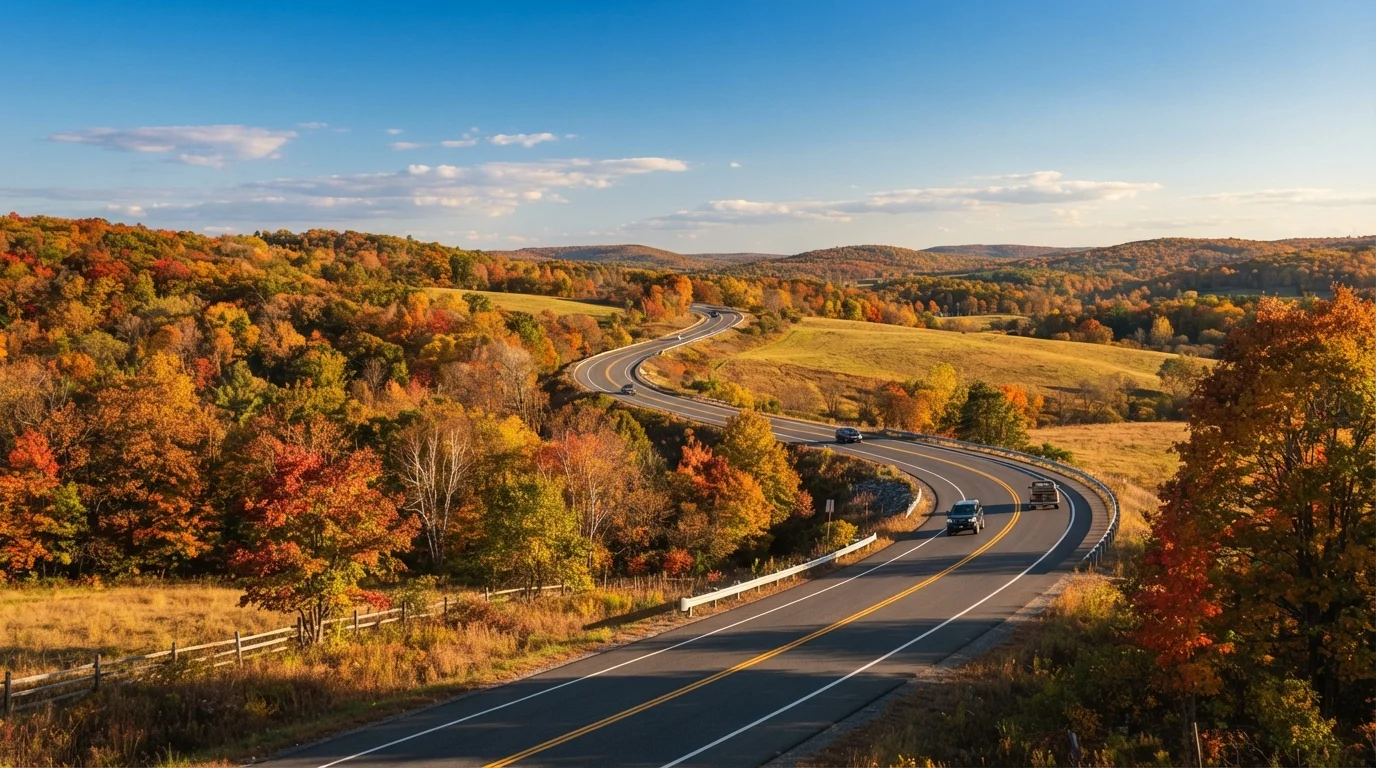
Photo credit: ExploreRoute.net | Travel Made Simple
In this article
A factual overview of the America's Byways program — how routes are designated, what categories exist, and how to find them.
What Is the America's Byways Program?
America's Byways is a collection of roads recognized by the U.S. Department of Transportation (USDOT) for their exceptional scenic, historic, cultural, natural, recreational, or archaeological qualities. Administered through the Federal Highway Administration (FHWA), the program formally designates routes at two tiers: All-American Roads and National Scenic Byways. Together, these routes form what the FHWA calls the National Scenic Byways Program.
The program originated with the Intermodal Surface Transportation Efficiency Act of 1991 (ISTEA), which directed the Secretary of Transportation to establish criteria for recognizing roads of special character. The first designations followed in the mid-1990s, and the program has since grown to encompass routes in nearly every state.
State and tribal governments, local organizations, and federal land management agencies can nominate routes. Nominees are evaluated against six defined intrinsic qualities — a term the FHWA uses to distinguish route character from ordinary highway utility. If you're planning to explore any designated route, the preparation checklist for iconic American drives is a practical starting point before you set out.
| Program Authority | Federal Highway Administration (FHWA), U.S. Department of Transportation |
| Legislation Origin | Intermodal Surface Transportation Efficiency Act of 1991 (ISTEA) |
| Designation Tiers | Two: National Scenic Byway and All-American Road |
| Intrinsic Quality Categories | Six: scenic, historic, cultural, natural, recreational, archaeological |
| Route Signage | Brown and white America's Byways logo signs posted along corridors |
| Official Directory | fhwa.dot.gov — searchable by state and intrinsic quality |
The Six Intrinsic Qualities and Two Designation Tiers
Every byway candidate is evaluated against one or more of the FHWA's six intrinsic qualities. A route must demonstrably possess at least one of these qualities to qualify for National Scenic Byway designation; an All-American Road must meet at least two and be considered a destination unto itself — meaning travelers would journey specifically for the road rather than merely passing through.
Intrinsic Quality
One of six federally defined characteristics — scenic, historic, cultural, natural, recreational, or archaeological — that a road must demonstrably possess to qualify for America's Byways designation. Intrinsic qualities distinguish a route's inherent character from its functional transportation value.
All-American Road
The higher of the two federal byway designation tiers. A route must possess at least two intrinsic qualities and be considered a destination unto itself — meaning travelers would make the journey specifically for the experience of the road.
Corridor Management Plan
A community-developed document that outlines how local stakeholders intend to protect and enhance the intrinsic qualities of a designated byway over time. The FHWA requires a plan as part of the nomination process.
National Scenic Byway
The base federal designation for roads that exhibit at least one intrinsic quality at a nationally significant level. These routes are recognized by the FHWA but may not qualify as destinations unto themselves in the way All-American Roads do.
The two designation tiers carry different weight:
- National Scenic Byway: Recognized for one or more intrinsic qualities at a national level. These roads are significant, but their primary draw may be regional or thematic rather than destination-defining.
- All-American Road: The higher designation, requiring at least two intrinsic qualities and a standard of excellence that makes the route a travel destination in its own right. Examples include the Blue Ridge Parkway in Virginia and North Carolina, and the Going-to-the-Sun Road in Montana's Glacier National Park.
Many states also maintain their own scenic byway programs using similar intrinsic quality criteria, so a route may carry both a state and a federal designation — or only one of the two. For roads that fall outside either program but still carry remarkable character, America's blue highways offer a different kind of discovery.
How to Find and Use the National Byways System
The FHWA maintains an official byways directory at fhwa.dot.gov, where travelers can search designated routes by state, intrinsic quality, or corridor. Each route listing typically includes a description, a map, contact information for local managing organizations, and links to corridor management plans — documents that outline how communities intend to preserve the route's character over time.
Designated byways are marked in the field with brown and white highway signs bearing the America's Byways logo. Not all sections of a corridor are equally accessible year-round; mountain passes and desert stretches are especially subject to seasonal closures or weather restrictions. Verify current road conditions through state DOT websites and the relevant federal land management agency before traveling.
150+
Federally designated America's Byways routes
The FHWA's National Scenic Byways Program has recognized more than 150 routes across the United States since designations began in the mid-1990s.
49
States with at least one designated byway
Designated routes span nearly every U.S. state, representing a broad geographic and thematic range of American road character.
Beyond the federal list, the complete guide to discovering hidden scenic drives covers research methods for finding routes that haven't yet earned federal recognition but are equally worth your time. And if your byway passes through protected land, the national parks road trip guide addresses permits, entry fees, and wildlife protocols. Every road has a story — learning to read roadside landmarks and signage will deepen what you take away from any designated corridor.

Author
Road Trip Culture Editorial Team
Road Trip Culture Editorial Team is the collective byline for our editorial team and contributor network. Articles published under this byline or an editorial pen name are researched, written, and reviewed according to our editorial standards for clarity, consistency, and independence before publication.
View all articles →