
Boutique Hotels and What Actually Makes Them Different
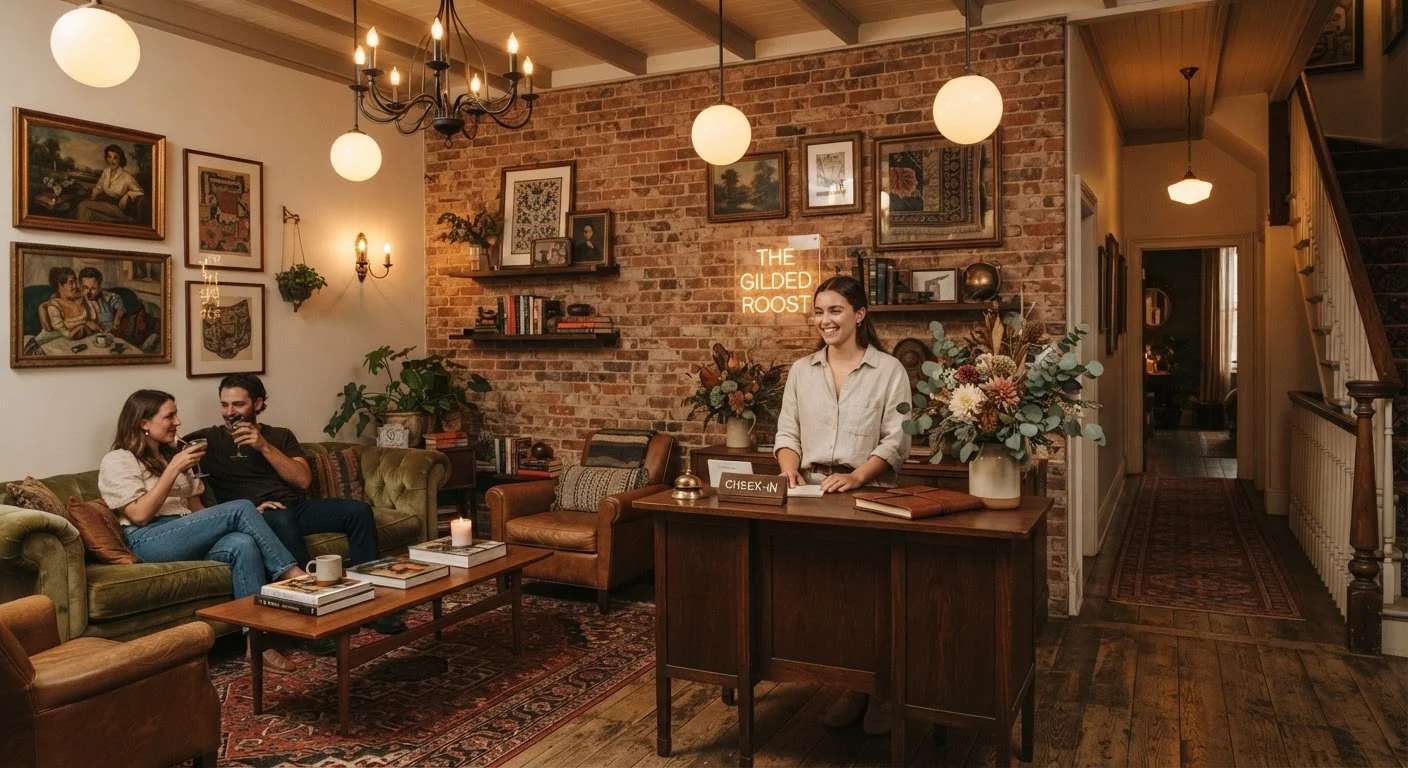
Photo credit: ExploreRoute.net | Travel Made Simple
In this article
Boutique is one of travel's most overused labels. Here's what genuinely sets a boutique hotel apart from a standard small property.
Key Takeaways
- Boutique hotels are defined by character and intentionality, not just small size.
- The label is unregulated, so marketing use of 'boutique' doesn't guarantee a genuine experience.
- Personalized service and a distinct local identity are the most reliable indicators.
- Many boutique properties are independently owned, though some brands have adopted the aesthetic.
- Boutique hotels suit travelers who value atmosphere and individuality over predictable amenities.
Why the Word 'Boutique' Has Lost Some Meaning
Few words in the hotel industry have been stretched further than boutique. Originally used to describe a specific kind of experiential, design-conscious lodging that stood apart from chain uniformity, the term now appears across properties of wildly different scales, ownership models, and quality levels. A 400-room resort with a rooftop bar calls itself boutique. So does a 12-room converted townhouse in Charleston with hand-painted wallpaper and a host who remembers your coffee order.
This inflation matters because travelers making decisions based on the label alone are working with incomplete information. Understanding what actually constitutes a boutique hotel — beyond the marketing — lets you match your expectations to what a property genuinely offers.
As our editorial guide on reading hotel self-descriptions explores, terms like 'boutique,' 'luxury,' and 'intimate' are unregulated and applied at a property's own discretion. No industry body certifies boutique status.
No Regulatory Body Certifies 'Boutique'
Unlike star ratings — which, while imperfect, involve some form of external assessment in many countries — the boutique label is entirely self-assigned. Any hotel can print 'boutique' on its website or listing without meeting any defined criteria. This makes consumer due diligence more important than usual when the category is central to your booking decision.
The Markers That Actually Define a Boutique Property
Genuine boutique hotels share several characteristics that go beyond size, though scale is a useful starting filter. Most authentic boutique properties have fewer than 100 rooms — many fewer than 50 — because limited scale is what enables the individualized attention that defines the category.
Beyond room count, look for these indicators:
- A coherent, site-specific design identity. Boutique hotels are designed with intention. The aesthetic typically references something specific — the building's history, the surrounding landscape, a cultural era — rather than defaulting to generic contemporary furnishings. This is distinct from a design hotel, where architecture itself is the primary draw, though the two can overlap.
- Personalized, empowered service. In a boutique property, staff are often hired for personality and local knowledge, not just procedural compliance. The ratio of staff to guests tends to be higher, and team members typically have latitude to make decisions without escalating every request.
- A distinct sense of place. Strong boutique hotels feel unmistakably rooted in their location — through food sourcing, local art, neighborhood connections, or community partnerships. They wouldn't work as well if you relocated them to another city.
- Independent or owner-driven management. Ownership structure isn't definitive, but independent ownership often explains why a property has a clear point of view rather than committee-designed neutrality.
How to Vet a Boutique Claim Before Booking
Look at the property's room count, read recent guest reviews for mentions of personalized service, and study the photography for design coherence rather than generic staging. Properties that genuinely fit the boutique category typically have a clear story — visible in how they describe their history, their location, and their staff.
Who Boutique Hotels Actually Suit
The boutique format isn't universally ideal, and recognizing this helps travelers make smarter choices rather than chasing a label. Boutique hotels tend to reward travelers who value atmosphere and narrative over amenity volume. If you're the kind of person who finds a well-curated reading nook more satisfying than a large fitness center, or who'd rather hear a local staff member's restaurant recommendation than consult a branded concierge app, boutique properties are likely your natural fit.
They work particularly well for solo travelers, couples on leisure trips, and anyone whose trip has a cultural or creative dimension. They're less consistently suited to travelers with complex logistical needs — large group bookings, extensive meeting facilities, or very young children requiring specific infrastructure.
It's also worth noting that boutique hotels and unique stays occupy adjacent but different territory. A boutique hotel still operates within the recognizable framework of hotel hospitality — front desk, daily housekeeping, room service in some form. Unique stays, as our piece on what makes a stay truly memorable examines, often depart further from convention — sometimes in ways that don't suit every traveler.
< 100
Typical room count for boutique hotels
Industry observers and hospitality consultants generally use 100 rooms as an informal upper threshold for boutique classification, though many properties considered boutique have significantly fewer.
1981
Year the boutique hotel concept emerged
The Blakes Hotel in London, opened in 1981 by designer Anouska Hempel, is widely cited as an early reference point for the boutique hotel concept in its modern form.
~40%
Travelers prioritizing unique, local character
Research from various hospitality industry surveys has consistently found that a substantial share of leisure travelers — roughly 40% or more — report that a hotel's local character and individuality significantly influences their booking decision.
Boutique in Different Contexts — and How Classification Varies
The boutique concept doesn't translate uniformly across geographies. A boutique hotel in New York City operates in a very different context than one in rural Tuscany or a mid-size Midwestern city. Pricing, service norms, and what counts as 'distinct character' all shift with location.
It's also worth understanding that hotel classification systems vary significantly by country — star ratings and category labels don't map neatly across borders. Our piece on hotel categories across different countries explores how the same terminology can mean very different things depending on where you're traveling.
The clearest signal that a property is genuinely boutique — regardless of geography — is internal coherence: a stay that feels like a considered whole, where the design, the service, the food, and the location all speak the same language. When those elements align, the label becomes almost beside the point.
Frequently Asked Questions

Author
Where to Stay Editorial Team
Where to Stay Editorial Team is the collective byline for our editorial team and contributor network. Articles published under this byline or an editorial pen name are researched, written, and reviewed according to our editorial standards for clarity, consistency, and independence before publication.
View all articles →