
A Field Reference for Adventure Travel Terminology Every Outdoor Traveler Should Know
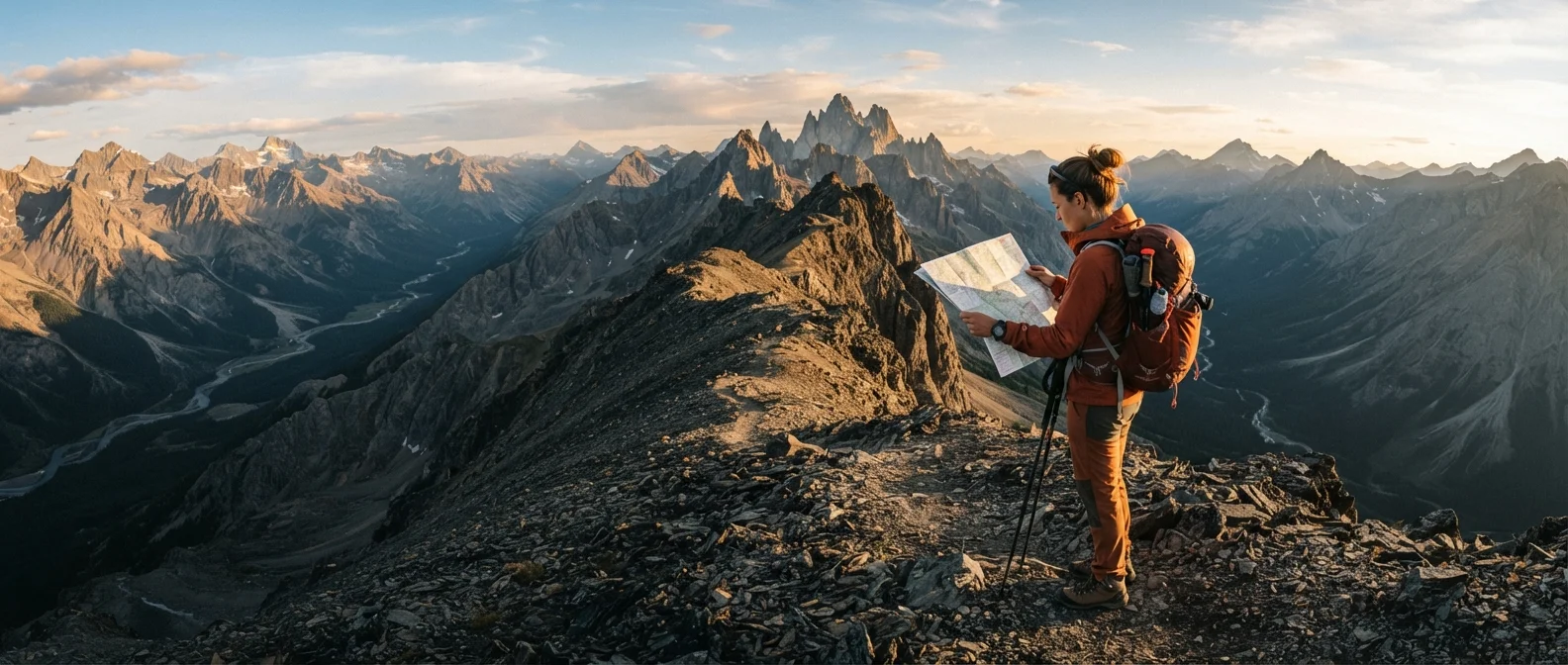
Photo credit: ExploreRoute.net | Travel Made Simple
From exposure and crux to portage and bail point — a clear reference glossary for the terms used across trekking, climbing, and wilderness travel.
Why Shared Terminology Matters in the Field
Across trekking, climbing, river travel, and backcountry navigation, a precise shared vocabulary isn't jargon for its own sake — it's a safety tool. When a guide says the route has significant exposure above the crux, or that you'll need to portage around a strainer, misunderstanding those terms can have real consequences. This reference covers the terms that come up most frequently across the main disciplines of adventure travel, organized by context.
If you're new to remote environments entirely, Your First Foray into Remote Wilderness Travel offers foundational orientation before you dive into discipline-specific language. For a broader look at how the field itself is defined, see What Adventure Travel Actually Means.
Exposure
The degree to which a route or position leaves a traveler vulnerable to a long, dangerous fall or severe environmental conditions. High exposure doesn't necessarily mean high technical difficulty, but it does mean that a mistake carries serious consequences.
Crux
The single most technically demanding section of a climb or route. Completing the crux generally means the remainder of the route is comparatively manageable.
Portage
Carrying a watercraft and its gear overland to bypass an unnavigable section of river — waterfalls, dangerous rapids, or logjams. The term is used broadly in kayaking, canoe travel, and packrafting.
Strainer
A partially submerged obstacle in a river — typically a fallen tree or debris pile — that allows water to pass through but traps solid objects, including people. Strainers are among the most dangerous hazards in moving water.
Bail Point
A pre-identified location on a route where a group can safely abandon the objective and exit. Establishing bail points before departure is a core element of wilderness risk planning.
Talus
A slope or field covered with loose, angular rock fragments that have eroded from a cliff or ridgeline above. Talus travel is slow, ankle-stressing, and requires careful foot placement.
Scree
Small, loose stones covering a steep slope. Distinct from talus in scale — scree fragments are typically fist-sized or smaller — and can slide underfoot, making descents both fast and unpredictable.
Technical Terrain
Any route section that requires specialized skills or equipment beyond basic hiking — such as rope work, anchor building, or advanced water-reading. The term signals that general fitness alone is insufficient.
Leave No Trace (LNT)
A set of outdoor ethics principles designed to minimize human impact on natural environments. LNT covers waste disposal, campsite selection, fire use, wildlife interaction, and respecting other visitors.
Acclimatization
The physiological process by which the body adjusts to reduced oxygen levels at altitude. Proper acclimatization — typically achieved through a gradual ascent profile — is essential for high-altitude trekking and climbing safety.
Packrafting
A style of backcountry travel that combines hiking with lightweight inflatable rafts, enabling travelers to cross lakes, float rivers, and access terrain unreachable on foot alone.
Via Ferrata
Italian for 'iron road' — a mountain route equipped with fixed cables, rungs, and ladders that allow travelers without full technical climbing skills to ascend exposed ridges or cliff faces with appropriate equipment.
Terrain and Conditions Vocabulary
How a landscape behaves — and how travelers describe it — varies dramatically by environment. These terms cross disciplines and appear regularly in route descriptions, guided briefings, and field communication.
| Primary terrain types in adventure travel | Alpine, canyon, jungle, desert, river corridor, coastal |
| Typical bail point planning rule | Establish at least one per major route segment (Wilderness risk management convention) |
| Acclimatization guideline above 8,000 ft | Ascend no more than 1,000 ft per day above that elevation (General wilderness medicine guidance; verify with a healthcare professional) |
| Via ferrata rating systems | Multiple regional systems exist (e.g., A–E in Europe); always check local grading |
| LNT principle count | 7 core principles (Leave No Trace Center for Outdoor Ethics) |
| Disciplines using portage | Kayaking, canoe travel, packrafting, and some coastal sea-kayak routes |
Understanding terrain vocabulary pairs directly with reading maps and assessing conditions. Travelers who want a landscape-level reference will find Understanding Biomes a useful companion to this glossary, providing ecological context for the environments where many of these terms apply. For those planning expeditions, the Adventure Travel Packing Checklist and Trip Research hub offer practical planning layers that build on this vocabulary.
Wilderness risk management also depends on communicating these concepts clearly. River Crossings, Flash Floods, and White Space on the Map demonstrates how terrain and conditions terms translate directly into decision-making in the field.

Author
Specialty Travel Editorial Team
Specialty Travel Editorial Team is the collective byline for our editorial team and contributor network. Articles published under this byline or an editorial pen name are researched, written, and reviewed according to our editorial standards for clarity, consistency, and independence before publication.
View all articles →