
The Logic of Mistake Fares: What They Are and How to Approach Them
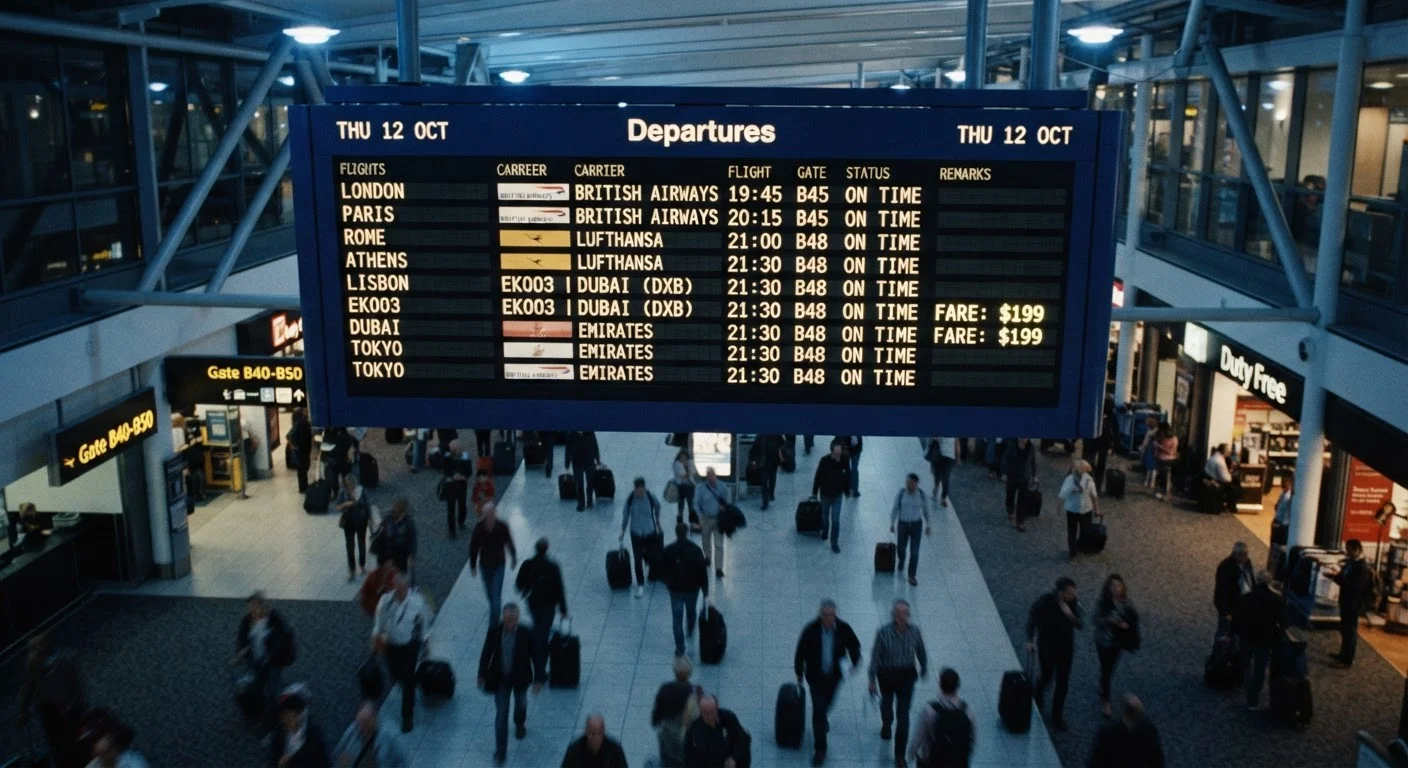
Photo credit: ExploreRoute.net | Travel Made Simple
In this article
Mistake fares occur when airlines publish unintended low prices. Learn what causes them, how reliable they are, and what to consider before booking one.
Key Takeaways
- Mistake fares are unintended pricing errors, not deliberate airline promotions.
- Airlines may honor or cancel bookings made at mistake fare prices — outcomes vary significantly.
- U.S. Department of Transportation rules on mistake fare enforcement have evolved; passengers do not have an automatic right to ticketing.
- Acting quickly matters, but so does understanding the financial exposure before booking.
- Flexibility in travel plans reduces the risk of disruption if a mistake fare booking is cancelled.
What Causes a Mistake Fare
Airline pricing is a highly automated, continuously updated process involving thousands of fare rules, taxes, surcharges, and market conditions. To understand why pricing errors occur, it helps to understand how fares are assembled. For a thorough breakdown, see our guide to how flight prices are built.
The most common sources of mistake fares include:
- Manual data entry errors: A fare analyst inputs a figure incorrectly — omitting a digit or misplacing a decimal — and the fare publishes before quality checks catch it.
- Currency conversion failures: When fares are priced in a foreign currency and converted, rounding errors or misconfigured exchange rates can produce drastically wrong figures.
- Tax or surcharge omission: Fuel surcharges or departure taxes are occasionally dropped from the final fare calculation due to system configuration errors.
- GDS distribution glitches: Global Distribution Systems can occasionally misread or misroute fare data, propagating an incorrect price to booking platforms.
Because these systems interact with dozens of third-party aggregators and travel agencies in real time, a single error can appear across many booking sites before it is caught.
Hours
Typical lifespan of a mistake fare once published
Industry observers and travel fare trackers consistently report that most mistake fares are corrected within a few hours of appearing, often faster for high-volume routes.
2015
Year U.S. DOT revised mistake fare enforcement rules
The U.S. Department of Transportation updated its stance on inadvertent fare publication, giving airlines more latitude to cancel bookings made at erroneous prices.
How Reliable Are Mistake Fare Bookings
This is the central question for any frequent flyer who encounters one. The honest answer: it depends, and outcomes are genuinely unpredictable.
U.S. DOT rules previously compelled airlines to honor published fares once a ticket was purchased. A 2015 policy revision altered this, allowing airlines to correct obvious pricing errors in some cases. Airlines may issue a full refund and cancel the booking, or in some instances, they choose to honor the fare as a goodwill gesture. There is no guarantee either way.
Booking Confirmation vs. E-Ticket: Key Distinction
A booking confirmation email acknowledges that your reservation was received — it does not mean your ticket has been issued. An e-ticket number (a 13-digit numeric code beginning with the airline's three-digit code) indicates the fare has been processed through the ticketing system. Check your confirmation carefully. If no e-ticket number is present, ticketing may still be pending or may not occur at all if the fare is cancelled.
What affects the outcome? Several factors appear to influence whether bookings are honored:
- How quickly the airline identifies and acts on the error
- How widely the fare was booked before correction
- The airline's internal policy on error handling
- Whether the fare was issued as a confirmed e-ticket
Receiving a booking confirmation email is not the same as receiving an e-ticket number. A confirmed e-ticket — a 13-digit numeric code — is a stronger indicator that a fare has been processed, though still not a guarantee.
What to Consider Before Booking
Mistake fares attract attention precisely because they represent the kind of dramatic price anomaly that travelers spend months hoping to find through conventional means. But treating them as windfalls without assessing the risks can lead to real financial exposure.
Keep All Downstream Bookings Refundable
The most important practical rule when booking a mistake fare is to keep every subsequent booking — hotels, car rentals, connecting flights — fully refundable until you receive a confirmed e-ticket number. Non-refundable ancillary costs represent your real financial exposure if the airline cancels the booking. Many experienced travelers wait 24–48 hours after booking before making any additional arrangements.
Before acting on a mistake fare, consider:
- Flexibility of your other bookings: Only book accommodations and ground transport that are fully refundable until you have confirmed ticketing. This is the single most important risk-mitigation step.
- Cost of the fare itself: Even mistake fares are not always free — they may still cost hundreds of dollars. A non-honored booking means a refund process that takes time.
- Whether the destination and dates actually work for you: The psychology of a striking price can override rational trip planning. Our guide on building realistic itineraries is worth reviewing before committing to any last-minute travel plan.
- Your tolerance for disruption: If a booking is cancelled weeks before departure, you will need to find alternative arrangements, potentially at full price.
It is also worth understanding that the allure of mistake fares sits within a broader category of travel budgeting decisions. As explored in the trade-offs of budget travel, a low sticker price doesn't always equal a low total cost. And common travel budget myths often include the assumption that extreme deals are always worth chasing.
How Mistake Fares Relate to Broader Booking Strategy
Mistake fares are not a reliable booking strategy — they are rare, unpredictable, and frequently short-lived. Frequent flyers who encounter them should treat them as opportunistic possibilities rather than expected tools. The broader discipline of flight booking strategy — understanding fare classes, timing, routing logic, and airline pricing behavior — is a far more durable source of savings and route optimization.
As our analysis of common booking myths demonstrates, many travelers overestimate the predictability of fare anomalies and underestimate the value of sound, repeatable booking practices. Mistake fares are the aviation equivalent of a favorable weather window — worth using if conditions align, but not something to build a plan around.
In short: approach mistake fares with clear eyes, a flexible itinerary, and no irreversible commitments until you hold a confirmed ticket number.
Frequently Asked Questions

Author
Smart Air Travel Editorial Team
Smart Air Travel Editorial Team is the collective byline for our editorial team and contributor network. Articles published under this byline or an editorial pen name are researched, written, and reviewed according to our editorial standards for clarity, consistency, and independence before publication.
View all articles →