
Cruise Myths That Shape Bad Itinerary Choices
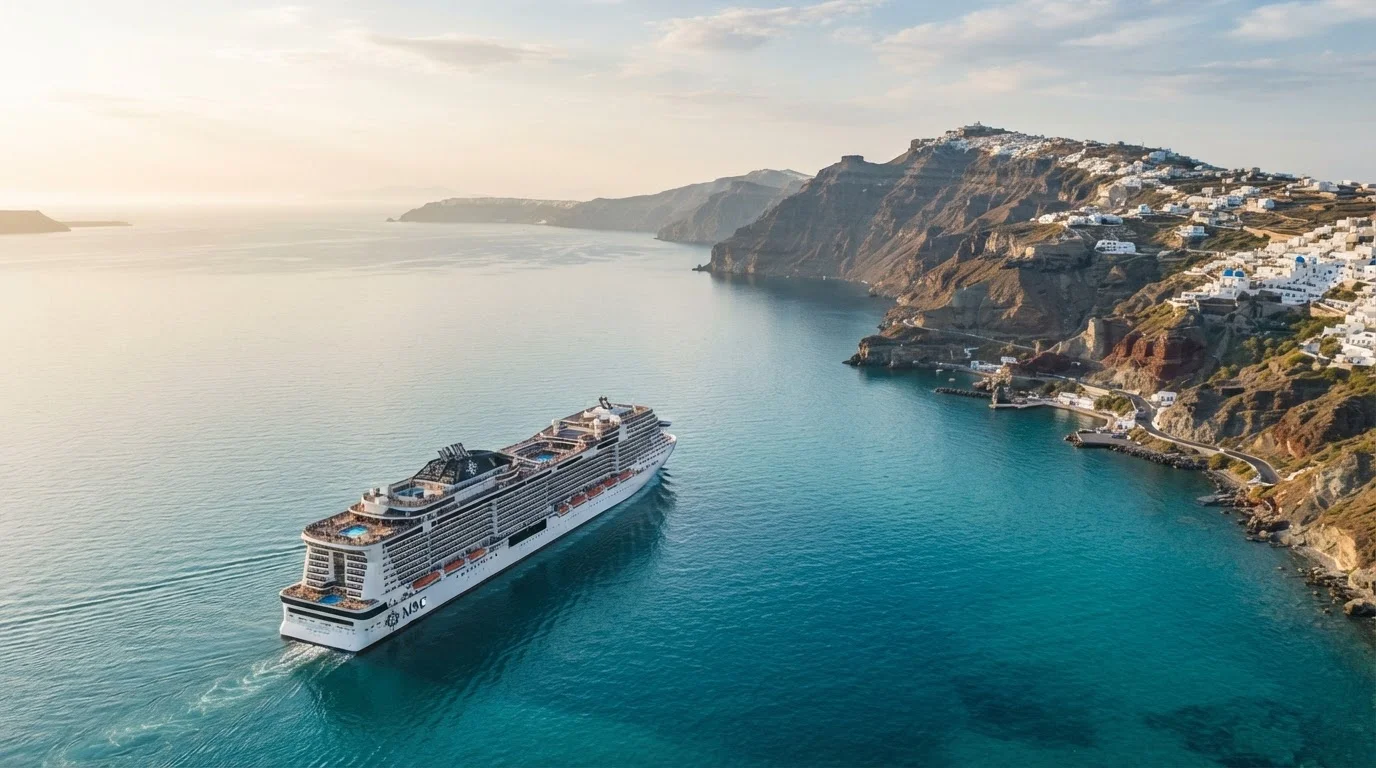
Photo credit: ExploreRoute.net | Travel Made Simple
In this article
Thinking more ports means a better trip? Or that sea days are wasted time? Common cruise itinerary misconceptions examined against reality.
Key Takeaways
- More ports per itinerary does not automatically produce a richer or more satisfying cruise experience.
- Sea days offer genuine value through enrichment, rest, and onboard programming that port-heavy itineraries can't replicate.
- Repositioning and shoulder-season itineraries often visit less-crowded destinations that standard routes skip entirely.
- Overnight port calls and slow itineraries frequently allow deeper cultural engagement than rapid turnaround stops.
- Itinerary decisions based on port count alone routinely lead to exhaustion and missed context at every destination.
Why Itinerary Myths Cost Cruisers Real Experiences
Most itinerary mistakes don't happen onboard — they happen during the planning stage, when travelers reach for familiar shortcuts: maximize ports, avoid sea days, stick to peak season, stay within well-known regions. These rules of thumb feel logical until the voyage itself reveals their flaws.
The result is a predictable pattern: overscheduled days ashore, a sense of exhaustion by day five, and a nagging feeling that the ship itself was little more than a floating hotel between obligations. Understanding where these assumptions originate — and why they consistently mislead — is the first step toward building an itinerary that actually fits how you travel.
For a deeper look at how planning assumptions quietly undermine trips across all travel types, see our itinerary myths guide. The dynamics explored there apply with particular force to cruise routes.
Myth
More ports equals a better cruise — the ideal itinerary packs in as many stops as possible.
Fact
Port density is one of the weakest predictors of cruise satisfaction; itinerary pacing and port depth matter far more.
The impulse to maximize ports is understandable — more destinations seems to mean more value. In practice, it tends to produce the opposite: shallow, rushed encounters with places that deserve more than four hours of attention. A port call that begins at 8 a.m. and ends at 5 p.m. leaves little room for meaningful exploration once transit time, orientation, and meals are factored in.
Itineraries that include overnight port calls or fewer, longer stops allow travelers to experience destinations across different times of day, attend evening cultural events, and move at a pace that permits genuine engagement. Matching your itinerary to your actual travel style starts with resisting the port-count metric entirely.
Myth
Sea days are wasted days — time aboard ship that could have been spent exploring a destination.
Fact
Sea days serve a distinct and valuable purpose in a well-structured cruise, and itineraries without them often produce traveler fatigue.
Sea days are frequently the first thing travelers try to eliminate when comparing itineraries. The assumption is that any day not spent ashore is a day squandered. This misreads what sea days actually provide: recovery time, onboard programming, and a pace of travel that prevents the cumulative exhaustion that hits around day seven of a port-every-day itinerary.
Most modern ships schedule enrichment content specifically around sea days — destination lectures, cooking classes, guest expert presentations. These offerings go largely unused on port-heavy sailings because passengers are always ashore. Beyond programming, sea days allow the ship's dining, spa, and deck spaces to function as they were designed — not as an afterthought between port obligations.
Myth
Peak season itineraries offer the best access to destinations — shoulder season means compromises.
Fact
Shoulder-season sailings frequently visit the same ports with significantly less congestion, and sometimes access ports unavailable during peak periods.
The peak-season instinct is driven by weather assumptions and a belief that popular itineraries run best when most travelers choose them. Neither holds consistently. Many Mediterranean and Baltic ports receive the majority of their annual cruise traffic within a narrow summer window, producing congestion levels that actively reduce the quality of a shore visit — longer queues at key sites, overwhelmed local infrastructure, and inflated prices.
Shoulder-season itineraries in the same regions often encounter the same landmarks in a quieter state, while adding ports — smaller Adriatic towns, Norwegian fjord villages — that aren't operationally viable when ship traffic peaks. Understanding why some ports get skipped helps travelers set realistic expectations about when and where these opportunities actually arise.
Myth
Repositioning cruises are discount sailings for budget travelers — not worth serious consideration.
Fact
Repositioning itineraries often cover rare routing combinations and extended ocean crossings that standard itineraries never replicate.
Repositioning sailings — when ships move between seasonal deployment regions — are sometimes marketed at lower price points, which has led to an unfair association with lesser quality. The itinerary structure, however, is frequently the most interesting available: transatlantic crossings, passages through the Panama Canal, routings between the Mediterranean and Caribbean that no fixed-circuit itinerary matches.
These voyages tend to include more sea days (genuinely useful for the reasons addressed above), fewer overcrowded ports, and a passenger mix that skews toward experienced cruisers rather than first-timers. For travelers who've exhausted conventional routing, repositioning sailings offer a materially different experience — provided they understand that the voyage itself is as much the point as the destinations. Specialty and themed cruise structures operate under similar logic, as explored in our themed cruises overview.
Myth
Ship-organized shore excursions are always the safest and most efficient way to experience a port.
Fact
Ship excursions offer genuine logistical advantages in some ports, but are not universally safer or more rewarding than independent planning.
The assumption that ship-organized tours represent the safest default in every port persists partly because it's sometimes true — in remote or logistically complex ports, the ship's organizational infrastructure matters. But applied uniformly, this belief leads travelers to pay a premium for generic group tours at ports where independent access is straightforward and local options are richer.
The real calculus involves port infrastructure, destination familiarity, time constraints, and how critical it is to guarantee a return to the ship on schedule. Our dedicated examination of shore excursion myths unpacks where ship tours earn their premium and where independent planning consistently outperforms them.
What Better Itinerary Thinking Actually Looks Like
Correcting these myths isn't about abandoning ambition — it's about redirecting it. A twelve-night itinerary with eight ports and four sea days will almost always produce more memorable travel than a twelve-night sprint through eleven ports. Depth beats breadth in nearly every case, and cruising is unusually well-suited to that philosophy when travelers let it be.
3–4 hrs
Usable exploration time in a typical port call
Industry estimates suggest that once transit, orientation, and return buffer time are deducted, most six-to-eight-hour port calls yield roughly three to four hours of genuine exploration time.
30–50%
Visitor volume reduction at shoulder-season ports
Port authority data from several major Mediterranean destinations indicates cruise passenger volumes in shoulder months can run 30–50% below peak-summer levels at the same ports.
Sea days deserve specific rehabilitation. Far from wasted time, they offer structured enrichment programming — navigation lectures, culinary demonstrations, destination briefings — that most port-intensive travelers never access. Our guide to making the most of sea days maps out how non-pool cruisers fill that time meaningfully.
For travelers still building their itinerary vocabulary, the cruise itinerary glossary decodes the terminology — turnaround days, tender ports, homeports — that appears on booking documents and shapes realistic expectations before you sail.
Over-Scheduling Ashore Has Real Costs
Itineraries built around maximum port stops routinely produce cumulative fatigue that diminishes enjoyment well before the voyage ends. Over-scheduling is the most common planning error across all travel types, and it's particularly pronounced on cruise itineraries where the temptation to treat every port as a full-day obligation is built into the format. Poor shore-day decisions compound this — see our guide to port-day mistakes for the specific patterns that lead to missed departures and wasted time.
If you've been approaching the itinerary selection process using the same assumptions that govern hotel or flight bookings, it's worth revisiting those foundations too. Our trip research myths article examines broader planning misconceptions that frequently carry over into cruise decisions.

Author
Cruise Journeys Editorial Team
Cruise Journeys Editorial Team is the collective byline for our editorial team and contributor network. Articles published under this byline or an editorial pen name are researched, written, and reviewed according to our editorial standards for clarity, consistency, and independence before publication.
View all articles →