
Slow Cruising: The Case for Itineraries Built Around Overnight Port Stays
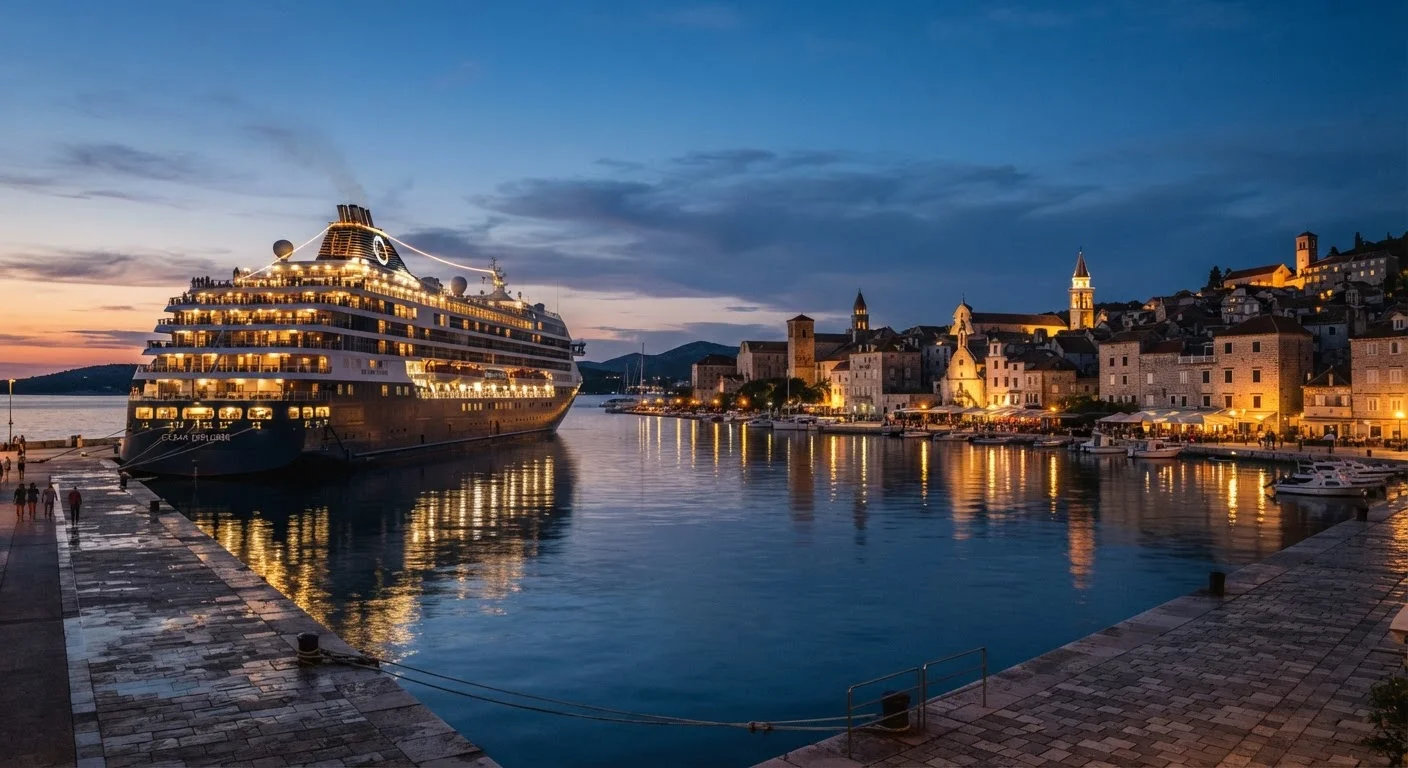
Photo credit: ExploreRoute.net | Travel Made Simple
In this article
Overnight port stops give travelers evenings ashore and deeper cultural access. Explore which regions and routes are best suited to this slower pace.
Key Takeaways
- Overnight port stays typically extend shore time to 18–24 hours, enabling evening dining and cultural experiences.
- Slow-cruise itineraries suit travelers who prioritize depth over breadth and want genuine local immersion.
- Mediterranean, Norwegian fjord, and Southeast Asian river routes are particularly well-suited to overnight stops.
- Fewer ports per voyage means fewer overall destinations — a deliberate trade-off, not an oversight.
- Ship amenities and sea-day entertainment are underutilized on slow-cruise itineraries, which may not suit all travelers.
Access to evening culture unavailable on day calls
Overnight stays allow passengers to experience local nightlife, late-dining traditions, and cultural events that simply don't exist within a standard six-to-ten-hour port window.
Reduced logistical pressure ashore
Without a hard departure countdown, travelers can explore at their own pace, revisit places of interest, or extend an excursion without cutting it short to make all-aboard.
Deeper cultural immersion in fewer destinations
Spending 18–24 hours in a city allows for multiple neighborhoods, longer museum visits, and conversations that day-trippers rarely have time for.
Better access to dawn and dusk landscapes
In scenic regions like Norwegian fjords or coastal Mediterranean towns, the golden hour light at dawn and dusk — typically missed on day calls — is often the most rewarding visual experience a destination offers.
Lower physical fatigue per port
Spreading activities across a full day and evening reduces the rushed, high-exertion quality of trying to see everything in one compressed visit.
Fewer total destinations per voyage
An itinerary structured around overnight stays will cover fewer ports than a port-intensive route of the same length — a meaningful trade-off for first-time regional visitors seeking geographic breadth.
Onboard amenities go underused
When most passengers are ashore in the evenings, ship entertainment, dining venues, and social programming have smaller audiences, which can diminish the onboard experience for those who enjoy ship life as much as shore life.
Evening safety and logistics vary by port
Not every port is equally walkable or safe after dark; some destinations require organized transportation to access safe areas, adding cost and complexity to the unstructured overnight time.
Premium pricing on select itineraries
Overnight-stay itineraries, particularly on small ships or river vessels, can carry higher per-night costs than comparable ocean sailings with more port stops and less dwell time.
Risk of disappointment if port culture is limited
An overnight stop in a smaller or less culturally dense port may feel like excess time in a location that didn't warrant the extended schedule — a risk that port selection directly determines.
What Slow Cruising Actually Means
The phrase "slow cruising" refers to itineraries deliberately structured around fewer ports and longer time in each — most notably through overnight stays. Rather than arriving at 8 a.m. and departing by 5 p.m., an overnight call typically keeps the ship docked through the following morning, giving passengers 18 to 24 or more hours ashore if they choose to use them.
This approach stands in direct contrast to the port-dense itineraries many cruise veterans know well. Standard day calls compress sightseeing into six to ten hours, which demands tight planning and leaves little room for spontaneity. An overnight format resets that calculus entirely.
Slow-cruise voyages are found across a range of regions and vessel types — from ocean liners anchoring in Dubrovnik or Valletta through the night, to small-ship expeditions holding position in a Norwegian fjord, to river vessels that routinely moor overnight in cities like Bordeaux, Budapest, or Hội An. The format is less a niche product and more a structural philosophy that certain itinerary designers build into routes where depth is the point.
The Advantages of Overnight Port Stays
Access to evening culture unavailable on day calls
Overnight stays allow passengers to experience local nightlife, late-dining traditions, and cultural events that simply don't exist within a standard six-to-ten-hour port window.
Reduced logistical pressure ashore
Without a hard departure countdown, travelers can explore at their own pace, revisit places of interest, or extend an excursion without cutting it short to make all-aboard.
Deeper cultural immersion in fewer destinations
Spending 18–24 hours in a city allows for multiple neighborhoods, longer museum visits, and conversations that day-trippers rarely have time for.
Better access to dawn and dusk landscapes
In scenic regions like Norwegian fjords or coastal Mediterranean towns, the golden hour light at dawn and dusk — typically missed on day calls — is often the most rewarding visual experience a destination offers.
Lower physical fatigue per port
Spreading activities across a full day and evening reduces the rushed, high-exertion quality of trying to see everything in one compressed visit.
The most significant benefit — access to a destination's evening culture — is one that port-focused travelers consistently cite as transformative. Dining at a restaurant that doesn't open until 9 p.m., attending a live music performance, or simply walking a waterfront after the day-tripper crowds have cleared produces a qualitatively different experience than a rushed afternoon ashore.
Overnight stays also reduce the logistics pressure that compresses single-day port visits. There's no ship-departure countdown driving every decision. Travelers can join a longer excursion, return to a neighborhood they liked, or simply sit in a square and watch the city operate on its own schedule. For travelers already thinking about weaving well-known landmarks with lesser-visited places, an overnight stop creates the time budget to do exactly that.
The Disadvantages Worth Considering
Fewer total destinations per voyage
An itinerary structured around overnight stays will cover fewer ports than a port-intensive route of the same length — a meaningful trade-off for first-time regional visitors seeking geographic breadth.
Onboard amenities go underused
When most passengers are ashore in the evenings, ship entertainment, dining venues, and social programming have smaller audiences, which can diminish the onboard experience for those who enjoy ship life as much as shore life.
Evening safety and logistics vary by port
Not every port is equally walkable or safe after dark; some destinations require organized transportation to access safe areas, adding cost and complexity to the unstructured overnight time.
Premium pricing on select itineraries
Overnight-stay itineraries, particularly on small ships or river vessels, can carry higher per-night costs than comparable ocean sailings with more port stops and less dwell time.
Risk of disappointment if port culture is limited
An overnight stop in a smaller or less culturally dense port may feel like excess time in a location that didn't warrant the extended schedule — a risk that port selection directly determines.
Slow itineraries involve deliberate trade-offs that don't suit every traveler. Fewer ports means fewer destinations over the same number of sailing days — a meaningful consideration for first-time visitors to a region who want geographic breadth. If a Baltic itinerary visits four capitals instead of seven, passengers who haven't been to that part of the world before may feel the reduced coverage acutely.
There's also a ship-side cost. Extended port stays mean more nights when onboard amenities — the pools, specialty restaurants, entertainment programs — sit underused because most passengers are ashore or asleep in port. For travelers whose cruise enjoyment is split evenly between ship life and shore life, slow itineraries may feel imbalanced. See our guide on aligning cruise routes with your travel style for a fuller framework on this trade-off.
Overnight Stays and Port Fees
Ports charge cruise lines berthing fees that typically increase with the duration of a stay. Some ports apply separate overnight tariffs. While this is a commercial factor that cruise lines negotiate, it can influence which destinations appear on slow-cruise itineraries and which do not. Travelers curious about why certain appealing ports rarely offer overnight calls may find port economics — rather than routing logic — to be the underlying reason.
Which Regions Are Best Suited to This Format
Not all cruise regions lend themselves equally to overnight port formats. The following areas have established infrastructure, walkable city centers, and evening culture that rewards the extended schedule:
- Mediterranean (Western and Eastern): Cities like Barcelona, Valletta, Kotor, and Heraklion have old towns dense enough to occupy multiple evenings without repetition. Evening dining culture aligns naturally with overnight ship schedules.
- Norwegian Fjords: Small-ship operators frequently anchor overnight in villages like Flåm or Ålesund, allowing passengers to experience the fjord landscape at dusk and dawn — the two most dramatic light conditions — rather than only midday.
- Southeast Asia River Itineraries: Mekong and Irrawaddy river cruises typically moor overnight in or near major cities, making evening temple visits and night market exploration a standard part of the experience.
- Northern Europe (Baltic and British Isles): Ports such as Tallinn, Helsinki, and Edinburgh reward extended stays given their cultural density and the long summer evenings at high latitudes.
Regions with limited port infrastructure, strong tidal constraints, or safety-based curfews on shore access are generally less viable for overnight formats — a practical consideration that shapes itinerary design more than marketing does.
18–24 hrs
Typical overnight port stay duration
Most cruise itineraries advertising overnight stays keep the ship docked from late afternoon one day through mid-morning the next, subject to port and tide schedules.
~30%
River cruises with regular overnight port stops
River cruise itineraries — particularly in Europe and Southeast Asia — routinely include overnight mooring in major cities as a standard scheduling feature, according to general industry itinerary patterns.
Planning Considerations Before You Book
Travelers drawn to overnight port stays should scrutinize the itinerary schedule carefully before booking. A ship marketing an "overnight in Dubrovnik" may depart at 6 a.m. the following morning — technically an overnight, but functionally closer to a standard day call with a sleeping berth ashore. Look for departures of 10 a.m. or later to access the genuine benefit.
It's also worth considering how the pace interacts with your overall voyage goals. Repositioning cruises offer a different version of extended time in unusual ports, occasionally including multi-night stays in a single location during transit seasons — worth exploring as a related format if slow cruising appeals to you in principle.
Finally, confirm what, if anything, the ship organizes for overnight stays versus what passengers arrange independently. Some lines coordinate evening group excursions; others treat the overnight stop as unstructured time. Independent travelers often prefer the latter, while those who rely on organized shore programs should verify availability before assuming the ship's social calendar extends past dinner.

Author
Cruise Journeys Editorial Team
Cruise Journeys Editorial Team is the collective byline for our editorial team and contributor network. Articles published under this byline or an editorial pen name are researched, written, and reviewed according to our editorial standards for clarity, consistency, and independence before publication.
View all articles →