
Chronic Health Conditions and Cruising: Planning for a Smooth Voyage
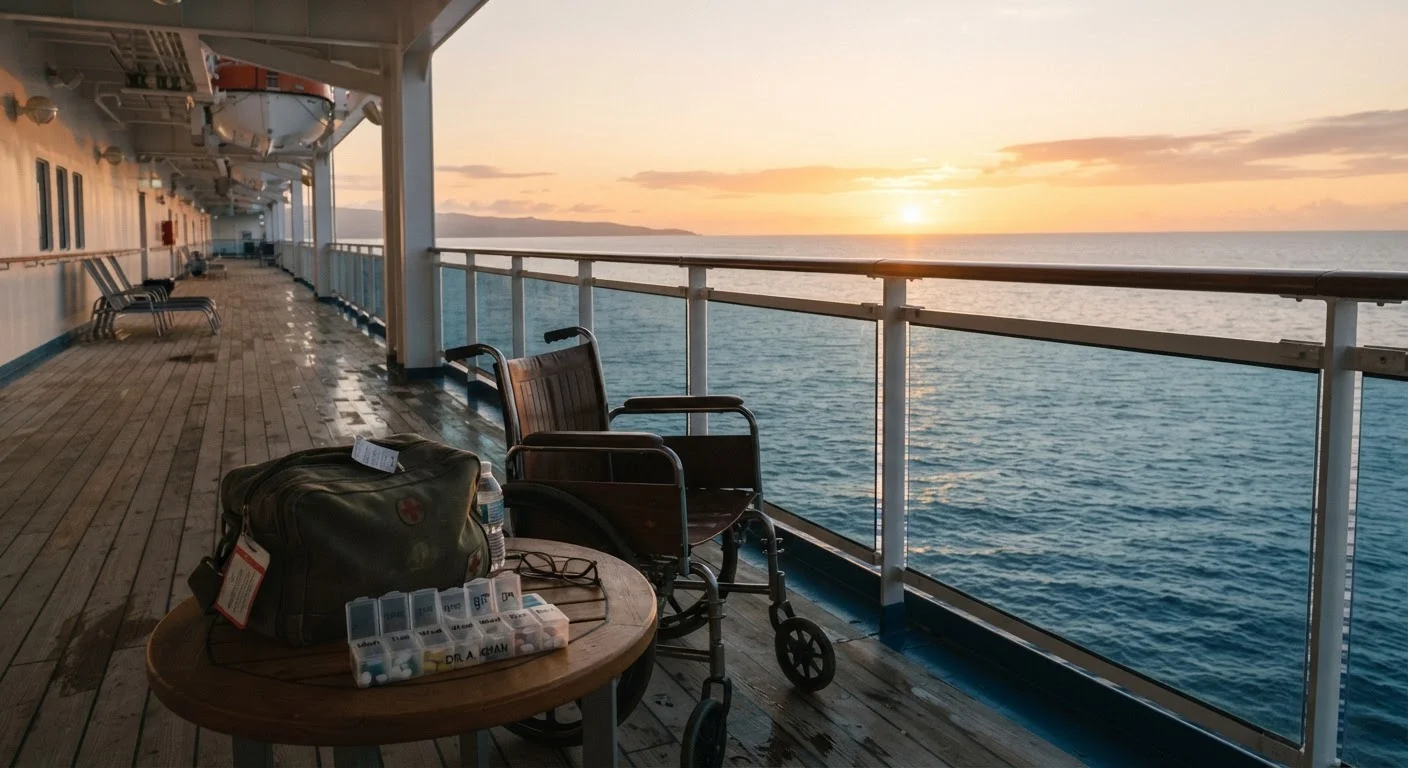
Photo credit: ExploreRoute.net | Travel Made Simple
In this article
General guidance on preparing for a cruise when managing ongoing health needs — from medical facilities onboard to port accessibility.
Key Takeaways
- Consult your physician and disclose your full health history to the cruise line before booking.
- Cruise ship medical centers vary significantly — research the specific vessel's capabilities in advance.
- Carry medications in original labeled containers in carry-on luggage, with quantities exceeding trip length.
- Port accessibility differs dramatically; tender ports and uneven terrain require advance planning.
- Travel insurance that explicitly covers pre-existing conditions is essential, not optional.
- Connecting with the cruise line's accessibility desk early unlocks accommodations most passengers never know exist.
Understanding the Landscape Before You Book
Cruising with a chronic health condition — whether cardiovascular disease, diabetes, COPD, multiple sclerosis, or another ongoing diagnosis — is entirely feasible for many travelers. The key distinction between a smooth voyage and a difficult one almost always comes down to how thoroughly you prepare before the ship leaves port.
Start by evaluating the itinerary itself, not just the destinations. Routes with long sea days, stable tropical climates, and dock-to-pier arrivals are generally more forgiving than itineraries that rely heavily on tender boat transfers or involve extreme temperature swings. Our itinerary evaluation checklist covers port accessibility, tender reliance, and seasonal factors that become especially consequential when managing ongoing health needs.
Ship selection matters just as much as destination. Larger vessels — particularly those built within the last decade — typically carry more robust onboard medical facilities staffed by licensed physicians and registered nurses. Smaller expedition or river vessels may have only a medic and a basic first-aid setup. Request the ship's medical center specifications directly from the cruise line; reputable operators will provide this information willingly.
Talk to the Accessibility Desk, Not Just Reservations
General reservations agents are trained to sell cabins, not to navigate medical logistics. The accessibility or special needs desk operates with different knowledge and authority — they can arrange cabin modifications, coordinate with the ship's medical officer, and flag your booking so crew are informed before you board. This single call often makes the largest difference in overall experience.
What to Do Before You Depart
A pre-cruise medical consultation is non-negotiable. Bring your itinerary to your physician and walk through specific concerns: altitude exposure if port stops include mountainous regions, food safety considerations, medication refrigeration needs, and whether any planned excursions are contraindicated for your condition. Ask for a written letter summarizing your diagnosis, current medications, dosages, and emergency contacts — translated if the itinerary includes non-English-speaking countries.
What you will need
Medication management deserves its own strategy. Pack well beyond what you need — a standard rule of thumb is to bring at least twice the quantity required for the voyage, split across your carry-on and checked luggage. Keep all medications in their original pharmacy-labeled containers; customs and ship security expect this. If you require refrigerated medications such as insulin, contact the cruise line's accessibility or special needs desk to arrange in-cabin refrigeration in advance. Do not assume a standard mini-bar fridge is pharmaceutical-grade.
For a comprehensive pre-departure packing framework, the cruise ship packing list offers scenario-by-scenario guidance that pairs well with condition-specific medication planning.
Travel insurance is where many experienced cruisers with chronic conditions still make costly mistakes. A standard travel protection policy will often exclude pre-existing conditions unless you purchase a policy with a pre-existing condition waiver — typically within a short window after your initial trip deposit. Review policy language carefully and consider consulting an independent insurance broker who specializes in travel coverage.
Pre-Existing Condition Exclusions Are the Norm, Not the Exception
Most standard travel insurance policies do not automatically cover medical events related to pre-existing conditions. The window to purchase a waiver is typically very short after your initial deposit — missing it can leave you financially exposed to costs that reach six figures for emergency medical evacuation from a remote itinerary. Do not delay reviewing your policy terms.
Navigating Ports and Shore Days Safely
Shore excursions present the greatest day-to-day variable. Accessibility at cruise ports ranges from fully equipped modern terminals with elevators, smooth pathways, and air conditioning, to tender landings on uneven docks in remote locations. Before each port day, verify whether the ship docks pierside or anchors offshore requiring a tender transfer — the latter can be physically demanding and may be unsuitable depending on your condition. Our pre-port checklist is a practical reference to run through each morning before disembarking.
Book excursions through the ship when your condition requires guaranteed accessibility. Independent tours can offer better experiences in many cases, but if a medical situation arises ashore and you booked independently, the ship is not obligated to delay departure. Excursions booked through the cruise line carry that protection.
Carry a day kit ashore: medications for a full day plus extras, a copy of your medical letter, your travel insurance emergency contact card, and any medical devices (glucose monitor, inhaler, EpiPen). Hydration needs vary sharply by climate and condition — factor this into your planning, especially in tropical or high-altitude ports.
Travelers managing chronic illness on cruise voyages share meaningful common ground with those planning land-based wellness travel. If you're weighing whether cruising or a structured retreat better suits your health needs, our wellness travel planning guide explores that question in depth.
This article provides general travel planning information only and is not a substitute for personalized medical advice. Always consult a qualified healthcare professional before traveling with a chronic health condition, and verify entry requirements, vaccination needs, and health-related travel restrictions with official government and carrier sources prior to departure.

Author
Cruise Journeys Editorial Team
Cruise Journeys Editorial Team is the collective byline for our editorial team and contributor network. Articles published under this byline or an editorial pen name are researched, written, and reviewed according to our editorial standards for clarity, consistency, and independence before publication.
View all articles →