
The Cruise Ship Packing List That Covers Every Scenario
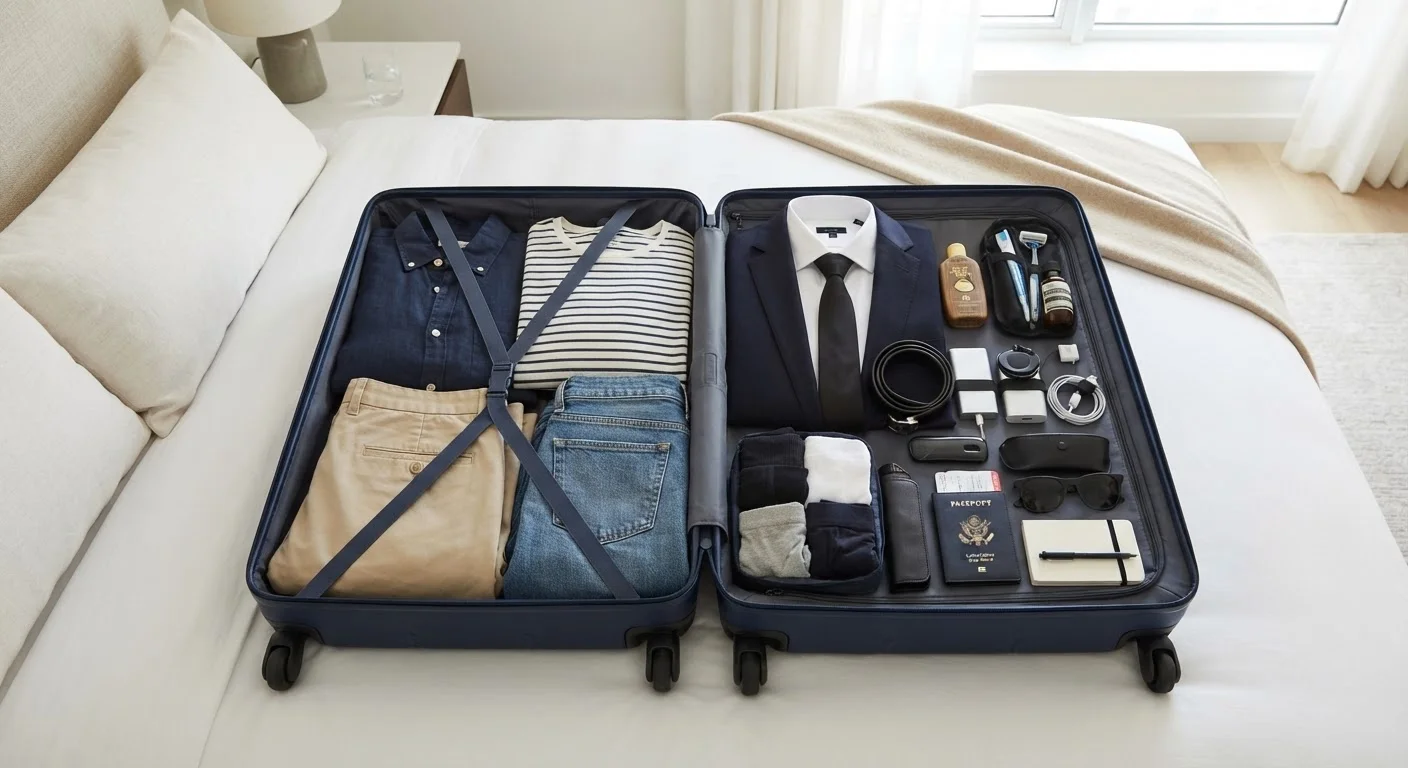
Photo credit: ExploreRoute.net | Travel Made Simple
In this article
A thorough pre-departure checklist covering formal nights, shore excursions, sea days, and everything in between.
Key Takeaways
- Cruise packing must account for formal nights, active shore excursions, sea days, and unexpected weather — all in one bag.
- Cabin storage is limited; packing with a category-by-scenario mindset prevents both overpacking and critical omissions.
- Documentation, medications, and valuables should always travel in your carry-on, never in checked luggage.
- Dress codes vary significantly by cruise line and itinerary — verify requirements before finalising formal wear.
- Shore excursion gear is often overlooked; a small day pack and appropriate footwear are non-negotiable for port days.
Why Cruise Packing Is a Different Beast
A cruise vacation compresses a week's worth of radically different environments into a single voyage. On any given sailing, you might attend a formal captain's dinner, scramble over lava fields in port, lounge poolside at sea, and navigate a busy embarkation terminal — sometimes within 48 hours of each other. That range is what makes packing for a cruise genuinely challenging.
Unlike a point-to-point trip where you can re-purchase forgotten items at a local pharmacy, a ship at sea offers limited resupply options, and onboard shops charge a premium for basics. The cost of forgetting motion sickness medication or a power adapter is far higher than it would be on land.
Before you work through this list, it's worth confirming you've already locked in your itinerary essentials. Our itinerary verification checklist covers port accessibility and visa requirements that can affect what you'll need to carry. If your voyage includes international port stops, cross-reference the pre-trip research checklist for international travel for entry documentation requirements.
Documents and Essentials
Clothing by Scenario
Footwear
Health, Wellness, and Safety
Shore Excursion Gear
Technology and Connectivity
Cabin Comfort and Organisation
Tools and Gear You'll Want on Hand
Before running through the checklist, gather the organisational tools that make packing efficient and retrievable at sea. Packing cubes earn their place on any cruise: cabin drawer space is scarce, and cubes let you locate formal wear or shore gear without excavating an entire suitcase. A small day pack is essential for port days — it shouldn't be an afterthought.
Packing Cubes (set of 4–6)
Organise clothing by category or scenario so you can locate formal wear or shore gear instantly in a compact cabin.
Lightweight Day Pack (20–25L)
Carry essentials during port excursions without the bulk of a full travel bag.
Dry Bag or Waterproof Pouch
Protect your phone, documents, and cash during water-based activities or in heavy rain at port.
Multi-Port USB Charging Hub
Cruise cabin outlets are limited — a hub lets you charge multiple devices simultaneously from a single socket.
Portable Power Bank
Keep phones and cameras charged during full-day shore excursions far from ship power.
Collapsible Tote Bag
Expands luggage capacity for souvenirs on the return journey without adding meaningful weight or bulk.
Cruisers managing ongoing health needs should read our guide to cruising with chronic health conditions before finalising their medical and wellness packing. Port-day preparation goes well beyond gear — see the pre-port checklist for currency, local laws, and re-boarding logistics.
Restricted and Prohibited Items Vary by Cruise Line
Many cruise lines prohibit irons, candles, certain power strips, and some alcoholic beverages brought onboard. Review your specific cruise line's prohibited items list before packing — items confiscated at embarkation are not always returned. Regulations change periodically, so check the official source rather than relying on past experience.
Luggage Arrives at Your Cabin After You Do
Checked bags are delivered to staterooms several hours after embarkation — sometimes not until early evening. Any item you need immediately upon boarding (medications, a change of clothes, embarkation documents) must travel in your carry-on. This is a common source of frustration that is entirely avoidable with deliberate planning.
Using This Checklist Effectively
Work through each group in order during a dedicated packing session — ideally two to three days before departure, leaving a buffer to source anything missing. Mark must items first, confirm they're packed, then layer in should and nice-to-have items to fill remaining bag space. For formal nights specifically, try garments on before packing; a dress that fitted last season may need attention before it leaves the house.
Never Check Your Medications or Documents
Prescription medications, travel insurance paperwork, passports, and boarding passes must stay in your personal carry-on at all times during transit. If your checked luggage is delayed or misrouted — a real possibility when flying to a port — these items cannot be replaced before the ship departs. Ships operate on fixed schedules and will not delay departure for late-arriving passengers or lost bags.
If you're flying to your embarkation port, pack a change of clothes, all medications, and critical documents in your carry-on. Airlines occasionally misroute luggage, and ships do not wait. For everything that applies on the flight itself, see the in-flight comfort checklist. Once aboard, understanding onboard etiquette will help you navigate dress codes and dining norms with confidence.

Author
Cruise Journeys Editorial Team
Cruise Journeys Editorial Team is the collective byline for our editorial team and contributor network. Articles published under this byline or an editorial pen name are researched, written, and reviewed according to our editorial standards for clarity, consistency, and independence before publication.
View all articles →