
The Hidden Costs Cruisers Often Overlook Before Sailing
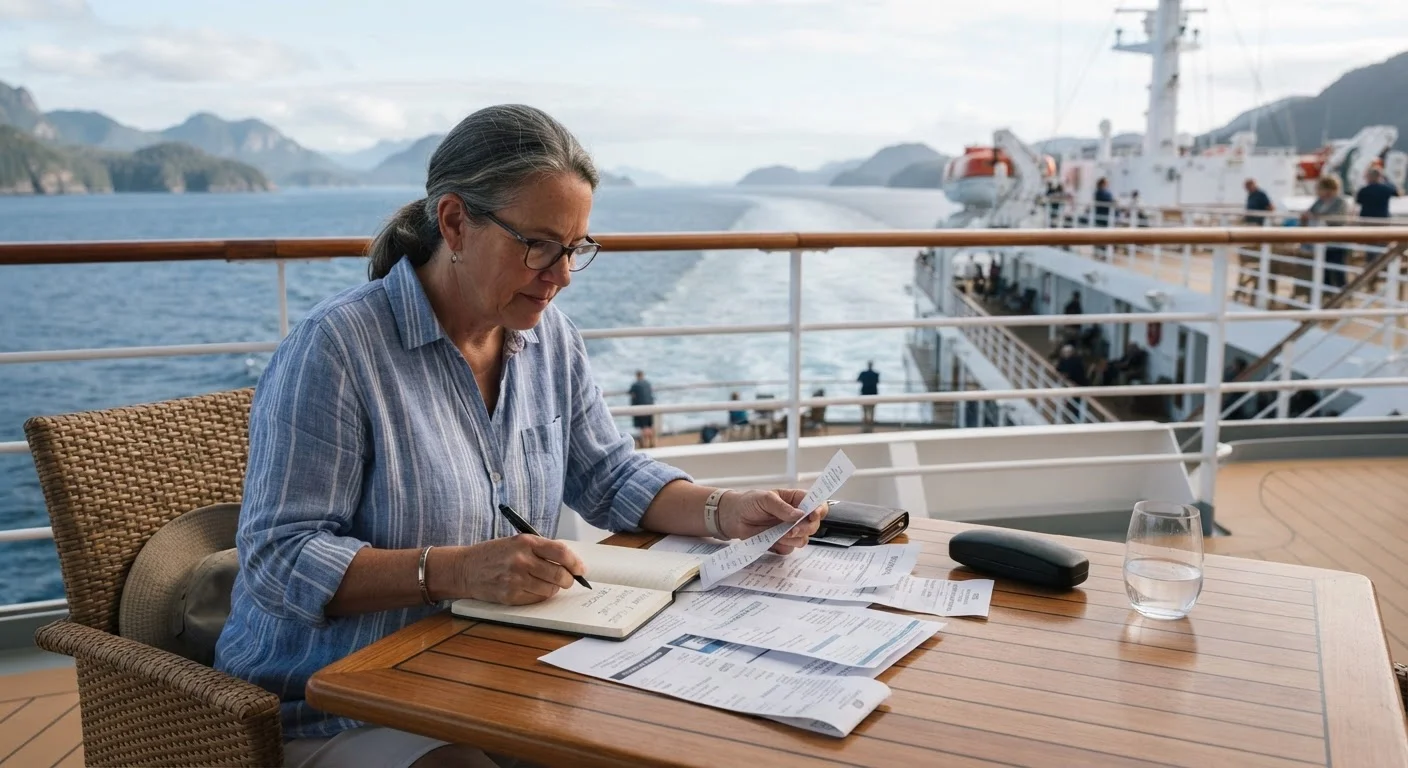
Photo credit: ExploreRoute.net | Travel Made Simple
Gratuities, port fees, Wi-Fi, and specialty dining — understand the extra expenses that can quietly inflate your cruise budget.
Key Takeaways
- Automatic gratuities can add $15–$25 per person per day on top of your base cruise fare.
- Port fees and government taxes are frequently excluded from advertised cruise prices.
- Onboard Wi-Fi, specialty dining, and beverage packages carry significant additional costs.
- Pre-purchased shore excursions through third parties can cost substantially less than ship-booked tours.
- Building a realistic cruise budget requires accounting for pre- and post-cruise travel expenses.
Why Cruise Budgets So Often Go Over
The appeal of a cruise is partly psychological: one price, one payment, one departure. But the fare you see advertised rarely reflects what you'll actually spend by the time you disembark. Experienced travelers who've mastered travel budgeting often find that cruises introduce an entirely new category of overlooked expenses. Understanding where those costs hide — before you board — is what separates a genuinely relaxing voyage from one that produces sticker shock on the final statement.
The mistakes below are consistent across cruise lines, ship sizes, and itinerary types. Each one is avoidable with a bit of pre-sailing research.
Ignoring automatic gratuities when calculating the total fare.
Why it happens: Cruise lines typically quote base fares without gratuities, and many travelers assume tipping is discretionary — as it is at hotels or restaurants on land.
Treating the advertised fare as the all-in price, overlooking port fees and government taxes.
Why it happens: Marketing materials lead with the base cabin rate, and mandatory port charges, embarkation fees, and government taxes are buried in the booking summary.
Underestimating the cost of onboard connectivity and entertainment extras.
Why it happens: Travelers accustomed to included Wi-Fi at hotels assume shipboard internet access works the same way. It generally does not — internet packages are a separate, often expensive purchase.
Booking all shore excursions through the ship without comparing independent alternatives.
Why it happens: Ship-organized excursions feel convenient and safe, and many cruisers assume they represent fair market pricing. The convenience premium is real but rarely disclosed.
Neglecting pre- and post-cruise travel costs in the overall budget.
Why it happens: Attention naturally focuses on the sailing itself. Flights to the embarkation city, overnight hotel stays, and airport transfers feel like separate logistics rather than part of the cruise budget.
Assuming beverage packages always represent good value.
Why it happens: Cruise lines market drink packages aggressively, and the per-day rate can sound reasonable when framed against the cost of individual cocktails onboard.
Costs That Accumulate Faster Than You Expect
Beyond individual line items, it's the compounding effect that catches most cruisers off guard. Gratuities applied daily, a drink or two charged to your stateroom account each evening, one specialty restaurant dinner mid-voyage, a ship-booked shore excursion at each port — none of these feels large in isolation. Together, they can double your effective per-person cost over a seven-night sailing.
$1,000+
Typical onboard extras per couple per week
Industry analyses consistently show that gratuities, beverage charges, and specialty dining can add over $1,000 per couple on a standard seven-night sailing.
30–50%
Premium above base fare from common add-ons
Travel finance researchers have estimated that mandatory fees and popular optional purchases routinely add 30–50% above the advertised cabin rate for many mainstream cruise lines.
For a fuller picture of how hidden charges accumulate across all travel types, see our guide on expenses travelers routinely underestimate. And if you're considering going it alone on your next voyage, solo cruising trade-offs deserve their own budget scrutiny — single-supplement fees are among the steepest hidden costs in the industry.
Onboard Account Balances Can Surprise You
Most cruise lines link a credit card to your stateroom key, making every purchase frictionless — which is precisely the risk. Small charges accumulate invisibly throughout the voyage. Check your onboard account statement every two to three days rather than waiting until the final night, when disputing errors becomes significantly harder.
Planning shore time effectively also matters financially. Many ports offer independent options at a fraction of ship-organized costs — explore the Ports & Shore Life hub for destination-specific guidance. And before you book anything, consider building a trip cost estimate using the framework in how to estimate the true cost of a trip — the methodology applies directly to cruise planning.

Author
Cruise Journeys Editorial Team
Cruise Journeys Editorial Team is the collective byline for our editorial team and contributor network. Articles published under this byline or an editorial pen name are researched, written, and reviewed according to our editorial standards for clarity, consistency, and independence before publication.
View all articles →