
Solo Cruising: The Trade-Offs Worth Understanding Before You Sail Alone
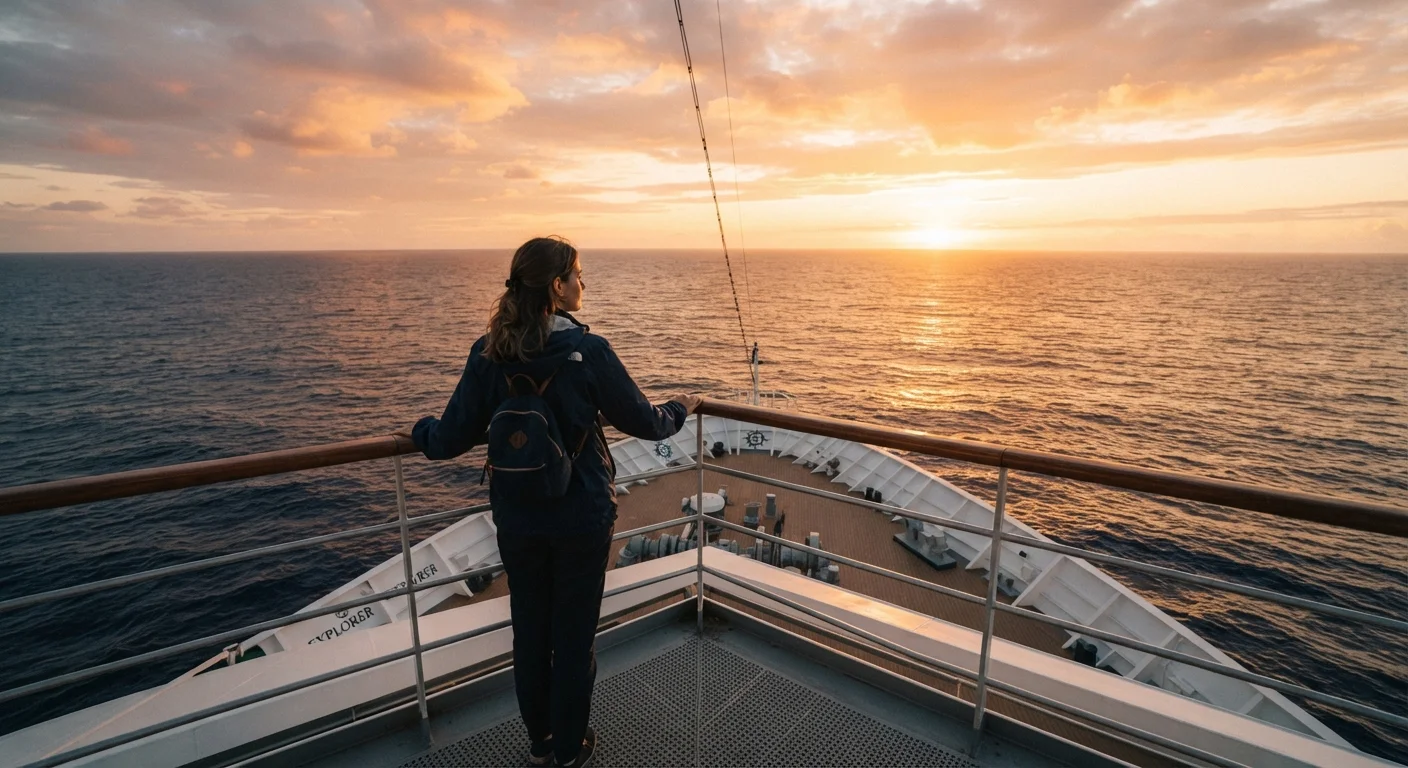
Photo credit: ExploreRoute.net | Travel Made Simple
In this article
A balanced look at the genuine advantages and real drawbacks of taking a cruise holiday by yourself.
Key Takeaways
- Solo cruisers gain complete itinerary control but typically pay a single supplement fee of 10–100% above the per-person double rate.
- Modern cruise ships increasingly offer dedicated solo cabin categories that eliminate or reduce the single supplement.
- Onboard social infrastructure makes solo cruising more socially accessible than most solo land-based trips.
- Shore time decisions — excursions vs. independent exploration — carry higher personal stakes when there's no travel companion to consult.
- Safety awareness and pre-trip planning are more critical when you have no one to rely on at sea or ashore.
Complete schedule autonomy at sea and in port
Every excursion, dining time, and onboard activity is chosen without negotiation. This compounds meaningfully on longer itineraries where even small daily compromises add up.
Built-in social opportunities without obligation
Cruise ships provide more natural social infrastructure than almost any other solo travel format — shared tables, group tours, and organized events create easy interaction points that can be opted into or out of.
Logistics bundled into a single booking
Transport between ports, accommodation, and the majority of meals are covered under one reservation, reducing the daily planning burden that weighs on solo land travelers.
Self-paced exploration of multiple destinations
A single cruise can deliver access to four, six, or more ports without the solo traveler having to manage individual transfers, hotel check-ins, or inter-city routing at each stop.
Genuine solitude available when desired
A private cabin, solo balcony time, and the ability to eat alone without social friction gives introverted travelers a level of restorative space that group trips rarely allow.
Single supplement significantly inflates cabin cost
Many cruise lines charge 150–200% of the per-person double rate for solo occupancy of a standard cabin, effectively doubling the accommodation expense relative to what a traveler in a pair would pay.
Full cognitive load of every decision falls on you
Planning, navigation, in-port problem-solving, and itinerary adjustments rest entirely with one person, with no companion to share research, catch errors, or provide a second perspective.
No built-in safety net ashore or onboard
If something goes wrong — a missed tender, a health issue, or a logistical problem in port — there is no travel companion to assist, advocate, or stay with belongings while you seek help.
All additional costs absorbed by one budget
Gratuities, specialty dining, excursions, and Wi-Fi packages are not shared between two people, making the total per-trip spend considerably higher than the headline cabin rate suggests.
Some ships still offer limited solo-specific options
While the industry has improved, many older or larger ships still lack dedicated solo cabins, leaving single travelers dependent on supplement negotiations or less desirable interior cabin workarounds.
Why Solo Cruising Is Having a Moment
The cruise industry has shifted noticeably toward solo travelers. What was once an afterthought — a market segment penalized with steep single supplements and few purpose-built amenities — has become a deliberate focus for many lines, partly in response to rising demand from independent travelers of all ages. Understanding why solo cruising appeals requires looking honestly at what the format actually offers a person traveling alone, compared with other solo trip styles.
Unlike solo land travel, where you must arrange every transfer, accommodation, and meal independently, a cruise bundles the logistics of movement, lodging, and dining into a single booking. For a solo traveler, that structural simplicity is not trivial — it removes an entire category of daily friction. At the same time, how itinerary-building changes when you're alone is worth understanding before you commit to any format, cruise or otherwise.
The Real Advantages of Going It Alone at Sea
Solo cruising offers a combination of benefits that are difficult to replicate in almost any other travel format.
Complete schedule autonomy at sea and in port
Every excursion, dining time, and onboard activity is chosen without negotiation. This compounds meaningfully on longer itineraries where even small daily compromises add up.
Built-in social opportunities without obligation
Cruise ships provide more natural social infrastructure than almost any other solo travel format — shared tables, group tours, and organized events create easy interaction points that can be opted into or out of.
Logistics bundled into a single booking
Transport between ports, accommodation, and the majority of meals are covered under one reservation, reducing the daily planning burden that weighs on solo land travelers.
Self-paced exploration of multiple destinations
A single cruise can deliver access to four, six, or more ports without the solo traveler having to manage individual transfers, hotel check-ins, or inter-city routing at each stop.
Genuine solitude available when desired
A private cabin, solo balcony time, and the ability to eat alone without social friction gives introverted travelers a level of restorative space that group trips rarely allow.
The ship's built-in social calendar — trivia nights, specialty dinners, cocktail hours, and port-day tours — creates natural interaction points without any obligation to participate. Many seasoned solo cruisers describe the balance as ideal: genuine solitude when you want it, easy company when you don't. That social architecture is one reason solo wellness travelers increasingly look to cruises as a structured retreat option.
Port flexibility is another underappreciated advantage. When you're not negotiating with a companion, every shore-day decision is yours alone — you can choose between organized excursions or independent exploration without compromise. That autonomy compounds across a 10- or 14-night itinerary.
The Trade-Offs You Need to Price In
No honest assessment of solo cruising ignores the financial reality. The single supplement — the surcharge cruise lines apply when a cabin designed for two is occupied by one — remains the most significant structural disadvantage.
Single supplement significantly inflates cabin cost
Many cruise lines charge 150–200% of the per-person double rate for solo occupancy of a standard cabin, effectively doubling the accommodation expense relative to what a traveler in a pair would pay.
Full cognitive load of every decision falls on you
Planning, navigation, in-port problem-solving, and itinerary adjustments rest entirely with one person, with no companion to share research, catch errors, or provide a second perspective.
No built-in safety net ashore or onboard
If something goes wrong — a missed tender, a health issue, or a logistical problem in port — there is no travel companion to assist, advocate, or stay with belongings while you seek help.
All additional costs absorbed by one budget
Gratuities, specialty dining, excursions, and Wi-Fi packages are not shared between two people, making the total per-trip spend considerably higher than the headline cabin rate suggests.
Some ships still offer limited solo-specific options
While the industry has improved, many older or larger ships still lack dedicated solo cabins, leaving single travelers dependent on supplement negotiations or less desirable interior cabin workarounds.
Beyond cost, solo travelers carry the full cognitive load of every decision. There is no one to split research with, no backup when plans shift in port, and no companion to provide a second opinion on a sketchy-looking taxi rank. The hidden costs that inflate any cruise budget can feel more acute when you're absorbing them alone — gratuities, specialty dining, Wi-Fi, and shore excursions all land on one account.
150–200%
Typical single supplement as % of double rate
Industry-standard single supplements on cruise lines without dedicated solo programs commonly range from 50% to 100% above the per-person double occupancy rate, effectively pricing solo cabins at 150–200% of the shared cost.
~25%
Share of cruise passengers traveling solo
Solo travelers are estimated to account for roughly a quarter of cruise passengers on some itineraries, a proportion that has grown steadily as cruise lines have responded with studio cabin programs and single-friendly pricing.
Connectivity is a separate consideration worth flagging. Managing Wi-Fi and data at sea matters more as a solo traveler — staying in touch with people at home is a practical safety net, not just a comfort.
Practical Steps That Change the Calculus
Several strategies meaningfully reduce the disadvantages without eliminating the advantages.
Seek solo-specific cabin programs. A growing number of ships now feature purpose-built studio cabins at single occupancy rates with no supplement. These typically come with dedicated common spaces — solo lounges — that function as informal social hubs without the pressure of formal dining room seating.
Time your booking deliberately. Some lines reduce or waive the single supplement on specific sailings, particularly repositioning cruises or shoulder-season itineraries. This requires flexibility in dates and routing, which solo travelers — unencumbered by a companion's schedule — are often better positioned to exploit than couples or groups.
Plan shore time with solo logistics in mind. Ship-sponsored excursions carry a built-in safety advantage for solo travelers: the ship waits for its own tours. Independent exploration, while often richer, requires careful planning on timing and communication. Review the trade-offs between ship-booked and independent port tours before committing either way.
Safety and Entry Requirements for Solo Travelers
Solo travelers should verify all visa, health, and entry requirements for every port on their itinerary well in advance of sailing — requirements can change, and the absence of a travel companion makes advance preparation more critical. Always consult official government travel advisories and your cruise line's pre-departure documentation for current, destination-specific guidance. This article provides general information only and does not substitute for official or professional advice.
Packing also looks different when you're handling every bag yourself at embarkation, transfers, and beyond. The carry-on versus checked-luggage debate is worth revisiting through a solo-traveler lens before you pack.

Author
Cruise Journeys Editorial Team
Cruise Journeys Editorial Team is the collective byline for our editorial team and contributor network. Articles published under this byline or an editorial pen name are researched, written, and reviewed according to our editorial standards for clarity, consistency, and independence before publication.
View all articles →