
Port Days That Go Wrong: Mistakes Cruisers Keep Making Ashore
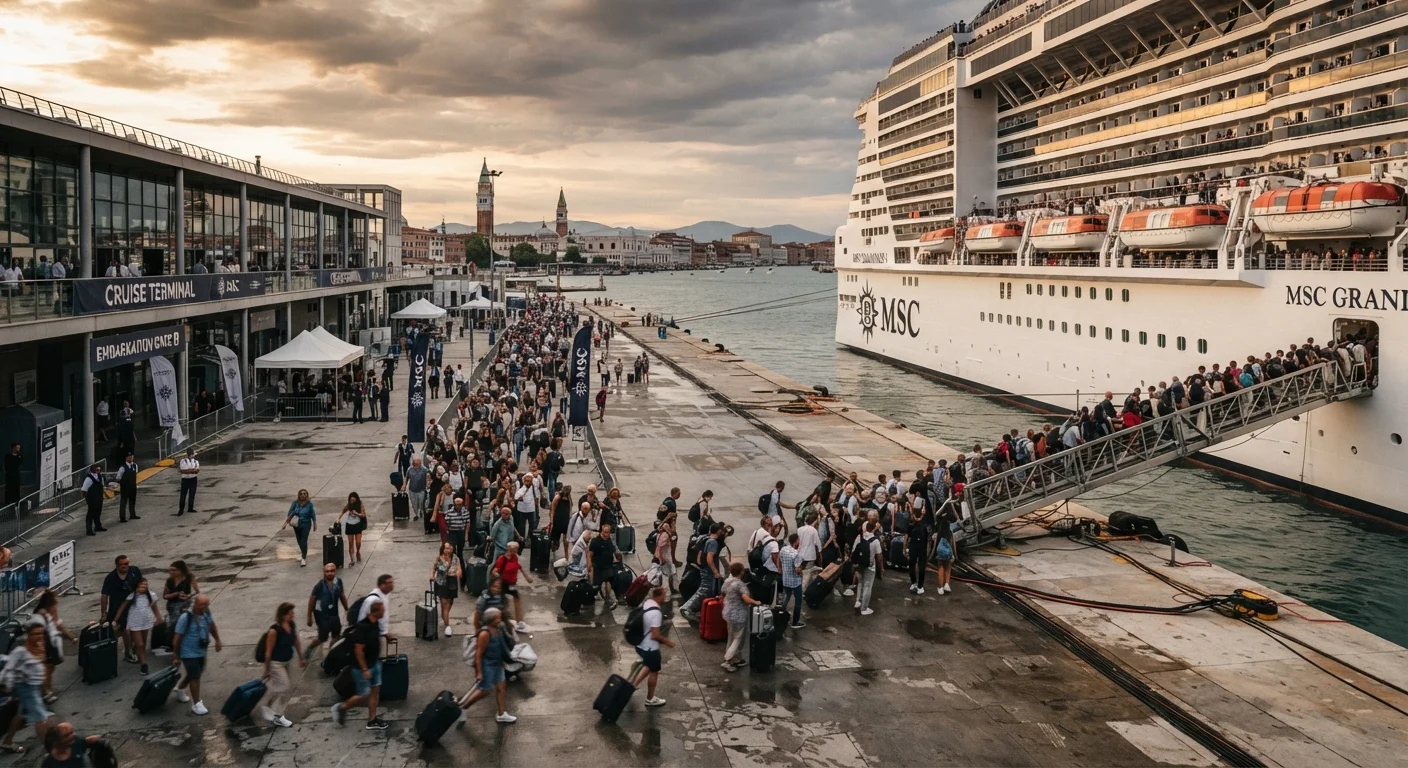
Photo credit: ExploreRoute.net | Travel Made Simple
Missed ship departures, tourist traps, and poor planning can ruin a port stop. Here's what goes wrong and how to sidestep it.
Key Takeaways
- The ship will leave without you — all-aboard time is a hard deadline, not a suggestion.
- Overloaded itineraries are the most common reason port days feel rushed and unsatisfying.
- Independent travelers who skip currency and transport research lose hours to avoidable problems.
- Pier-side vendor traps and tourist-area markups cost cruisers significantly more than necessary.
- Tender ports require extra planning — underestimating them can cost you an hour ashore.
Why Port Days Go Off the Rails
A port day has a fixed clock. From the moment the gangway opens to the all-aboard call, most cruisers have somewhere between six and ten hours ashore — and that window shrinks faster than almost anyone anticipates. Transport delays, wrong assumptions about local infrastructure, and overpacked schedules are the most consistent reasons a port day ends in frustration rather than satisfaction.
The mistakes below are not unusual or exotic. They are the same patterns the team sees across itineraries, from Caribbean ports of call to Baltic capitals to Southeast Asian anchorages. Understanding why they happen is the first step toward avoiding them. For a fuller picture of why certain ports get skipped or swapped before you even arrive, learn how itinerary disruptions actually work.
Confusing all-aboard time with departure time and cutting return margins too fine.
Why it happens: Cruisers often assume they have more flexibility than they do, treating all-aboard time as a suggestion rather than a legal deadline with real consequences.
Trying to cram too many sites into a six-to-eight-hour port window.
Why it happens: The excitement of a new destination — and the fear of missing out — pushes cruisers to build itineraries that would challenge a full day on land, ignoring travel time between sites.
Arriving at a tender port without understanding the embarkation process.
Why it happens: Many cruisers do not distinguish between dock ports and tender ports until they are already in a queue, unaware that small-boat transfers can add 30–60 minutes each way.
Not researching local transport or currency before stepping off the ship.
Why it happens: It is easy to assume that taxis, card payments, or ride-share apps will be available and familiar — a reasonable expectation at home that frequently fails in smaller international ports.
Spending the entire port day within walking distance of the cruise terminal.
Why it happens: The pier area is safe, familiar, and heavily marketed — it takes deliberate effort to move past it, especially for first-time visitors to a destination.
Ignoring the cumulative environmental and cultural impact of large group arrivals.
Why it happens: Individual travelers rarely think of themselves as part of a crowd, even when thousands of cruisers disembark simultaneously at fragile or heritage sites.
Planning Smarter Before You Step Ashore
The cruisers who consistently get the most from their port days share a common habit: they treat the evening before a port stop as preparation time, not downtime. A few targeted questions — What are the transport options? Is this a tender port? What time does the last reliable return service run? — prevent the majority of problems described above.
The Ship Will Not Wait for You
All-aboard time is the hard cut-off — not a rough guideline. Ships operate on strict port schedules tied to tidal windows, berth fees, and maritime law. If you are not back on board, the vessel will sail. Any costs incurred to rejoin the ship at the next port — flights, accommodation, transfers — fall entirely on you.
Port days can also carry hidden costs that accumulate quickly when cruisers are unprepared. Shopping near the terminal is almost always more expensive than the same goods a few blocks inland, and currency exchange at pier-side kiosks typically applies unfavorable rates. Strategies for spending wisely ashore can stretch both your time and your budget considerably.
Don't Rely on Ship Excursions as a Safety Net
While ship-organized excursions typically guarantee a return before all-aboard time, independent plans carry no such protection. Build in a minimum 60-to-90-minute buffer between your planned return and the posted all-aboard time — more if you are relying on local transport, which can be unpredictable.
Finally, resist the impulse to treat every port as a box to be checked. A relaxed, well-chosen hour at a single market or coastal walk often delivers more than a frantic circuit of five sites. For a deeper look at the over-scheduling trap that undermines so many travel days, see why most itineraries try to do too much. The same principle applies just as pointedly to a single day ashore.
6–10 hrs
Typical usable time ashore per port call
Most cruise itineraries allocate between six and ten hours at each port, including docking and departure procedures.
30–60 min
Time lost each way at a tender port
Small-boat transfers at anchorage ports can consume up to an hour of shore time each direction depending on queue length and sea conditions.

Author
Cruise Journeys Editorial Team
Cruise Journeys Editorial Team is the collective byline for our editorial team and contributor network. Articles published under this byline or an editorial pen name are researched, written, and reviewed according to our editorial standards for clarity, consistency, and independence before publication.
View all articles →