
Myths About Driving Across Remote Terrain That Could Get You in Trouble
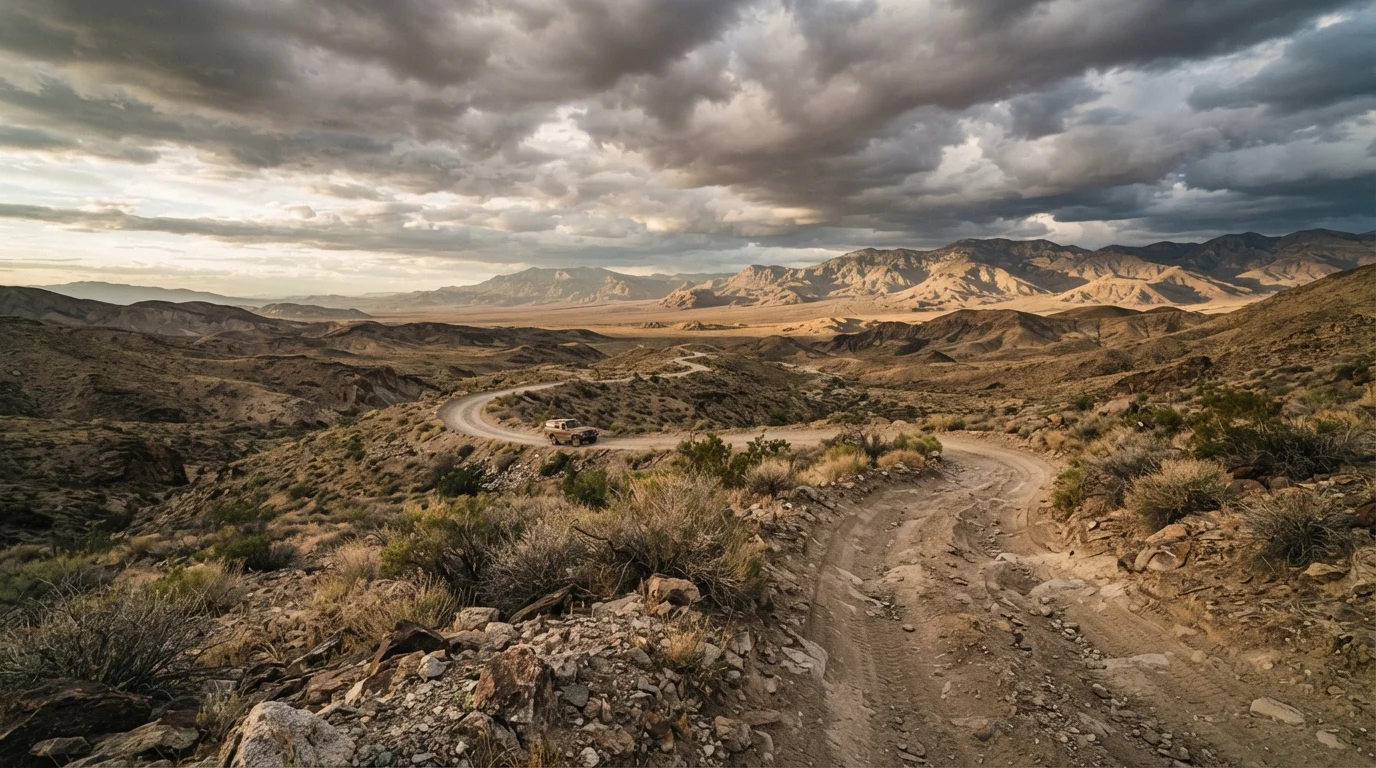
Photo credit: ExploreRoute.net | Travel Made Simple
In this article
Common assumptions about off-highway driving — from tyre pressure to water crossings — examined against what experienced drivers actually know.
Key Takeaways
- Lowering tyre pressure improves traction on soft or uneven terrain — up to a point.
- 4WD does not prevent rollovers or compensate for poor judgment on steep grades.
- Water crossings are among the most dangerous remote-driving hazards, even in dry seasons.
- Cell service cannot be assumed; carry a dedicated communication device on remote routes.
- Most remote road damage happens to vehicles that were technically capable but poorly prepared.
Why Remote Driving Myths Are Especially Costly
Misreading a situation on a city street usually means a fender bender and a phone call. Misreading one in a canyon fifty miles from the nearest town can mean a multi-day ordeal or worse. The myths that circulate about off-highway driving tend to be plausible-sounding half-truths — things that might work in mild conditions but fall apart when terrain gets serious. That gap between assumption and reality is where most backcountry incidents originate.
What follows isn't meant to discourage remote travel — quite the opposite. The hidden scenic drives that reward prepared drivers are among the most spectacular experiences available in North America. The goal here is to replace comfortable assumptions with the kind of grounded knowledge that keeps those experiences safe and repeatable.
Myth
Deflating your tyres a little is bad for them and unnecessary on dirt roads.
Fact
Controlled tyre deflation — often called 'airing down' — meaningfully improves traction and ride quality on soft, rocky, or corrugated terrain.
Running lower pressure spreads the tyre's contact patch across more surface area, reducing the chance of getting stuck in sand or bouncing dangerously over washboard. Most experienced off-road drivers drop to somewhere between 18 and 25 PSI depending on the surface, then re-inflate before returning to pavement. The critical part is carrying a reliable portable compressor so you can restore proper pressure before highway speeds — driving highway speeds on aired-down tyres causes dangerous handling and rapid wear.
Myth
A 4WD or AWD vehicle can handle almost any remote terrain without special preparation.
Fact
Drivetrain capability is only one variable. Ground clearance, tyres, recovery gear, and driver skill matter just as much.
Four-wheel drive transfers power to all wheels, but it does nothing to improve braking distance, reduce rollover risk on side slopes, or help if you high-center on a rock. Many rescues in remote areas involve capable-seeming SUVs whose drivers overestimated what the badge on the tailgate actually means. Proper preparation includes knowing your vehicle's approach and departure angles, carrying a hi-lift jack and traction boards, and — critically — never driving remote routes solo without a communication plan. See our overview of roadside emergencies every driver should know for practical recovery basics.
Myth
If the water looks calm and shallow, it's safe to drive through.
Fact
Visual assessment of water depth and current is notoriously unreliable, and conditions can change rapidly.
Murky water hides drop-offs, submerged rocks, and soft creek beds that can swallow a wheel instantly. Even a trickle flowing over a road can indicate saturated ground that will mire a vehicle. Flash flooding — common in slot canyon country and desert washes — can send a wall of water through a dry-looking crossing with almost no warning. The rule followed by experienced backcountry drivers: if you can't physically wade the crossing first and confirm depth and bottom firmness, you don't drive it.
Myth
You can rely on your phone's GPS and maps app in remote areas.
Fact
Cellular GPS works without signal, but map data often requires a download, and satellite positioning can fail in deep canyons or dense forest.
Many travelers confuse 'GPS' (the satellite positioning system) with 'navigation' (which requires map data). A phone can show your dot on a blank screen without a cached map. More importantly, calling for help requires cellular service — which is absent across enormous stretches of the American West. A dedicated personal locator beacon (PLB) or satellite messenger device is the only reliable emergency communication option in true backcountry. Download offline maps before departure, and always carry a paper topo map as a backup for routes through national forest or BLM land. Our guide to first-time remote wilderness travel covers navigation fundamentals in more depth.
Myth
Remote roads are clearly marked with difficulty ratings, like ski runs.
Fact
Most backcountry and forest roads carry no standardized ratings, and conditions vary dramatically by season and recent weather.
A road described as 'passable for high-clearance vehicles' in a summer trip report may be deeply rutted after spring snowmelt or washed out after monsoon rains. The U.S. Forest Service maintains thousands of miles of roads under different classifications, but signage is inconsistent and not calibrated to your specific vehicle. Research should combine recent trip reports from online communities, ranger station calls before departure, and realistic self-assessment of your rig. National forest roads operate under different rules and conditions than the paved parkways most drivers are used to.
Preparation Beats Capability Every Time
The pattern across most backcountry incidents is consistent: the vehicle was capable enough, but the preparation wasn't. Drivers who venture onto remote terrain without recovery gear, a communication plan, or realistic knowledge of road conditions are essentially betting that nothing will go wrong. In remote terrain, that's a bet with steep odds.
Never Drive Remote Routes Alone Without a Plan
Solo remote driving is a legitimate choice, but it requires a higher standard of preparation. Always file a trip plan with a trusted contact that includes your route, expected return time, and instructions for when to call for help. A satellite communicator dramatically reduces the risk of an unassisted emergency going undetected for days.
Before any serious remote route, build a pre-departure checklist: confirm current road conditions with the relevant land management agency, ensure your spare is full-size and properly inflated, carry at least a day's worth of water and food beyond what you expect to need, and leave a detailed itinerary with someone who will raise an alarm if you don't check in. These habits cost almost nothing and close most of the gap between capability and safety.
If you're new to the logistics of remote overnight travel, it's also worth separating the myths about accommodation from the realities — our piece on remote lodging misconceptions is a useful counterpart to the driving side of the equation.
~80%
Of backcountry rescues involve preventable situations
Search and rescue agencies and wilderness safety organizations broadly estimate that the large majority of backcountry incidents result from inadequate preparation rather than unforeseeable events.
6 inches
Water depth that can cause loss of vehicle control
The Federal Emergency Management Agency (FEMA) notes that just six inches of moving water can cause a driver to lose control of a standard passenger vehicle.

Author
Road Trip Culture Editorial Team
Road Trip Culture Editorial Team is the collective byline for our editorial team and contributor network. Articles published under this byline or an editorial pen name are researched, written, and reviewed according to our editorial standards for clarity, consistency, and independence before publication.
View all articles →