
Planning a Route That Rewards the Journey, Not Just the Destination
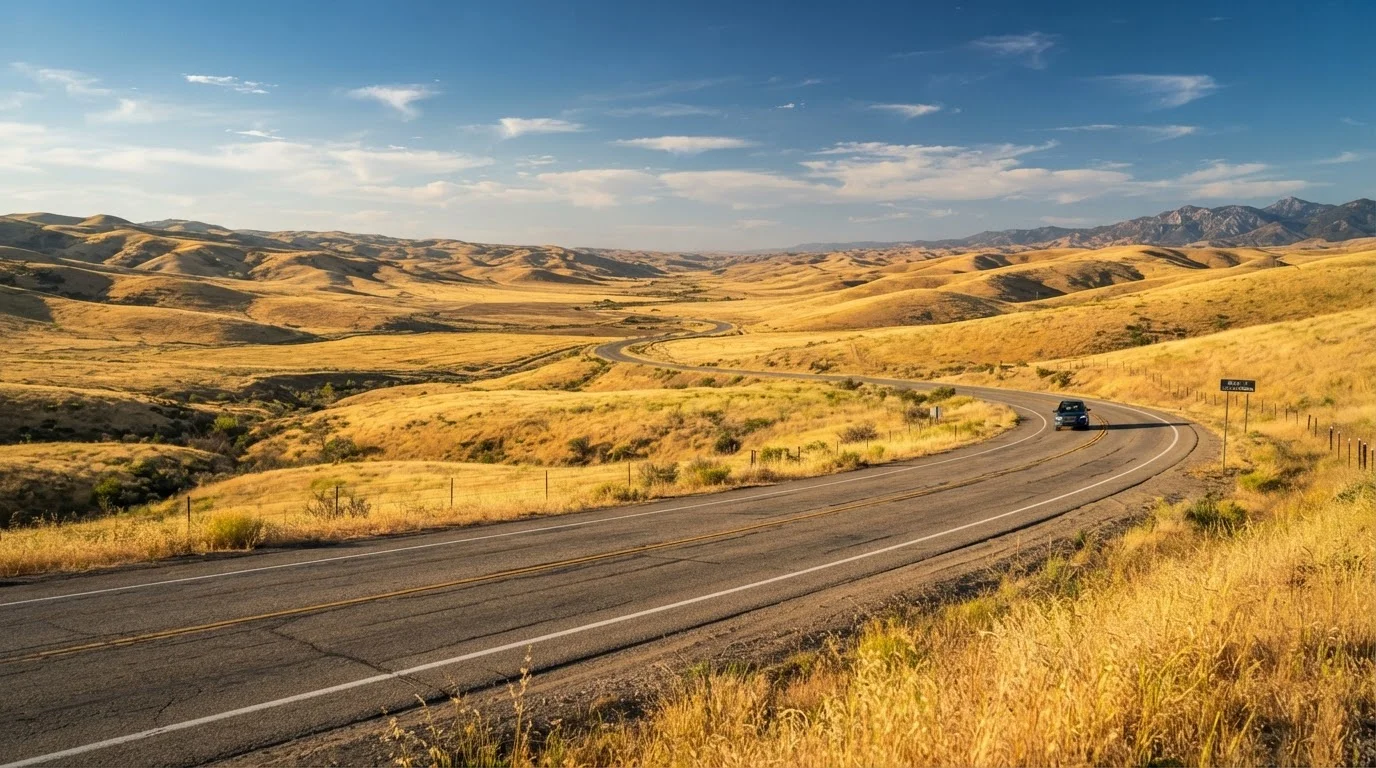
Photo credit: ExploreRoute.net | Travel Made Simple
In this article
Learn how to map a road trip that balances driving time with meaningful stops, scenic detours, and realistic daily mileage.
Key Takeaways
- Capping daily mileage at 250–300 miles leaves room for spontaneous stops and reduces fatigue.
- Anchoring your route to two or three compelling stops creates structure without over-scheduling.
- Scenic detours and alternate highways often deliver more reward than the fastest route.
- Overnight stop placement matters as much as daytime itinerary when planning a road trip.
- Building one buffer day per four to five travel days prevents small delays from derailing the whole trip.
Why Route Design Is the Heart of a Good Road Trip
Most people plan a road trip by identifying a destination and then plotting the fastest path there. That approach treats driving as overhead — a cost you pay to arrive somewhere. The better framework flips that: the drive is the experience, and the destination is simply where you sleep at the end of it.
Good route design isn't complicated, but it does require a few deliberate choices made before you leave the driveway. It means knowing how many miles you can genuinely enjoy in a day (not just survive), where to sleep so tomorrow's drive starts well, and which detours are worth the extra time. It also means resisting the temptation to fill every hour — because the moments that define a road trip almost always arrive unscheduled.
Whether you're exploring America's iconic road trip corridors or piecing together your own route through lesser-traveled territory, the principles below apply equally. For those building a multi-day itinerary from scratch, the itinerary building hub offers complementary frameworks for structuring any length of trip.
What you will need
How to Build Your Route Step by Step
The following steps work whether you're planning a weekend loop or a two-week cross-country drive. Follow them in order — each one informs the next.
Road atlas or state highway maps
Provides a wide-angle view of route options and highlights scenic byways that GPS apps often skip.
Digital mapping app (e.g., Google Maps, Apple Maps)
Used to estimate drive times, check real-time conditions, and locate rest stops or fuel along the route.
Notebook or trip-planning spreadsheet
Records daily mileage targets, anchor stops, and accommodation options in one place.
State tourism or DOT websites
Official sources for scenic byway designations, road closures, and seasonal access information.
Establish your anchor stops first
Before drawing a single line on a map, identify two or three places that genuinely excite you — a national park, a specific town, a canyon overlook. These become your anchors. Everything else builds around them. Anchors give your route a spine without locking every hour into a rigid schedule. Limit yourself to three anchors per week of travel; more than that and you're building an itinerary, not a road trip.
Set a realistic daily mileage ceiling
A sustainable daily mileage for a road trip — one that includes actual stops, meals, and exploration — sits between 200 and 300 miles for most travelers. Plug your anchor stops into a mapping tool and divide total mileage by travel days. If the daily average exceeds 300 miles, either add a travel day or cut an anchor. Pushing past that ceiling consistently turns the trip into a commute. See what lower daily mileage does for a road trip for a deeper look at the trade-offs.
Research and layer in scenic detours
Once your anchor-to-anchor corridor is mapped, look for designated scenic byways, state routes, or historic highways that run parallel to or intersect your main path. America's highway system is laced with these alternatives — many pass through landscapes the interstates completely bypass. State DOT websites and National Scenic Byways resources are reliable starting points. Add one or two detours per travel segment, keeping each detour under 45 minutes of added drive time so they enhance rather than derail the day.
Place overnight stops strategically
Overnight stop location shapes the next day's driving as much as that day's. Aim to end each day within striking distance of the next morning's first interesting stop — not just at the nearest town with lodging. Cross-reference your mileage ceiling with accommodation options roughly every 200–250 miles. This keeps departure times flexible and avoids the trap of spending the first two hours of each day covering ground you should have covered the night before. For a full comparison of accommodation types suited to road travelers, see overnight stops on a road trip.
Build in at least one buffer day
For every four to five travel days, block one day with no mileage goal — a town you stay in an extra night, a trailhead you didn't plan to visit, or simply a slow morning with nowhere to be. Buffer days absorb the unexpected: weather, road construction, or discovering a place worth lingering in. Trips without buffer days are always one flat tire away from a cascading schedule failure. This connects directly to why most itineraries try to do too much — over-scheduling is the single most common road trip mistake.
Do a final sanity check before you leave
Print or download an offline version of your route. Check for any known seasonal road closures, construction advisories, or entry requirements for parks or protected areas along your path — official park and DOT websites are your most reliable sources. Verify fuel stop spacing, particularly on remote stretches; why road trippers underestimate fuel planning covers the gaps most people don't notice until they're already in them. Conditions and access rules can change, so always confirm with official sources before departing.
Leave the itinerary loose after noon
Front-load any must-do stops in the morning when energy and light are both working in your favor. Keep afternoons deliberately open. Some of the most memorable road trip moments — roadside diners, unmarked viewpoints, unexpected festivals — happen when you're not racing toward something scheduled. A loose afternoon is a feature, not a planning failure.
Don't Let the Map App Set Your Pace
Routing apps optimize for speed, not experience. Left to their own defaults, they'll steer you onto interstates and away from the roads that make a road trip worth taking. Always manually check for scenic or alternate route options rather than accepting the fastest path. The first suggested route is rarely the most rewarding one.
Mileage Estimates Are Just Starting Points
Every mileage and time estimate in this guide assumes average road and weather conditions. Mountain driving, urban congestion, gravel roads, and high-altitude passes all extend drive times significantly. Build conservatively, and treat any milestone you hit ahead of schedule as a gift — time to slow down, not to add more distance.
Once your route is set, consider how it connects to the broader trip experience. Layered itineraries offer a structured way to weave well-known landmarks with genuinely off-the-beaten-path finds, so the trip feels both grounded and exploratory. And if you're traveling with family, keeping kids comfortable on long drives is worth a read before you finalize daily mileage targets.

Author
Road Trip Culture Editorial Team
Road Trip Culture Editorial Team is the collective byline for our editorial team and contributor network. Articles published under this byline or an editorial pen name are researched, written, and reviewed according to our editorial standards for clarity, consistency, and independence before publication.
View all articles →