
Reading Fare Classes: The Alphabet Behind Airline Tickets Explained
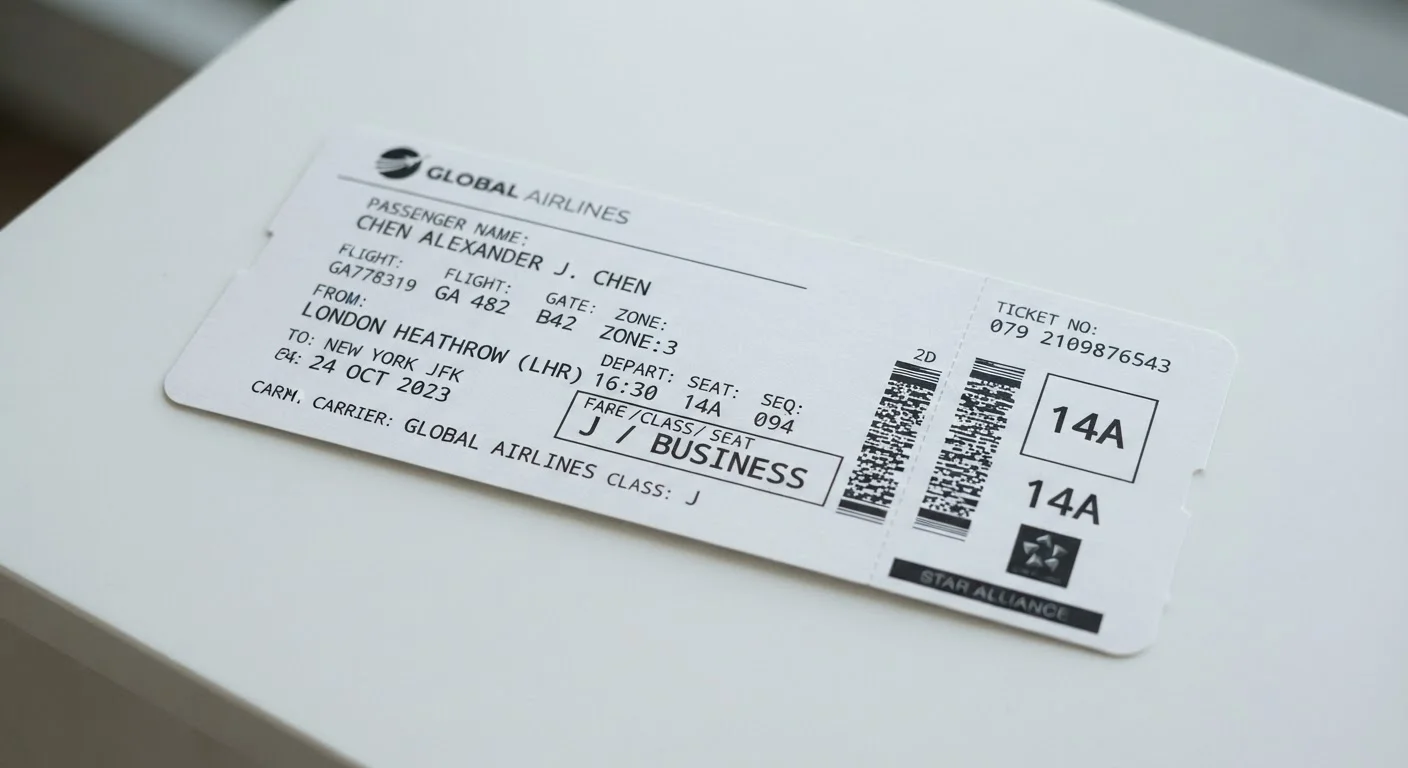
Photo credit: ExploreRoute.net | Travel Made Simple
In this article
Every airline ticket carries a fare class code that determines price, flexibility, and upgrade eligibility. Here's how to decode them.
What a Fare Class Actually Is
Every seat sold on a commercial flight is assigned a fare class — a single letter code that functions as a shorthand contract between you and the airline. That letter determines not just the price you paid, but the rules governing your ticket: whether you can change it, whether you earn frequent flyer miles, and whether you're eligible for an upgrade. Understanding fare classes is one of the more useful skills a frequent flyer can develop.
Fare classes exist within what airlines call a booking class inventory. An aircraft might have 180 physically identical economy seats, yet those seats can be sold under a dozen different fare classes simultaneously — each with its own price point and conditions. This is the foundation of modern airline yield management, and it explains why the same seat can cost very different amounts depending on when or how you book. For a deeper look at the pricing mechanics involved, see the anatomy of a flight price.
| Typical number of fare classes per airline | 10–26 booking class codes (Industry standard across major carriers) |
| Full-fare economy class code | Y (universal across most carriers) (IATA convention) |
| Where fare class appears | E-ticket confirmation, booking receipt, fare basis code |
| Mileage earn range by class | 0% (sale fares) to 150%+ (premium flexible) (Varies by airline loyalty program) |
| Upgrade eligibility threshold | Typically requires Y, B, or equivalent full-fare economy (Airline-specific; verify with carrier) |
Decoding the Letter Codes
Fare class letters are broadly grouped by cabin, though the specific assignments vary by airline. A rough industry-wide pattern holds:
- F, A — First class (full-fare and discounted first)
- J, C, D, I, Z — Business class (ranging from fully flexible to deeply discounted)
- W, P — Premium economy
- Y — Full-fare economy (the most flexible economy ticket)
- B, H, K, M, L, V, S, N, Q, O, G — Discounted economy classes, roughly in descending order of flexibility and mileage earn rate
- E, T, X — Deeply discounted or sale economy fares
The key insight is that Y is not the same as H, even if both seat you in the same economy row. Y typically earns 100% of miles flown and carries no change fees. H might earn 75% and require a fee to change. A deeply discounted class like N or G could earn as little as 0% and be entirely non-refundable. When you book through a travel agency or partner airline, the fare class on your ticket may differ from what you'd see booking directly — a nuance also worth considering when understanding codeshare tickets.
Fare Class
A single-letter code assigned to a ticket that defines its price bucket, refundability, change conditions, and mileage earn rate. Multiple fare classes can exist for seats within the same physical cabin.
Booking Class Inventory
The pool of seats an airline allocates to each fare class on a given flight. When inventory in a cheaper class sells out, the airline opens or expands higher-priced classes.
Yield Management
The revenue strategy airlines use to dynamically price seats across multiple fare classes, maximizing total revenue per flight by adjusting availability based on demand.
Fare Basis Code
A longer alphanumeric code on your e-ticket that encodes the fare class, cabin, and specific conditions of your ticket. It always begins with the booking class letter.
Mileage Accrual Rate
The percentage of miles flown credited to a frequent flyer account for a given ticket. Rates are tied to fare class and vary significantly — from 0% on the cheapest fares to 150% or more on premium flexible tickets.
Why Fare Classes Matter for Miles and Upgrades
Frequent flyer programs use fare class to determine how many miles a ticket earns — sometimes called a mileage accrual rate. A business-class ticket booked in class J might earn 150% of miles flown. The same seat booked as a discounted I or Z fare might earn only 50–75%. Always verify the mileage earn rate for your specific booking class in your loyalty program's table before assuming business class automatically means a high mileage return.
Upgrade eligibility works similarly. Most airlines restrict complimentary or award upgrades to tickets booked in specific fare classes. A deeply discounted economy fare — classes like G or N — is typically ineligible for any upgrade path, whether using miles, certificates, or elite status. Full-fare Y or B class economy tickets, by contrast, are often the most upgrade-eligible economy fares available.
Fare Class vs. Cabin Class: Not the Same Thing
Cabin class (economy, business, first) describes the physical section of the plane. Fare class is the pricing and rules layer within that cabin. Two passengers sitting side-by-side in economy can hold entirely different fare classes — with different change fees, mileage earn rates, and upgrade eligibility. Always check fare class, not just cabin, when evaluating a ticket's true flexibility.
Where does fare class appear on your ticket? Look at your booking confirmation or e-ticket receipt for a field labeled class, booking class, or fare basis. The fare basis code — a longer alphanumeric string — will always begin with the booking class letter.

Author
Smart Air Travel Editorial Team
Smart Air Travel Editorial Team is the collective byline for our editorial team and contributor network. Articles published under this byline or an editorial pen name are researched, written, and reviewed according to our editorial standards for clarity, consistency, and independence before publication.
View all articles →