
Solo Adventure Travel vs. Guided Expeditions: What Each Approach Really Demands
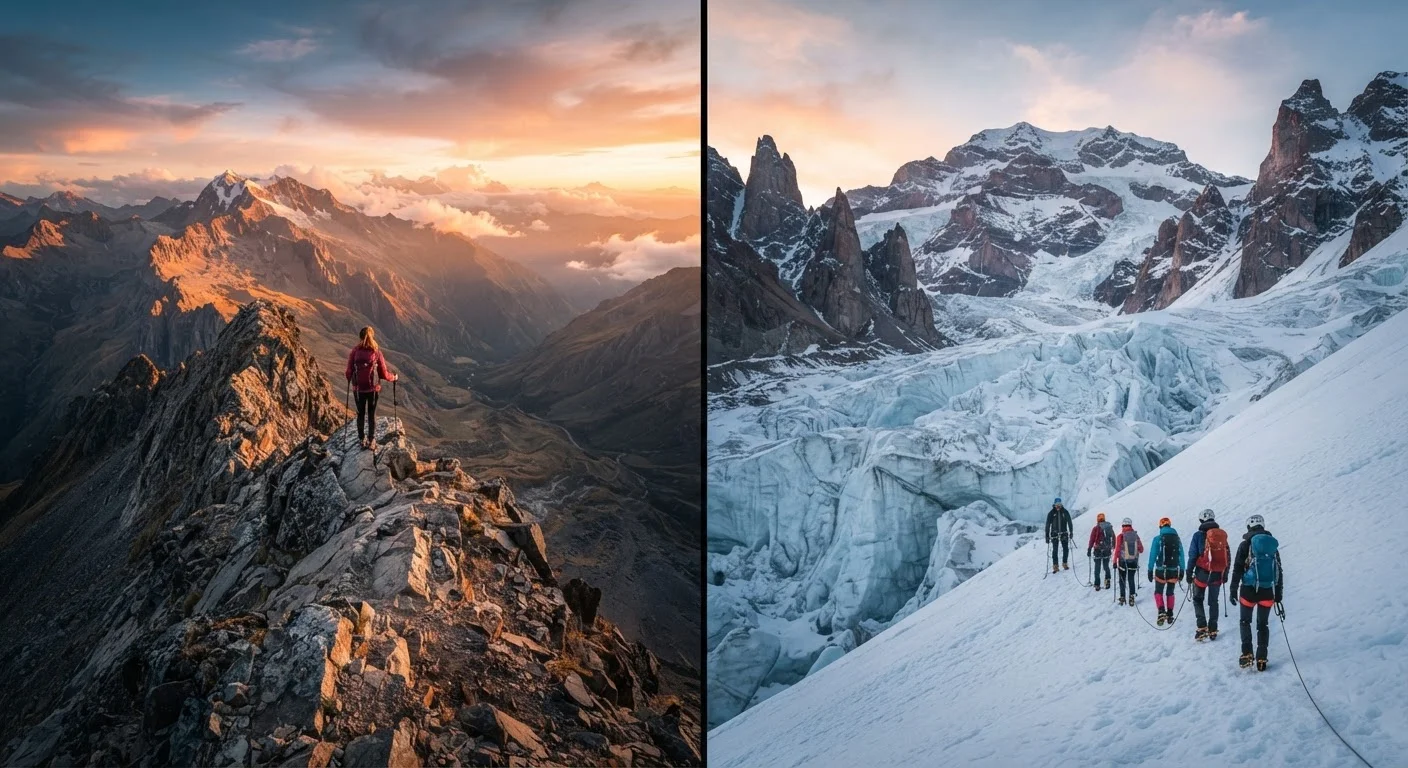
Photo credit: ExploreRoute.net | Travel Made Simple
In this article
Going it alone or joining a guided expedition shapes every part of your trip. Here's an honest look at the trade-offs between both approaches.
Key Takeaways
- Solo adventure travel demands stronger self-sufficiency, navigation skills, and risk tolerance than most trips require.
- Guided expeditions provide built-in logistics, expert knowledge, and safety infrastructure — at the cost of flexibility.
- Neither approach is universally superior; the right choice hinges on your skill set, experience level, and objectives.
- Honest self-assessment of fitness, technical ability, and comfort with uncertainty is essential before committing to either path.
- Always verify entry requirements, safety advisories, and permit conditions through official government sources before departure.
The Core Difference: Control vs. Infrastructure
The choice between solo adventure travel and a guided expedition isn't simply about companionship — it's about who holds the decision-making authority and who carries the burden of preparation. Solo travel puts every variable in your hands: route selection, risk assessment, weather calls, emergency response, and daily pace. A guided expedition transfers much of that responsibility to an operator and its team, giving you access to logistical infrastructure you'd otherwise spend months building yourself.
That trade-off runs through every aspect of the trip. Solo travelers gain radical freedom but absorb every consequence of a poor decision. Guided travelers gain expertise and support, but operate within a structure that may not bend to personal preference. Understanding how itinerary-building shifts between solo and group formats is a useful starting point before committing to either path.
What Solo Adventure Travel Actually Requires
Solo adventure travel in genuinely challenging environments — multi-day wilderness routes, remote river crossings, high-altitude approaches — demands a skill base that goes well beyond enthusiasm. Navigation using topographic maps and a compass (not just GPS), wilderness first aid, self-rescue techniques, and the ability to read changing weather are baseline competencies, not optional extras.
Logistically, you are your own support system. Permits, emergency contact registration, resupply planning, gear redundancy, and evacuation contingencies all fall to you. This isn't meant to discourage — experienced solo adventurers often cite unmediated immersion in landscape and the clarity that comes with full self-reliance as the most rewarding aspects of this style. But the entry requirements are real. The distinction between alpine climbing and high-altitude trekking illustrates how dramatically skill requirements can diverge even within the same mountain environment.
Register Your Route Before You Go
Before heading solo into remote terrain, research the specific regulations governing your route. Many wilderness areas and national parks require advance permits, mandatory check-in procedures, or restrictions on solo travel in high-risk zones. Leave a detailed itinerary with a trusted contact who knows when to raise the alarm if they don't hear from you.
Before heading solo into remote terrain, research the specific regulations governing your route. Many wilderness areas and national parks require advance permits, mandatory check-in procedures, or restrictions on solo travel in high-risk zones.
What Guided Expeditions Actually Require
Joining a guided expedition doesn't mean showing up unprepared. Reputable operators specify fitness benchmarks, prerequisite experience, and gear lists for good reason — the group's safety often depends on every participant meeting those standards. Arriving underprepared creates risk for guides and fellow travelers alike.
Beyond physical readiness, guided travel demands a different kind of adaptability: the ability to operate within a group dynamic, accept decisions made by the lead guide, and surrender some of the spontaneity that defines solo travel. For the depth it provides in return — local ecological knowledge, cultural context, permitted access to restricted zones — many travelers find that trade-off worthwhile. For a broader look at what sustained field time in expedition-style travel involves, see the honest pros and cons of expedition-style adventure travel.
| Solo Adventure Travel | Guided Expeditions | |
|---|---|---|
| Flexibility | Full — pace and route entirely self-determined | Limited — structured itinerary set by operator |
| Required experience | High — navigation, first aid, self-rescue essential | Variable — operator specifies prerequisites |
| Logistical burden | Entirely on the traveler | Largely handled by operator |
| Safety infrastructure | Self-provided; minimal backup | Guides, comms equipment, group support |
| Cultural/ecological depth | Self-directed; depends on preparation | Enhanced via expert local guides |
| Cost structure | Lower direct cost; high gear investment | Higher upfront; logistics included |
| Access to restricted areas | Limited without operator permits | Often greater via licensed operators |
Safety, Risk, and Information
Risk profiles differ substantially between the two approaches. Solo travelers face higher exposure to compounding hazards — an injury, navigation error, or equipment failure without backup support can escalate quickly. Guided expeditions typically include communication equipment, medical supplies, and trained personnel, significantly altering the risk calculus in remote environments.
Information quality matters equally in both cases. Whether you're planning solo or evaluating a guided operator's proposed route, grounding your research in reliable sources is essential. Government travel advisories and independent forums each play distinct roles — understanding how to use both without being misled by either is a core planning skill. Always verify entry requirements, visa conditions, and safety conditions with official government sources before departure, as these can change without notice.

Author
Specialty Travel Editorial Team
Specialty Travel Editorial Team is the collective byline for our editorial team and contributor network. Articles published under this byline or an editorial pen name are researched, written, and reviewed according to our editorial standards for clarity, consistency, and independence before publication.
View all articles →