
Ayurvedic Retreats in India and Sri Lanka: A Region-by-Region Overview
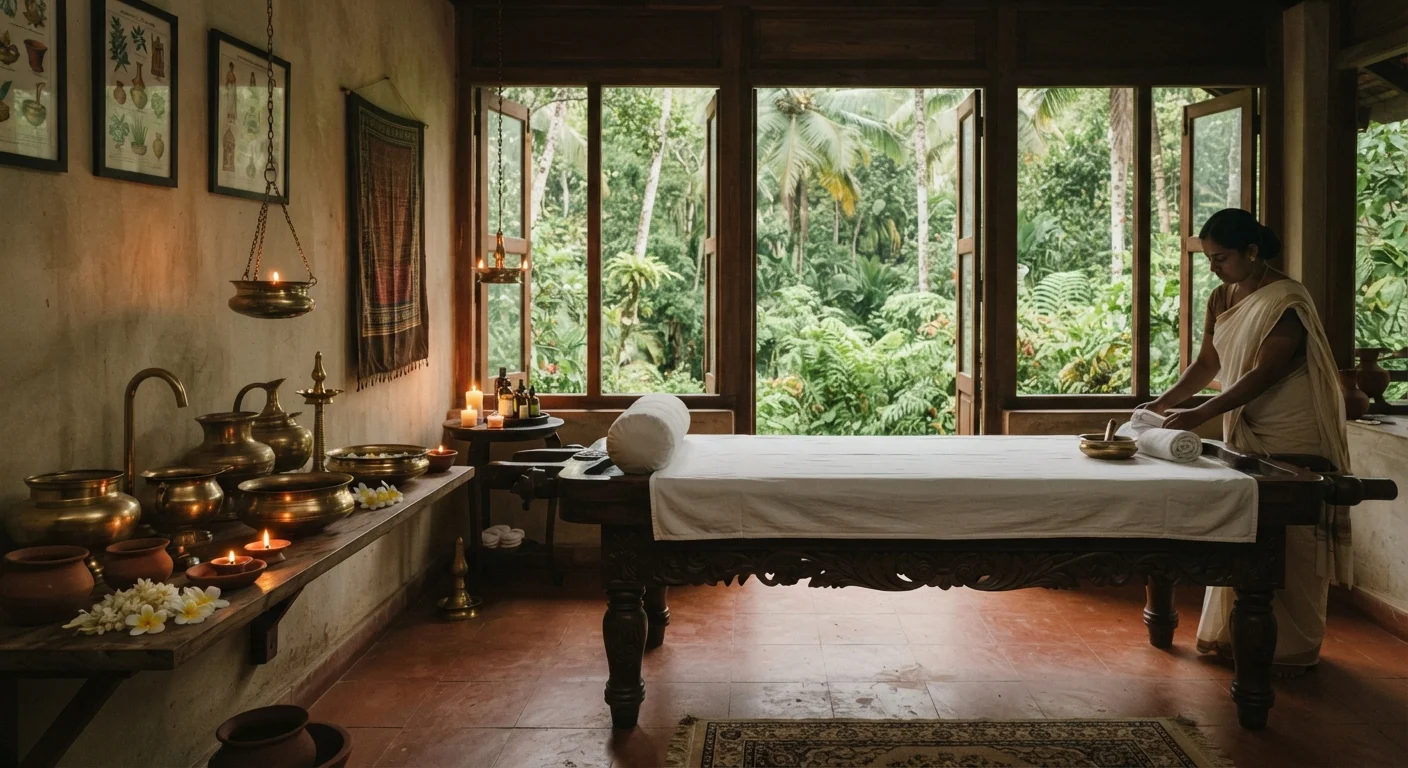
Photo credit: ExploreRoute.net | Travel Made Simple
In this article
Kerala, Goa, and Sri Lanka each offer distinct Ayurvedic traditions. This guide maps regional differences to help you choose an experience that fits your intentions.
Why Region Matters in Ayurvedic Travel
Ayurveda is not a monolithic wellness commodity. It is a living medical tradition rooted in specific landscapes, lineages, and cultural contexts — which means where you go shapes what you receive as profoundly as any individual treatment menu. For the experienced traveler accustomed to spa weekends and yoga retreats, understanding these regional distinctions is the difference between a genuinely restorative immersion and an aesthetically pleasant but therapeutically shallow experience.
The three regions most travelers consider — Kerala in South India, Goa on India's western coast, and Sri Lanka — represent meaningfully different expressions of the tradition. Each has its own climate logic, practitioner lineages, typical program structures, and cultural contexts that affect how Ayurveda is taught, administered, and integrated into daily life at a retreat. This overview maps those differences so you can match your intentions to the right regional approach.
For a broader framework on evaluating wellness travel formats, see The Complete Picture on Wellness Travel. If you're still clarifying what you actually need from a retreat before booking, these pre-booking questions are worth working through first.
| Primary Indian region for classical Ayurveda | Kerala, South India |
| Optimal Kerala treatment season | Monsoon (approx. June–August) (Per classical Ayurvedic theory on climatic conditions) |
| Sri Lanka's indigenous medical tradition | Deshiya Chikitsa |
| Minimum recommended Panchakarma duration | 7–21 days (varies by program and condition) (General practitioner guidance; consult a qualified vaidya) |
| Ayurvedic physician credential (India) | BAMS — Bachelor of Ayurvedic Medicine and Surgery |
| Goa retreat profile | Integrative; blends Ayurveda with yoga, meditation, and nutrition |
Kerala: The Canonical Heartland
Kerala is widely regarded as Ayurveda's most intact living tradition. The state's Ashtavaidya physician families — hereditary lineages of practitioners trained across generations — continue to operate clinics and retreat centers where classical texts such as the Ashtanga Hridayam directly govern treatment protocols. This is not simply a marketing claim; it reflects a genuine continuity of practice that is difficult to replicate elsewhere.
The Kerala monsoon season (roughly June through August) is considered the optimal period for intensive Ayurvedic treatments. Cooler temperatures, higher humidity, and open skin pores are believed in classical Ayurvedic theory to enhance the absorption of medicated oils and the efficacy of Panchakarma — the five-action purification process that underpins serious therapeutic programs. Many clinically oriented retreats operate their most rigorous programs during this window.
Panchakarma
A classical Ayurvedic five-action purification and rejuvenation process involving preparatory therapies, primary cleansing treatments, and post-treatment protocols. Traditionally supervised by a qualified Ayurvedic physician and typically conducted over a minimum of one to three weeks.
Vaidya
The Sanskrit and Malayalam term for a trained Ayurvedic physician. A qualified vaidya holds a recognized degree in Ayurvedic medicine (such as a BAMS — Bachelor of Ayurvedic Medicine and Surgery) and is qualified to conduct clinical consultations and prescribe individualized treatment protocols.
Ashtavaidya
Hereditary lineages of Ayurvedic physicians in Kerala, trained across generations in classical texts and treatment methods. These families are considered among the most authoritative custodians of Kerala's Ayurvedic tradition.
Deshiya Chikitsa
Sri Lanka's indigenous traditional medicine system, which shares foundational concepts with Indian Ayurveda but incorporates local plant pharmacopeia, preparation traditions, and cultural frameworks developed over centuries on the island.
Dosha
In Ayurvedic theory, one of three fundamental biological energies — Vata, Pitta, and Kapha — said to govern physiological and psychological functions. Ayurvedic consultations typically assess an individual's doshic constitution to guide personalized treatment.
Abhyanga
A classical Ayurvedic full-body oil massage using warm medicated oils selected according to an individual's constitution and therapeutic needs. It is one of the most widely practiced Ayurvedic treatments and often forms part of daily routine in residential retreat programs.
Travelers seeking clinical depth — genuine Panchakarma, physician-led consultations, and multi-week programs with measurable therapeutic intention — will find Kerala's most credentialed centers unmatched. The trade-off is that serious programs demand real commitment: restricted diet, limited activity, and a willingness to let the process lead. This is not leisure travel dressed in linen; it is closer to a supervised therapeutic course.
Accessibility considerations: Kerala's major wellness centers cluster around Thiruvananthapuram, Thrissur, and the backwater regions near Alleppey. Travel within the state requires planning, and some smaller clinics have limited English-language communication. Verify program credentials, physician qualifications, and program structure directly before booking.
Goa and North India: Lighter-Touch and Integrative Approaches
Goa's Ayurvedic landscape is shaped by its identity as an international tourism destination. Retreats here tend to integrate Ayurveda within broader wellness programming — yoga, meditation, nutrition, and sometimes digital detox elements are woven alongside Ayurvedic consultations and treatments. If you're drawn to a more holistic immersion that doesn't require the clinical intensity of a full Panchakarma course, Goa offers polished, accessible options.
The practitioner landscape is more variable here than in Kerala. Some Goa-based centers employ qualified Ayurvedic physicians trained in Kerala traditions; others offer treatments delivered by therapists with shorter training periods. Scrutinizing credentials matters more in this context. Ask specifically whether your initial consultation will be conducted by a qualified vaidya (Ayurvedic physician) and whether treatment protocols are individually prescribed or menu-based.
Rishikesh and other Himalayan destinations in North India represent a third Indian regional variant — one where Ayurveda frequently sits alongside yogic philosophy, breathwork, and spiritual practice in a way that emphasizes mental and energetic wellness alongside the physical. These programs often appeal to travelers already engaged with contemplative practice. For those considering whether a more silent or tech-free format might suit them equally well, this comparison of digital detox and meditation retreat formats offers useful orientation.
5,000+
Years of Ayurvedic tradition documented in classical texts
Ayurveda is considered one of the world's oldest codified systems of medicine, with foundational texts such as the Charaka Samhita and Sushruta Samhita dating back several millennia.
8
Hereditary Ashtavaidya physician families in Kerala
Kerala's eight Ashtavaidya lineages are recognized custodians of classical Ayurvedic knowledge and continue to practice today.
Sri Lanka: A Distinct but Related Tradition
Sri Lanka's indigenous medical tradition, Deshiya Chikitsa, shares deep roots with Ayurveda but developed independently, incorporating local medicinal plants, preparation methods, and cultural frameworks over centuries. Many Sri Lankan retreat centers draw on both the classical Indian Ayurvedic canon and this indigenous tradition, creating a regional synthesis rather than a direct replica of Kerala-style practice.
The island's geography — tropical coastlines, highland tea country around Kandy and Ella, and dry-zone ancient cities — means retreat settings vary considerably. Coastal centers typically emphasize relaxation and rejuvenation programs; highland retreats often incorporate cooler-climate herbalism and slower-paced immersions. The cultural context of Sri Lanka's majority Theravada Buddhist heritage also permeates many wellness spaces, infusing retreat rhythms with an orientation toward mindfulness and simplicity that some travelers find distinctly nourishing.
Practically, Sri Lanka's retreat infrastructure has developed significantly and many centers offer strong English-language communication, clear program structures, and relatively straightforward international access compared to some rural Kerala clinics. This makes Sri Lanka a pragmatically appealing entry point for travelers new to Ayurvedic immersion who want genuine tradition without maximum logistical complexity. Travelers already exploring non-retreat wellness integration may also find these strategies for building wellness into any trip applicable in Sri Lanka's diverse travel landscape.
This article provides general educational information about Ayurvedic travel traditions and is not medical advice. Consult a qualified healthcare professional before undertaking any therapeutic health program, especially if you have existing health conditions. Entry requirements, travel advisories, and retreat offerings change — verify all details with official sources and providers before travelling.

Author
Specialty Travel Editorial Team
Specialty Travel Editorial Team is the collective byline for our editorial team and contributor network. Articles published under this byline or an editorial pen name are researched, written, and reviewed according to our editorial standards for clarity, consistency, and independence before publication.
View all articles →