
Thermal Bathing Cultures Around the World and What Makes Each One Distinct
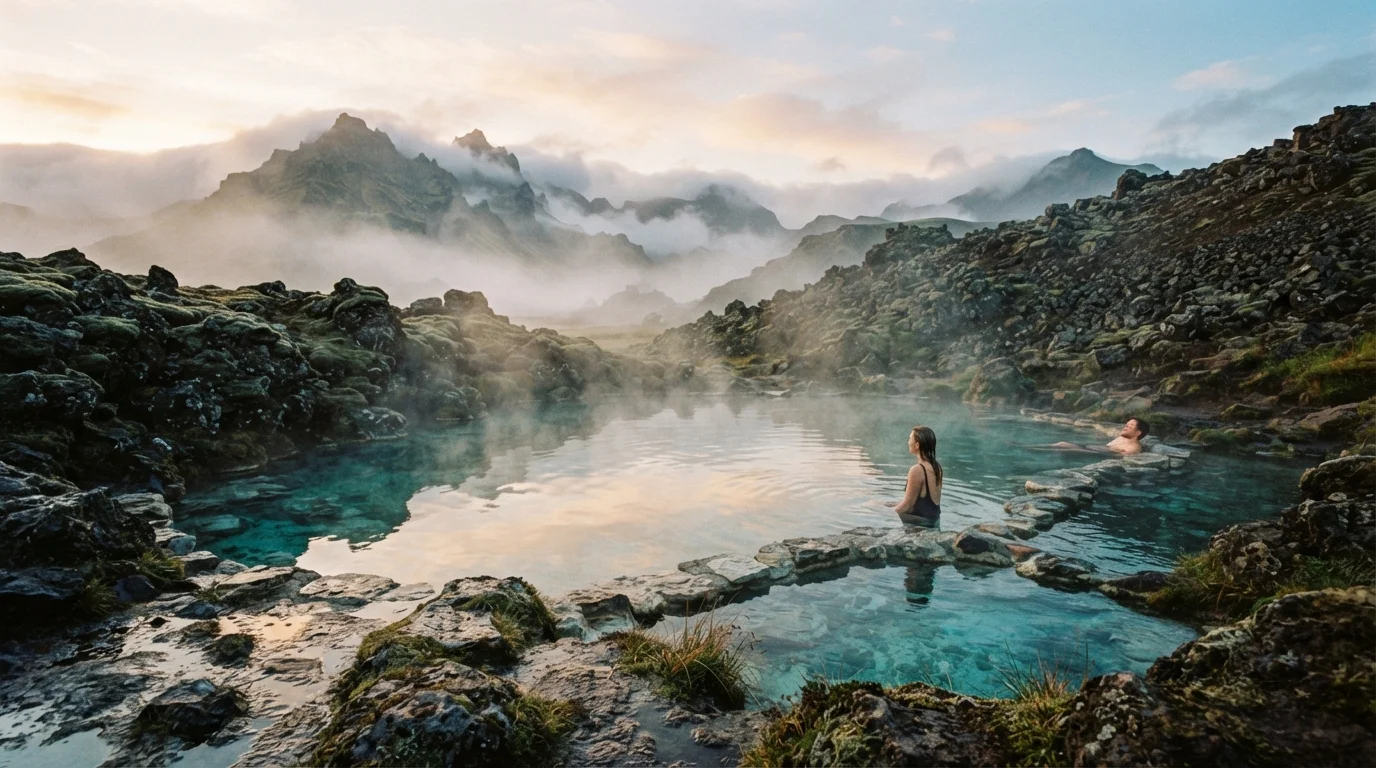
Photo credit: ExploreRoute.net | Travel Made Simple
In this article
Hungary, Japan, Iceland, Turkey, and New Zealand each have unique thermal bathing traditions. Discover the cultural context and practical differences between them.
Key Takeaways
- Thermal bathing traditions differ significantly in etiquette, purpose, and cultural meaning across countries.
- Japan, Hungary, Iceland, Turkey, and New Zealand each offer a distinct and historically rooted soaking experience.
- Understanding local customs before visiting thermal baths enhances respect and the overall experience.
- Thermal bathing is as much a social and spiritual practice as it is a physical wellness pursuit.
- Each tradition reflects the geology, history, and social values of its home culture.
Why Thermal Bathing Is More Than Just Soaking
Across the world, hot springs and thermal baths occupy a place far beyond physical relaxation. They are sites of ritual, community, healing philosophy, and cultural identity. For the seasoned traveler who has moved past the highlights reel, stepping into a thermal tradition — with genuine understanding of its context — is one of the most immersive experiences available.
The science behind geothermal wellness is compelling on its own terms. Research into balneotherapy — the therapeutic use of mineral-rich waters — has explored its effects on musculoskeletal conditions, stress, and circulation, though results vary and no soaking tradition should be approached as a medical treatment. For a deeper look at what the research actually says, see our companion piece on the science behind popular wellness practices abroad.
What follows is a country-by-country look at five of the world's most distinct thermal bathing cultures — what defines them, what makes them meaningful, and what travelers should understand before they arrive.
Japan: Onsen as Sacred Ritual
Japan's onsen culture is among the most codified thermal bathing traditions in the world. Fed by the country's intense volcanic activity, thousands of hot spring facilities exist across the archipelago, from rustic mountain rotenburo (outdoor baths) to elaborate resort complexes. The water's mineral composition — sulfur, sodium, calcium — varies significantly by region, and each source is traditionally associated with specific therapeutic properties.
Onsen etiquette is precise and deeply observed. Bathers wash and rinse thoroughly at individual shower stations before entering the communal pool — this is non-negotiable. Tattoos remain a cultural friction point at many facilities, a legacy of historical associations, though attitudes are gradually evolving. The experience is characteristically silent and contemplative. Pairing an onsen stay with a traditional ryokan means the bathing ritual becomes inseparable from the overall hospitality experience.
Onsen etiquette is precise — washing before entering the communal pool is non-negotiable.
Hungary: Bathing as Urban Civic Life
Budapest sits atop one of the richest geothermal fields in Central Europe, and thermal bathing here has been a civic institution for centuries — first under Ottoman occupation, which introduced the domed hammam aesthetic, and later through the grand Austro-Hungarian-era bathhouses that still define the city's skyline. Széchenyi and Gellért are the most visited examples, but the tradition runs across the city in neighborhood facilities that function more like community centers than tourist attractions.
Unlike Japan's hushed atmosphere, Hungarian bathing is social and lively. Chess boards float in outdoor pools, conversation fills steam rooms, and locals visit as part of ordinary weekly routines. Admission structures typically offer access to multiple pools and thermal chambers, and the architectural drama of neo-baroque and art nouveau interiors adds an additional layer of cultural immersion unavailable anywhere else.
Budapest's thermal baths function as civic institutions — social, lively, and deeply woven into daily life.
Iceland: Geothermal Bathing in Raw Nature
Iceland's relationship with geothermal water is elemental — the country sits directly on the Mid-Atlantic Ridge, and hot water emerges from the earth with minimal industrial intervention. The most internationally recognized facility is the Blue Lagoon in the Reykjanes Peninsula, but Iceland's genuine bathing culture centers on community hot pots (heitur pottur) found in nearly every town, often outdoors and unadorned.
These neighborhood pools are where Icelanders gather year-round, often in temperatures below freezing, to talk, decompress, and maintain community bonds. They are not tourist spectacles — they are functioning social infrastructure. Visiting them respectfully, following local norms around quiet conversation and pool-sharing, gives travelers access to an authenticity that major facilities cannot replicate. The contrast between freezing air and steaming water is considered part of the experience, not a hardship to be mitigated.
Iceland's neighborhood hot pots are social infrastructure — where locals gather through every season.
Turkey: The Hammam and Its Layered History
The Turkish hammam is technically a steam bath rather than a mineral spring tradition, but its cultural depth makes it essential to any survey of thermal bathing worldwide. Rooted in Roman bathing practice and later expanded through Islamic hygiene traditions, the hammam became a central institution of Ottoman city life — a space for cleansing, socializing, celebration, and even political discourse.
A traditional hammam sequence moves through rooms of graduated heat — the soğukluk (cool room), ılıklık (warm room), and hararet (hot room) — culminating in a vigorous scrub with a kese (exfoliating mitt) performed by an attendant. The ritual has social and spiritual dimensions that make it meaningfully different from spa treatments that superficially resemble it. Historic hammams in Istanbul and elsewhere are functioning cultural monuments; engaging with them carries a responsibility to approach the tradition on its own terms rather than as a wellness commodity.
The hammam's sequence of graduated heat rooms reflects centuries of Ottoman social and spiritual life.
New Zealand: Māori Geothermal Tradition and Living Landscape
New Zealand's thermal bathing identity is inseparable from Māori culture and the geothermal landscape of the Taupo Volcanic Zone, centered around Rotorua. For Māori, geothermal waters — ngāwhā — are tapu (sacred) and carry deep ancestral significance. Historically, they were used for cooking, healing, and ceremony. Several iwi (tribes) maintain guardianship over geothermal sites, and cultural protocols govern how visitors engage with them.
Travelers who approach Rotorua only through commercial hot pool experiences miss the broader cultural conversation available there. Engaging with Māori-led cultural programs that explain the spiritual geography of the region offers a dimension of understanding unavailable elsewhere. The combination of living volcanic landscape, cultural learning, and thermal immersion makes New Zealand's offering genuinely distinct — and demands a level of cultural attentiveness that enriches the experience for both visitor and host community.
For Māori, geothermal waters are tapu — sacred — and understanding this transforms the bathing experience entirely.
Choosing the Right Thermal Experience for You
Each of these five traditions offers something fundamentally different. A traveler drawn to quiet meditative immersion will find Japan's onsen culture a natural fit, while someone seeking grand architectural spectacle and social energy may feel most at home in Budapest. Iceland suits those who want nature raw and unmediated; Turkey rewards those curious about layered history and ritual; New Zealand offers a setting where geothermal wonder and indigenous cultural learning intersect.
Research Etiquette Before You Arrive
Every thermal bathing culture has specific norms around dress, behavior, gender separation, and hygiene that vary significantly from one country to the next. Spending thirty minutes reading about local customs before your visit — from whether tattoos are permitted to how to address attendants — signals respect and dramatically improves the experience. Local tourism boards and cultural organizations are generally the most reliable sources for current guidance.
Many of these bathing cultures pair naturally with the kind of atmospheric, locally embedded accommodation explored in our guide to traditional lodging styles from around the world. Staying in a ryokan in Japan, for instance, places the onsen not as a day-trip activity but as a central element of the entire stay.
This article is for general informational purposes only and does not constitute medical advice. Always consult a qualified healthcare professional before using thermal baths if you have any health conditions, and verify current entry requirements, safety advisories, and local regulations with official government sources before traveling.

Author
Specialty Travel Editorial Team
Specialty Travel Editorial Team is the collective byline for our editorial team and contributor network. Articles published under this byline or an editorial pen name are researched, written, and reviewed according to our editorial standards for clarity, consistency, and independence before publication.
View all articles →