
Ryokans, Riads, and Pousadas: Traditional Lodging Styles From Around the World
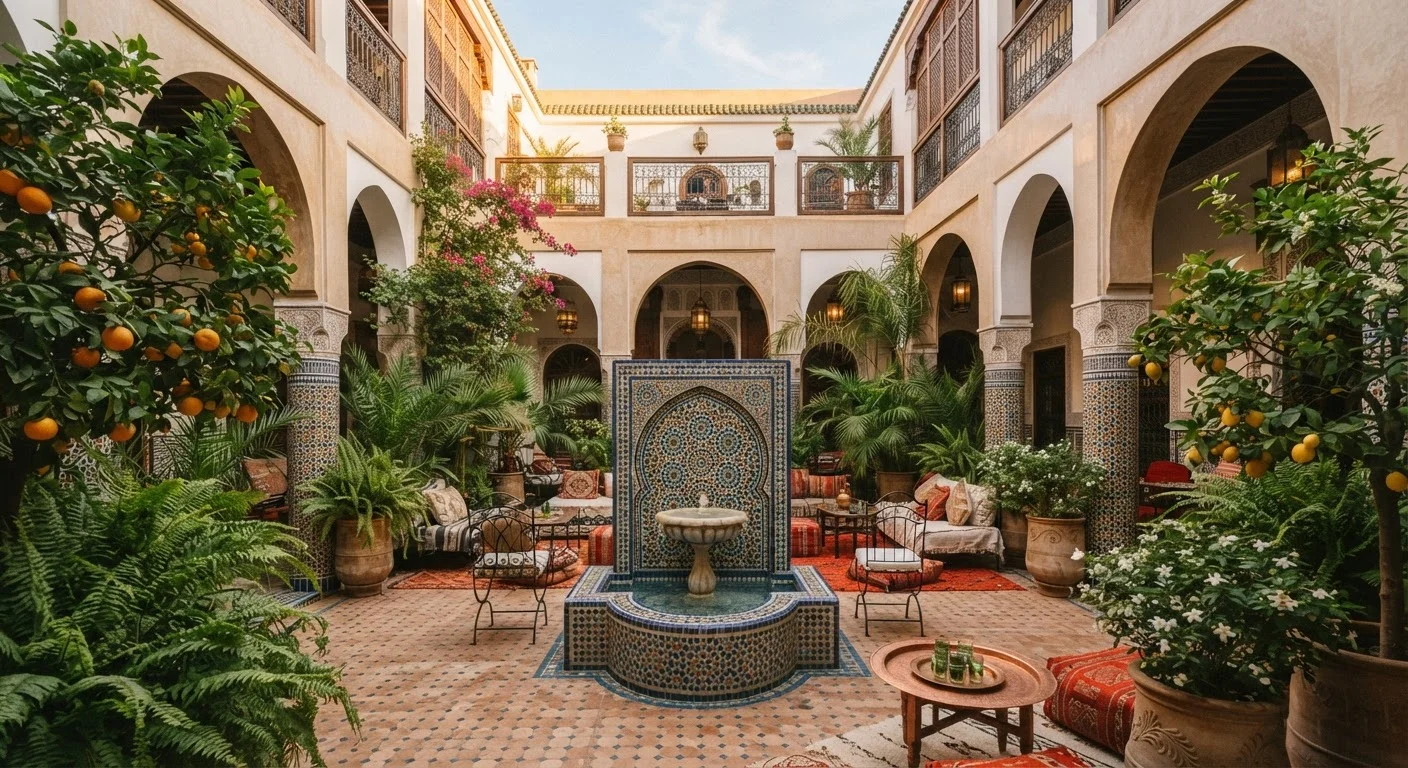
Photo credit: ExploreRoute.net | Travel Made Simple
In this article
Regional lodging traditions offer something chain hotels can't: cultural immersion baked into the building itself. A tour of notable styles worldwide.
Key Takeaways
- Traditional lodging styles like ryokans, riads, and pousadas offer cultural immersion that modern chain hotels rarely replicate.
- Each style reflects distinct architectural philosophies, hospitality rituals, and regional histories worth understanding before you book.
- Matching the right traditional lodging type to your travel personality can meaningfully shape your entire trip experience.
- Many of these formats blend heritage with modern comfort, making them accessible to travelers who value both authenticity and amenity.
- Seasonality, etiquette expectations, and accessibility vary significantly across these property types — research matters.
Why Traditional Lodging Styles Reward the Curious Traveler
There's a category of travel accommodation that operates on a fundamentally different premise than the standard hotel. Rather than optimizing for universal consistency, these properties are rooted in place — shaped by local climate, cultural ritual, architectural tradition, and a particular philosophy of hospitality. Staying in one isn't simply a matter of finding a bed; it's an orientation into how a culture thinks about rest, privacy, gathering, and welcome.
For frequent travelers already familiar with major tourist circuits, these lodging traditions offer something harder to replicate: genuine context. The building itself carries the story. If you're trying to match your trip type to the right hotel style, understanding what distinguishes a ryokan from a riad — and who each suits best — is an essential starting point.
Below, we tour seven of the world's most culturally distinctive traditional lodging formats, what defines each one, and the traveler personality most likely to find them rewarding.
Ryokan (Japan)
The ryokan is arguably the most codified traditional lodging experience in the world. These Japanese inns — many operating for generations — are built around a precise choreography of hospitality: tatami-mat rooms, futon bedding laid out by staff, communal or private onsen (hot spring baths), and kaiseki meals served in-room or in a dedicated dining space. Guests typically wear yukata (lightweight robes) throughout their stay.
What distinguishes a ryokan isn't just aesthetics — it's the concept of omotenashi, a deeply attentive, anticipatory form of service. The experience is deliberately unhurried. Ryokans suit travelers who want to slow down, engage with Japanese bathing culture (explored further in our guide to thermal bathing traditions worldwide), and surrender to a structured ritual rather than improvise their itinerary.
A ryokan isn't just a room — it's a choreographed cultural ritual built around unhurried hospitality.
Riad (Morocco)
A riad is a traditional Moroccan townhouse built around a central interior courtyard — typically featuring a fountain, citrus trees, and mosaic tilework. The name derives from the Arabic word for garden. From the outside, riads are deliberately understated, presenting blank walls to the street; all the beauty turns inward. This inward orientation reflects Islamic architectural ideals around privacy and the sanctity of domestic life.
Most riads found in medinas (old city centers) in Marrakech, Fez, and Essaouira have been restored by private owners and converted into intimate guesthouses, usually with between four and twelve rooms. They suit travelers who value atmosphere over amenity count, and who want to be embedded in a living historic neighborhood rather than isolated in a resort compound.
Riads present blank walls to the street — all the beauty, and all the life, turns deliberately inward.
Pousada (Brazil and Portugal)
The word pousada translates roughly as inn or guesthouse, but the term carries distinct character in two countries. In Portugal, the state-managed Pousadas de Portugal network converted historic monasteries, castles, and palaces into heritage hotels — lodging experiences where the building itself is the destination. In Brazil, the term is used more loosely to describe small, often family-run inns that reflect strong regional character, particularly in coastal towns and ecotourism corridors.
Both traditions reward travelers seeking intimacy and local ownership over corporate hospitality. Portuguese pousadas in particular suit history-minded travelers who want to sleep inside a 12th-century convent; Brazilian pousadas suit those drawn to personal, unpretentious hospitality in nature-rich settings.
Portugal's pousadas let you sleep inside 12th-century convents; Brazil's offer intimate, family-run coastal character.
Masseria (Southern Italy)
A masseria is a fortified farmhouse — historically the working heart of agricultural estates across Puglia, Basilicata, and Calabria. Built between the 16th and 18th centuries to protect harvests and workers, masserias are characterized by thick stone walls, arched interiors, olive groves, and a self-contained compound logic. Many have been carefully restored into agriturismo (farm-stay) properties, some retaining working olive oil or wine production.
Masserias are particularly well-suited to travelers who want a slow, landscape-anchored stay in a region that often gets overshadowed by Italy's northern cities. The appeal is rural grandeur without pretension — long lunches, local produce, and architecture that earns its authority from centuries of use rather than deliberate design.
Masserias earned their thick stone walls from necessity, not aesthetics — and that honest history is exactly the appeal.
Haveli (India — Rajasthan and Gujarat)
A haveli is a traditional merchant or aristocratic townhouse found primarily across Rajasthan and Gujarat in northwestern India. These multi-story mansions are defined by elaborate carved facades — sandstone jharokhas (overhanging enclosed balconies), painted murals, and intricate latticework screens (jali). Historically, havelis housed extended families across interconnected courtyards; today, many have been converted into heritage hotels or boutique guesthouses.
Staying in a haveli offers something few other lodging formats can match: the sense of occupying a genuinely aristocratic domestic space, scaled for a way of life that no longer exists in quite the same form. They suit culturally curious travelers willing to navigate older infrastructure — plumbing and accessibility in converted havelis can vary considerably — in exchange for extraordinary architectural character.
A haveli places you inside a vanishing domestic world of merchant courts, painted murals, and carved sandstone balconies.
Khan (Central Asia)
Caravanserais — known in various forms as khans across Uzbekistan, Turkey, and the wider Silk Road corridor — were rest stops built along ancient trade routes to shelter merchants, animals, and cargo. Many followed a consistent architectural logic: a large central courtyard surrounded by vaulted cells for sleeping and storage, with the entrance carefully controlled. Some of the grandest examples, particularly in Samarkand, Bukhara, and Istanbul, have been partially or fully restored as boutique hotels.
This is lodging for the historically adventurous — travelers who want their accommodation to function as a primary cultural artifact. The experience is necessarily interpretive; not all caravanserai conversions maintain the full original scale or function, but the best offer an irreplaceable sense of continuity with the merchants who rested there centuries before.
Caravanserais were the world's first hospitality infrastructure — and the best-preserved ones still feel like it.
Trullo (Puglia, Italy)
Trulli are the distinctive whitewashed stone huts with conical roofs found almost exclusively in the Itria Valley of Puglia, with the highest concentration in the town of Alberobello. Built using dry-stone construction techniques — no mortar — they date back several centuries and were historically used as agricultural storage, livestock shelters, and rural dwellings. The conical roofs are topped with decorative pinnacles; interiors are cool in summer and naturally insulating in winter.
Today, many trulli operate as self-catering vacation rentals or boutique properties. They suit independent travelers and couples looking for a singular architectural experience embedded in a working rural landscape. Unlike many heritage properties, trulli tend to be genuinely cozy rather than imposing — an intimacy that suits short, deeply local stays over extended itineraries. Those drawn to this kind of place-based accommodation may also appreciate the broader world of unique stays beyond the conventional hotel format.
Trulli are built without mortar — their ancient dry-stone logic creates interiors that stay naturally cool all summer.
Choosing the Style That Fits Your Travel Self
These seven formats represent only a portion of the world's regional lodging traditions. For travelers drawn to even more unconventional settings, treehouses, cave dwellings, and floating cabins occupy their own fascinating niche, while terrain-specific formats like desert camps and arctic cabins offer yet another lens on place-based lodging.
The common thread across all traditional lodging styles is intentionality. Each has evolved over centuries to suit a specific geography, climate, and cultural value system. That's precisely what makes them rewarding — and why doing a little research before you arrive pays dividends. Etiquette expectations, seasonal availability, and physical accessibility differ considerably across these property types. Always verify current entry requirements, accessibility features, and local customs directly with properties and official sources before you travel.
Ask About Etiquette Before You Arrive
Many traditional lodging styles come with specific behavioral expectations — removing shoes in a ryokan, covering shoulders in certain riad common areas, or observing quiet hours tied to agricultural rhythms in a masseria. A quick note to the property before arrival, asking what guests should know, is one of the most effective ways to ensure the experience is respectful and rewarding for everyone involved.

Author
Where to Stay Editorial Team
Where to Stay Editorial Team is the collective byline for our editorial team and contributor network. Articles published under this byline or an editorial pen name are researched, written, and reviewed according to our editorial standards for clarity, consistency, and independence before publication.
View all articles →