
The Complete Travel Budgeting Guide: Planning, Tracking, and Adjusting Costs
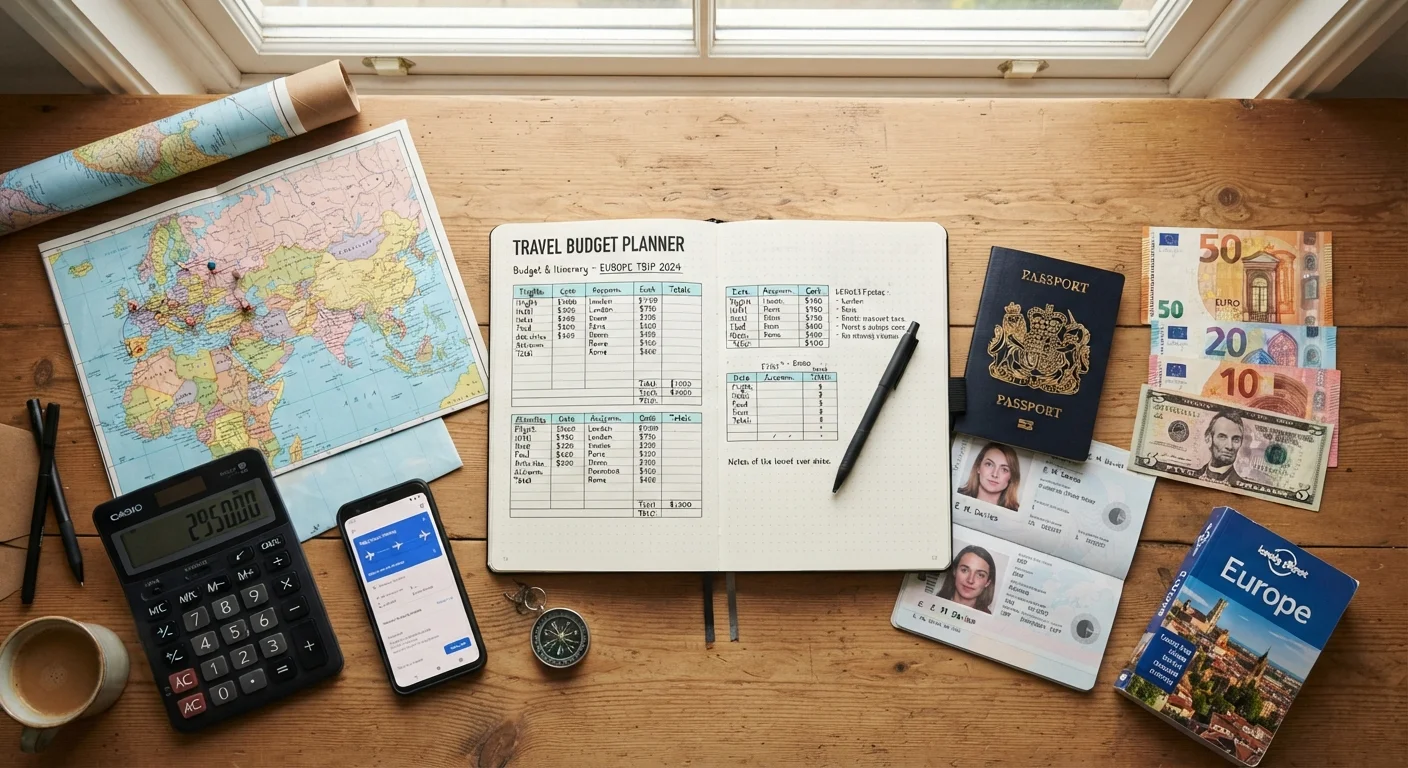
Photo credit: ExploreRoute.net | Travel Made Simple
In this article
An end-to-end resource covering how to plan, allocate, monitor, and reconcile travel spending — from initial research to post-trip review.
Key Takeaways
- Separate your budget into fixed costs and variable daily spend before any research begins.
- A contingency reserve of 10–15% of total budget prevents one surprise from derailing the trip.
- Daily tracking, even a rough log, creates awareness that curbs overspending in real time.
- Mid-trip adjustments are normal — the goal is to rebalance categories, not abandon the plan.
- A post-trip review turns spending data into sharper estimates for future trips.
Why a Travel Budget Framework Matters
Most travelers think about money reactively — checking account balances after a big purchase rather than allocating funds before the trip departs. A budget framework flips that dynamic. It transforms a vague sense of "how much this might cost" into a structured plan with clear category limits, a tracking method, and a defined process for adjusting when reality diverges from the estimate.
This guide covers every stage of that process: researching realistic costs, allocating funds across categories, monitoring spending on the ground, and conducting a post-trip review that makes the next trip easier to plan. Whether you're mapping out a two-week international itinerary or a long weekend road trip, the same core framework applies.
For a deeper understanding of how costs break down by type, see the Travel Cost Categories reference glossary, which defines every major and minor expense category you'll encounter in planning.
10–15%
Recommended contingency reserve
Travel finance advisors generally suggest reserving this portion of total trip cost for unexpected expenses.
35–40%
Typical accommodation share of trip budget
A commonly cited benchmark for international leisure travel; actual proportion varies significantly by destination and travel style.
3 days
Maximum interval between budget check-ins
Checking your running total at least every three days helps catch category overruns before they compound.
Building Your Budget from the Ground Up
Start by dividing every anticipated cost into two buckets: fixed costs and variable daily costs. Fixed costs are committed before departure — flights, accommodation booked in advance, travel insurance premiums, and prepaid tours or passes. Variable costs are the daily on-the-ground spend: meals, local transport, activities, and incidentals.
Research-Based Estimation
Generic per-day averages from travel blogs are a starting point, not a reliable number. Instead, build your estimate from actual research: check accommodation listings for your specific dates, review transit options for your planned routes, and look at menu prices for restaurants at the level you intend to use. The complete trip research guide walks through how to verify destination-level data systematically.
Category Allocation
Once you have realistic unit costs, multiply by quantity and duration. A useful rough allocation for international travel — not a rule, but a benchmark — is: accommodation 35–40%, food and drink 20–25%, transport (local and inter-city) 15–20%, activities and entrance fees 10–15%, and a contingency reserve of 10–15%. Adjust these proportions to match your travel style; a food-focused trip shifts weight toward dining, while a museum-heavy itinerary shifts it toward activities.
Anchor Estimates to Real Listings
When estimating accommodation costs, use the actual rates showing on booking calendars for your specific travel dates rather than annual averages. Prices can vary 50–100% between shoulder and peak season at the same property. Your budget will be far more accurate if it reflects what you'd actually pay today for those dates.
The Contingency Reserve
Build a reserve into the total before you start spending, not after something goes wrong. A reserve of 10–15% of the full trip budget covers flight change fees, medical out-of-pocket costs, weather-driven itinerary pivots, or simply an unexpected experience worth paying for. Treat it as a locked category — only tap it for genuine surprises, not for routine overspending in other categories.
Tracking Spending While You Travel
A budget you don't monitor is just a wish list. Daily tracking — even a rough end-of-day log — creates a feedback loop that keeps decisions grounded in remaining funds rather than optimism.
Set a daily 'soft limit' that is 10–15% below your actual daily budget. That buffer absorbs the small purchases that never make it into pre-trip estimates — a museum audioguide, a cab in the rain, a round of drinks.
Travelers consistently underestimate incidental costs. A built-in soft limit creates room for real behavior without blowing the overall plan.
Before departure, screenshot or download your budget spreadsheet so it's accessible offline. Budget discipline breaks down when you lose access to your tracking tool in a low-connectivity destination.
Reliable internet access is not guaranteed in transit or in many destination areas; offline access ensures tracking continuity.
Practical Tracking Methods
Choose a method that matches how you actually behave while traveling. A shared spreadsheet (accessible offline if downloaded) works well for detail-oriented travelers and groups splitting costs. A dedicated expense-tracking app provides automatic categorization if you enter purchases in real time. A simple daily cash envelope system — withdrawing a set daily amount in local currency — creates a physical constraint that requires no logging at all.
Whichever method you use, check your running total against your budget at least every two to three days. Daily is better. The goal isn't perfection; it's early detection of categories that are running hot before they compound.
Handling Currency and Exchange
Record all expenses in a single base currency for consistent comparison. Convert at the actual rate you received, not a headline rate, since fees and spreads vary. Note that exchange rates fluctuate and your effective cost can drift meaningfully over a multi-week trip — this is another reason your contingency reserve matters.
Adjusting When Costs Drift Off Plan
Budget drift is not failure — it's information. The question is whether you catch it early enough to act. When you notice a category running over, the response is to rebalance: reduce spending in a more flexible category to compensate, rather than ignoring the gap and hoping it self-corrects.
Don't Ignore Early Overruns
A category that runs 20% over budget in the first few days compounds quickly across a longer trip. Travelers who tell themselves they'll "make it up later" rarely do — flexible categories like dining and activities tend to expand, not contract, as a trip progresses and fatigue sets in. Address overruns within a day or two of detecting them.
Common rebalancing levers include: choosing self-catering or market meals instead of restaurants for one or two days, skipping a paid activity in favor of free alternatives (parks, walking neighborhoods, public viewpoints), or using slower and cheaper transit options for a leg of the journey where speed isn't critical.
For a full set of strategies when spending has meaningfully outpaced the plan, the article Managing Money Mid-Trip When the Budget Isn't Holding provides a structured approach to real-time rebalancing without derailing the experience.
The Post-Trip Review: Closing the Loop
The most under-used step in travel budgeting is the review you do after you return. Actual spending data is far more valuable than any pre-trip estimate — it reveals which categories you consistently under- or over-estimate, and it becomes the foundation for every future budget.
What to Capture
Record total actual spend by category, the variance against your plan, and any one-off costs that inflated a category. Note qualitative observations too: did your accommodation choice deliver enough value, or would a different tier have served you better? Did any activity cost feel disproportionate to the experience?
Using the Data Forward
File your review somewhere retrievable. Travelers who return to previous trip data when planning a similar destination — same region, same travel style — arrive at realistic estimates much faster and with far less guesswork. The review also informs how you build future itineraries; see the complete itinerary crafting guide for how spending patterns should inform day-by-day scheduling decisions.
Your Data Beats Any Average
Published per-day travel cost figures are averages across many traveler types and accommodation tiers. Your own past trip records — even rough ones — will produce more accurate estimates for future trips because they reflect how you specifically travel. Start a simple log now, even if it's just a running total in a notes app.
A well-maintained record of three or four past trips gives you a personal benchmark that no generic travel cost database can match — because it reflects your actual preferences, pace, and spending habits, not an averaged stranger's.

Author
Travel Planning Editorial Team
Travel Planning Editorial Team is the collective byline for our editorial team and contributor network. Articles published under this byline or an editorial pen name are researched, written, and reviewed according to our editorial standards for clarity, consistency, and independence before publication.
View all articles →