
Travel Cost Categories: A Reference Glossary for Budget Planning
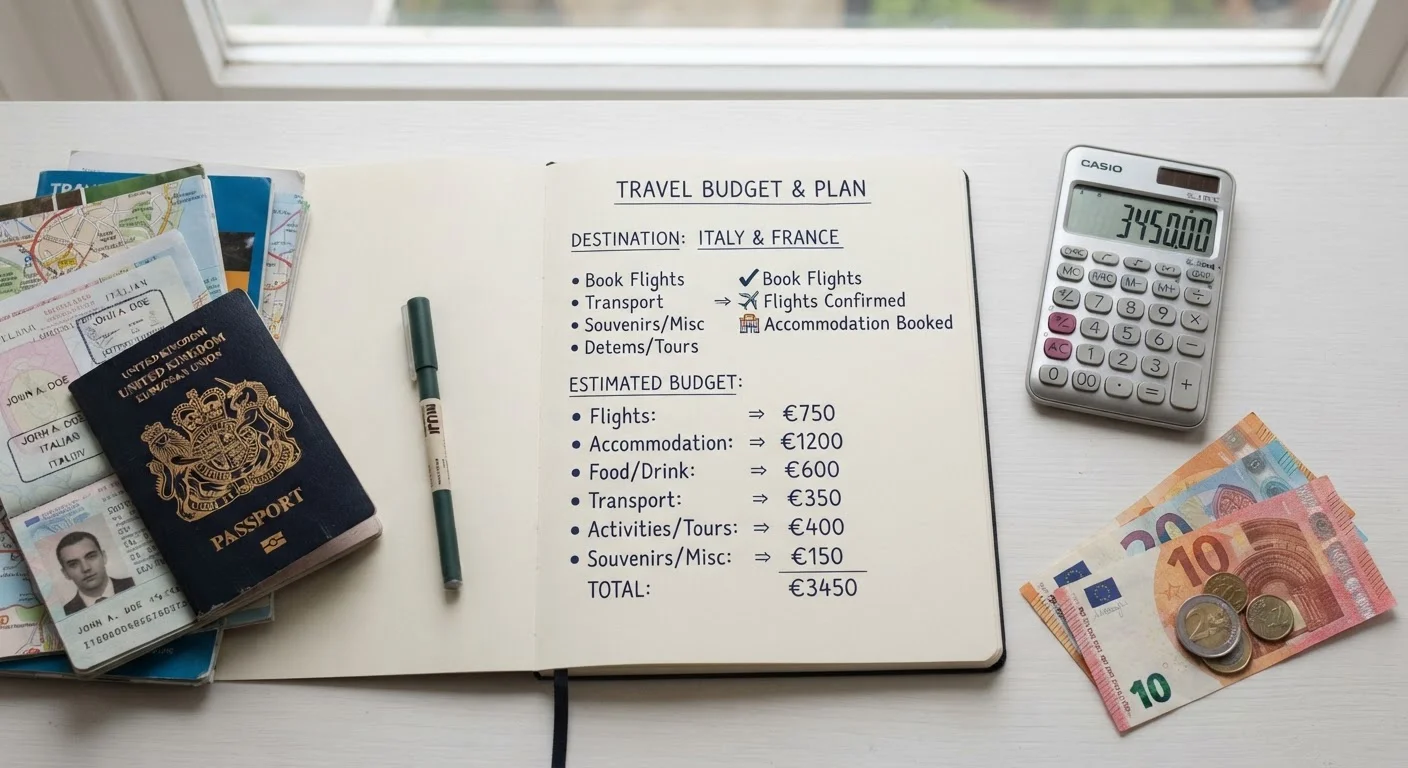
Photo credit: ExploreRoute.net | Travel Made Simple
In this article
A lookup resource defining every major and minor cost category in travel budgeting — from fixed pre-trip costs to discretionary on-the-ground spend.
Why Cost Categories Matter in Travel Budgeting
Most travel budgets fail not because travelers spend too much, but because they don't know what they're actually accounting for. When every expense lives in one undifferentiated pile labeled "trip costs," it's impossible to forecast accurately, spot overruns early, or make trade-offs deliberately.
Organizing expenses into defined categories solves this. It turns a vague number into a structured plan you can monitor and adjust. This glossary defines every major cost category you'll encounter when planning a trip — from the largest fixed commitments to the smallest discretionary purchases. Use it as a reference alongside the complete travel budgeting guide to build a framework that covers the full span of your spending.
| Primary budget tiers | 4 (Fixed, Variable Transport, Food & Beverage, Discretionary) |
| Recommended contingency buffer | 10–15% of total estimated trip cost (General budgeting practice) |
| Most underestimated category | Incidental and discretionary spend (tips, fees, shopping) |
| Fixed vs. variable split | Typically 60–70% fixed, 30–40% variable for planned trips (Varies by destination and trip style) |
Core Cost Categories Defined
Travel expenses fall into four broad tiers, each with distinct subcategories:
1. Fixed Pre-Trip Costs
These are locked in before you depart and don't change regardless of what you do on the ground. They include:
- Airfare or long-distance transport: Flights, train tickets, or cruise fares booked in advance.
- Accommodation bookings: Hotel, hostel, rental, or resort reservations — especially if prepaid.
- Travel insurance premiums: Policies covering trip cancellation, medical emergencies, or baggage loss.
- Visa and entry fees: Government-mandated application costs, e-visa fees, and passport renewal if required.
- Pre-booked experiences: Tours, guided excursions, or tickets purchased before departure.
2. Variable Transportation Costs
These shift based on your behavior once traveling:
- Local transit: Metro cards, buses, ferries, or rail passes used in-destination.
- Rideshare and taxi spend: Charges vary by city pricing structures and usage frequency.
- Car rental and fuel: Daily rental rates plus fuel, tolls, and parking.
- Airport transfers: Shuttles, express trains, or private transfers at origin and destination. These are among the hidden costs that quietly inflate every travel budget.
3. Food and Beverage
One of the most variable categories and frequently underestimated:
- Dining out: Restaurant meals across all meal occasions.
- Groceries and self-catering: Market or supermarket purchases when cooking is available.
- Street food and snacks: Small purchases that accumulate faster than expected.
- Alcohol and specialty beverages: Notably price-variable by destination and venue type.
4. Discretionary and Incidental Costs
These are real expenses but harder to predict in advance:
- Souvenirs and shopping: Often the most elastic category — easy to expand without noticing.
- Tips and gratuities: Norms vary widely by country and service type; research conventions before travel.
- Currency exchange fees: Spreads and transaction charges when converting money or using cards abroad.
- Communication costs: International SIM cards, eSIM plans, or roaming charges.
- Contingency reserve: A deliberate buffer — typically 10–15% of the total estimated budget — held for unexpected expenses.
Fixed Cost
An expense that is set and non-variable before or during the trip, such as a prepaid flight or hotel reservation. These costs don't change based on behavior on the ground.
Variable Cost
An expense that fluctuates depending on choices made during travel, such as dining spend or taxi usage. These are the most important to monitor actively.
Contingency Reserve
A deliberate budget buffer — commonly 10–15% of total estimated costs — set aside specifically to absorb unexpected expenses without disrupting the overall plan.
Committed Cost
Any prepaid or non-refundable expense already locked in. Knowing your committed costs at any point tells you the minimum financial exposure for the trip.
Discretionary Spend
Optional or lifestyle-driven purchases such as souvenirs, upgrades, or leisure activities that are not required for the trip but add to the experience.
Entry Fee
Government-mandated costs to enter a country or attraction, including visa application fees, e-visa charges, and tourist levies. These are fixed and should be researched well in advance.
Applying Categories to Your Planning Process
Naming categories is only useful if you use them consistently. When building your budget spreadsheet or using a tracking app, assign every estimated and actual expense to one of these buckets before your trip and log to the same structure on the ground. This makes reconciliation — comparing what you planned against what you spent — straightforward after you return.
A common practical approach is to distinguish committed costs (already paid, non-refundable) from estimated costs (variable items you're forecasting). This separation clarifies your actual financial exposure at any point in the planning timeline.
For travelers building a budget from the ground up, see the framework for first-time trip planners. And if you're reviewing assumptions you've been making about what costs what, travel budget myths examined against reality is a useful companion read.
Currency and Payment Fees Add Up
Foreign transaction fees, ATM withdrawal charges, and unfavorable exchange spreads are easy to overlook because each individual charge is small. Over a two-week trip, these costs can total a meaningful amount depending on destination and card type. Budget explicitly for this subcategory rather than absorbing it into a catch-all 'miscellaneous' line.
This article provides general travel budgeting information for educational purposes. Prices, fees, and local conditions vary and can change; always verify current costs with official sources and providers before finalizing your travel plans.

Author
Travel Planning Editorial Team
Travel Planning Editorial Team is the collective byline for our editorial team and contributor network. Articles published under this byline or an editorial pen name are researched, written, and reviewed according to our editorial standards for clarity, consistency, and independence before publication.
View all articles →