
Ways a Single Trip Can Teach You to Budget the Next One Better
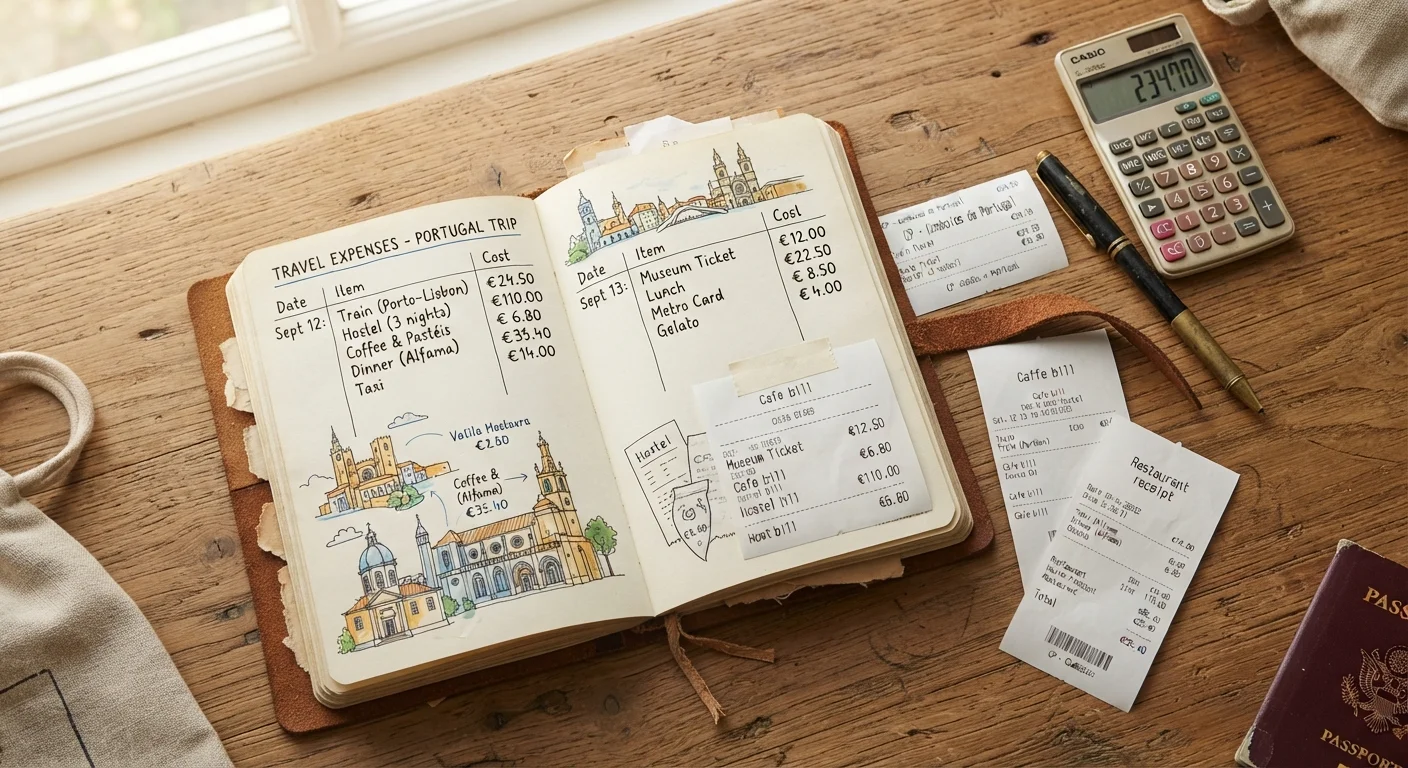
Photo credit: ExploreRoute.net | Travel Made Simple
In this article
Post-trip financial reflection is one of the most underused budgeting tools. Here's what to track and analyse once you're back home.
Key Takeaways
- Comparing your planned budget to actual spending reveals consistent blind spots in future estimates.
- Categorizing overspending by type — food, transport, activities — shows exactly where to adjust next time.
- A single trip's data can anchor more realistic expectations for similar destinations or trip styles.
- Noting what you didn't spend money on is just as instructive as tracking where you overspent.
- Building a post-trip template makes future reviews faster and more actionable.
Why Post-Trip Reviews Are Underused
Most travelers put enormous energy into pre-trip planning — comparing prices, drafting itineraries, estimating costs — and then close the chapter the moment they land home. That's a missed opportunity. The financial data sitting in your bank statements, receipts, and memory from a single completed trip is arguably more valuable than any budgeting guide you'll read before the next one.
Unlike pre-trip estimates, which are built on assumptions, post-trip numbers are real. They reflect how you actually travel: your pace, your priorities, your unexpected costs. If you're familiar with the popular destinations but still find your budgets slipping, the problem usually isn't your planning tools — it's that you haven't yet built a feedback loop. This article outlines the specific ways one completed trip can sharpen every budget you build afterward.
For travelers who are newer to the process, our framework for first-time trip planners covers the foundational structure before you layer in this kind of refinement.
This works for any trip size
Post-trip budget reviews are just as useful for short weekend trips as for multi-week international travel. A three-day domestic trip still generates data about your daily spending rhythm, your food habits, and your transport choices. Smaller trips are actually good practice runs for building the review habit before tackling a complex international itinerary.
What One Trip Can Teach You
Reconcile every category, not just the total
The overall number — how much you spent versus how much you budgeted — tells you almost nothing on its own. What matters is the breakdown. Pull your actual spending into the same categories you used when planning: accommodation, food and drink, local transport, activities, shopping, and incidentals. Then compare line by line.
You'll often find that the total looks roughly right, but the internal distribution is completely different from what you expected. Maybe accommodation came in under budget because you found a well-priced option, but food ran 40% over. That imbalance is the signal. Next trip, you'll know to allocate more to dining and less to lodging — or to plan cheaper meals deliberately to preserve that flexibility.
Category-level reconciliation reveals the imbalances your total spending figure hides entirely.
Identify your personal spending triggers
Overspending rarely happens uniformly. It tends to cluster around specific situations: the first day of a trip when excitement overrides caution, rainy-day afternoons with nothing planned, transit hubs with limited food options, or markets that encourage impulse purchases. Reflect honestly on when during the trip your spending spiked and what was happening at that moment.
This isn't about self-criticism — it's pattern recognition. If you consistently overspend in transit or on unplanned rest days, the solution isn't willpower; it's building those costs into future budgets or planning those moments more deliberately. Strategies for rebalancing mid-trip are also worth having ready before you go.
Spending spikes cluster around predictable situations — identifying yours changes how you plan for them.
Note what you underspent — and why
Most post-trip reviews focus on overruns. But underspending by category is equally instructive. If you budgeted for four paid museum visits and only went to two, that's useful data. Did you genuinely lose interest in that type of activity, or did you run out of time? Did free alternatives turn out to be just as satisfying?
Consistently underspending in a category across trips suggests you're over-allocating there and could redirect that budget toward categories where you regularly run short. It also tells you something about your travel priorities that pre-trip planning often doesn't capture accurately.
Consistent underspending in one category means you're over-allocating there and constraining something else.
Price your time, not just your expenses
One underexamined cost is the trade-off between time and money. Did you take a cheaper three-leg flight that cost you a full day of travel? Did you stay somewhere far from the action and spend more on taxis than you saved on accommodation? These aren't always wrong decisions, but they need to be evaluated in full.
After the trip, map the time costs of your money-saving choices. If the math doesn't hold up — if the savings were smaller than the loss in productive travel time or experience quality — you have a concrete case for spending differently next time. This kind of reflection is central to effective destination and logistics research before future trips.
Cheap options that cost you significant time or comfort often aren't savings when evaluated fully.
Build a destination cost baseline for future reference
Once you've reconciled your actual spending, distill it into a daily cost figure for the destination — total spend divided by trip length, excluding pre-booked flights and accommodation if you prefer to track those separately. This number becomes a reference point that's calibrated to your travel style, not a generic travel blog estimate.
Over time, you'll accumulate a small library of real baselines for different destination types: budget-friendly Southeast Asian cities, mid-range Western European capitals, higher-cost island destinations. These anchors make future budgets faster to build and more accurate from the start. They also help you quickly sense-check whether a new destination aligns with what you want to spend. Common budgeting myths are worth examining alongside this process to avoid skewed baselines.
A personal daily cost baseline, built from real data, outperforms any generic destination estimate.
Document the context that shaped your numbers
Raw numbers without context can mislead future planning. A daily spend figure from a trip taken during peak tourist season, with a special event in town, after a currency shift, or as part of a group won't translate cleanly to a solo trip in shoulder season. Note these factors when you record your post-trip data.
Contextual notes — weather disruptions that forced paid alternatives, a local holiday that changed prices, traveling with someone who had different spending preferences — make your data more transferable. They help you apply the right lessons rather than copying figures that don't fit your next trip's conditions. Itinerary structure also affects daily costs significantly, which is worth factoring into your notes.
Budget data without contextual notes can mislead future planning as much as having no data at all.
Create a simple post-trip template
Design a one-page review document before your next trip so it's ready to fill in when you return. Include fields for planned vs. actual spend by category, daily cost average, key overspend triggers, and one or two lessons to carry forward. Completing it within a week of returning — while details are fresh — takes 20–30 minutes and pays dividends on every trip that follows.
Turning Observations Into a Repeatable System
A one-time review is useful. A structured template you return to after every trip compounds over time into a genuinely personal financial model. Consider maintaining a simple spreadsheet with columns for trip type, destination region, duration, planned vs. actual spend by category, and a notes field for contextual factors — shoulder season vs. peak, group vs. solo, slow travel vs. fast-paced.
After three or four trips, patterns emerge that no generic budgeting article can predict for you: maybe you consistently underestimate ground transport by 20%, or you reliably spend half your food budget in the first two days when novelty is high. These are insights that belong to your style of travel.
For strategies on keeping spending in check throughout a trip — not just in hindsight — see how experienced travelers manage their financial habits on the road. And if you want a complete end-to-end framework from planning through post-trip reconciliation, the complete travel budgeting guide ties all the stages together.
The information in this article is intended for general educational purposes. Travel costs vary significantly based on destination, timing, traveler behavior, and external conditions. Verify current prices and conditions with official and provider sources before finalizing any travel plans.

Author
Travel Planning Editorial Team
Travel Planning Editorial Team is the collective byline for our editorial team and contributor network. Articles published under this byline or an editorial pen name are researched, written, and reviewed according to our editorial standards for clarity, consistency, and independence before publication.
View all articles →