
Why Popular Destination Guides Go Stale — and What to Use Instead
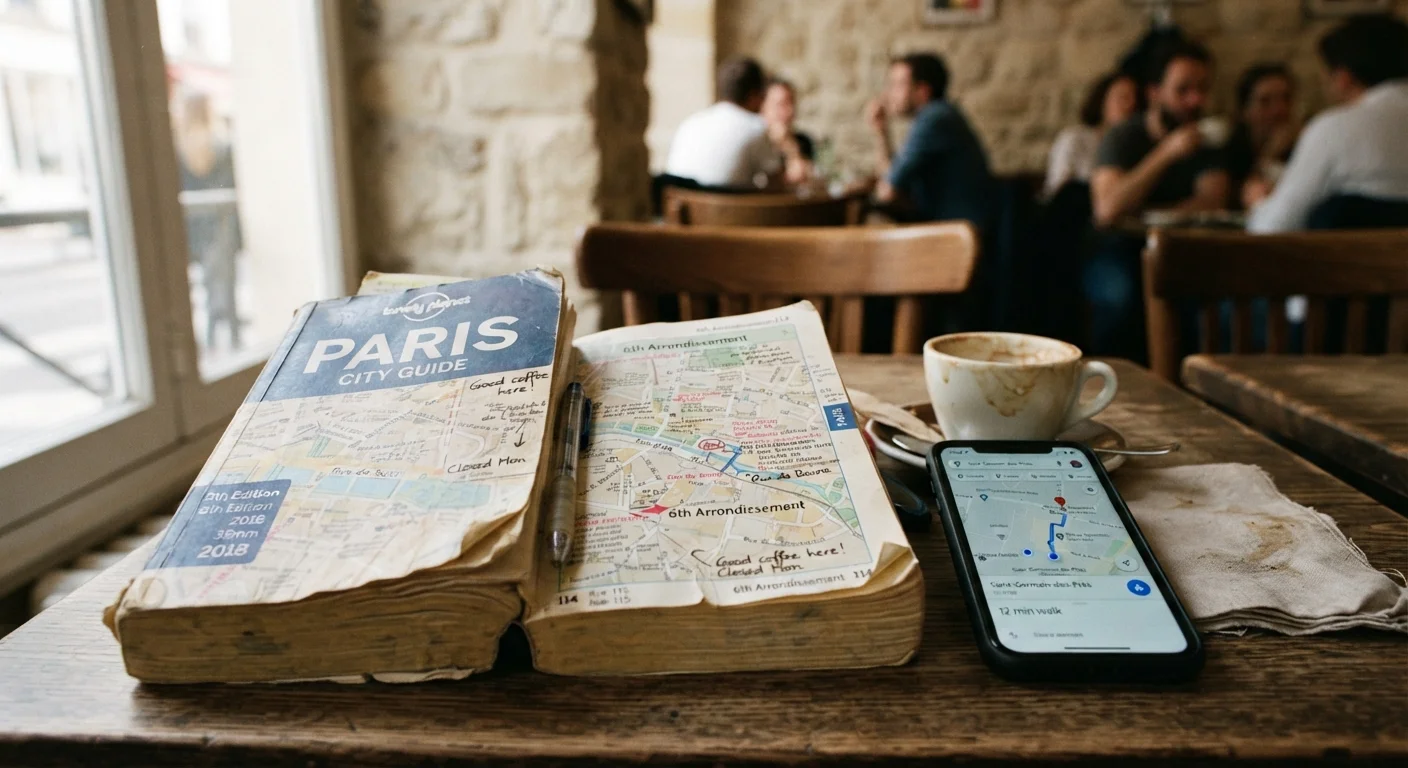
Photo credit: ExploreRoute.net | Travel Made Simple
In this article
Guidebooks and top-10 articles age quickly. Learn which research sources stay current and how to spot outdated destination intel.
Key Takeaways
- Printed guidebooks and top-10 articles can be years out of date before you even open them.
- Layering multiple source types — official, local, and community-based — produces far more reliable destination intel.
- Learning to check a source's publication date and author context is as important as the content itself.
- Verification habits built before departure prevent costly surprises on the ground.
Why Destination Guides Age Faster Than You Think
Travel guidebooks typically take 12 to 18 months to move from manuscript to shelf, and print editions are often revised only every two to four years. A top-10 article published online may carry a byline date, but its underlying research could be considerably older. Meanwhile, destinations change constantly: restaurants close, entrance fees shift, border policies update, and entire neighborhoods gentrify or deteriorate.
For frequent travelers targeting off-the-beaten-path experiences, this lag is especially damaging. The hidden gem described in a two-year-old article may now be flooded with visitors — or closed entirely. Understanding why guides go stale is the first step toward building a smarter research stack. For a broader framework on evaluating what makes any source trustworthy, see The Anatomy of a Reliable Travel Source.
Treating a guidebook's publication date as the research date.
Why it happens: Travelers assume a book published this year reflects current conditions, not realizing editorial cycles often lag 12–24 months behind the print date.
Relying solely on top-10 or 'best of' listicles for destination planning.
Why it happens: These articles rank highly in search results and feel authoritative, so travelers treat them as comprehensive guides rather than editorial snapshots.
Ignoring the author's context and recency when evaluating a source.
Why it happens: Travel content is often written by generalist contributors who visited briefly or not at all, and readers have no easy way to detect this from the headline.
Skipping verification of logistics covered in older sources.
Why it happens: When a recommended attraction or route appears in multiple sources, travelers assume the redundancy signals reliability — but multiple sources may all cite the same outdated original.
Overlooking seasonality data when researching a destination.
Why it happens: Guides often describe a place in its ideal conditions without flagging that those conditions apply to only a narrow window of the year.
Building a Research Stack That Stays Current
Replacing stale guides isn't about abandoning published research — it's about layering sources with different update cycles and perspectives. A practical research stack typically combines three tiers:
- Official and governmental sources — Tourism board websites, national park authorities, and embassy travel advisories are updated on an ongoing basis. Always verify entry requirements and safety advisories through official government channels before travel; conditions can change with little notice.
- Community and forum intelligence — Recent traveler posts on destination-specific forums often surface closures, new openings, and on-the-ground conditions that no publication has covered yet. Crowd-sourced travel information has real strengths and blind spots worth understanding before you rely on it.
- Open and public data — Satellite imagery, local news archives, and government datasets can reveal infrastructure changes, seasonal closures, and environmental conditions invisible to standard travel sites. Open-source intelligence tools give travelers a meaningful edge when used deliberately.
12–24 months
Typical lag between guidebook research and publication
Publishing industry timelines mean print travel guides often reflect conditions from one to two years before readers purchase them.
~40%
Traveler-reported inaccuracies in printed guides
Traveler surveys conducted by travel research organizations consistently find that a significant share of printed guide details — hours, prices, access — are outdated on arrival.
Once your research is solid, the next challenge is translating it into a workable plan. See the complete guide to crafting travel itineraries for a structured approach to turning research into day-by-day scheduling. And if you want to expand your overall research methodology from the ground up, the complete trip research guide covers every phase from destination discovery through final verification.
Never Rely on Guides for Entry and Safety Requirements
Visa rules, health documentation requirements, and government travel advisories change with little notice and are almost never current in published guides or travel articles. Always verify these details directly with your country's official foreign affairs or state department travel advisory pages, and with the destination country's embassy or consulate, as close to your departure date as possible.

Author
Travel Planning Editorial Team
Travel Planning Editorial Team is the collective byline for our editorial team and contributor network. Articles published under this byline or an editorial pen name are researched, written, and reviewed according to our editorial standards for clarity, consistency, and independence before publication.
View all articles →