
Design Hotels: When Architecture and Interiors Are the Destination
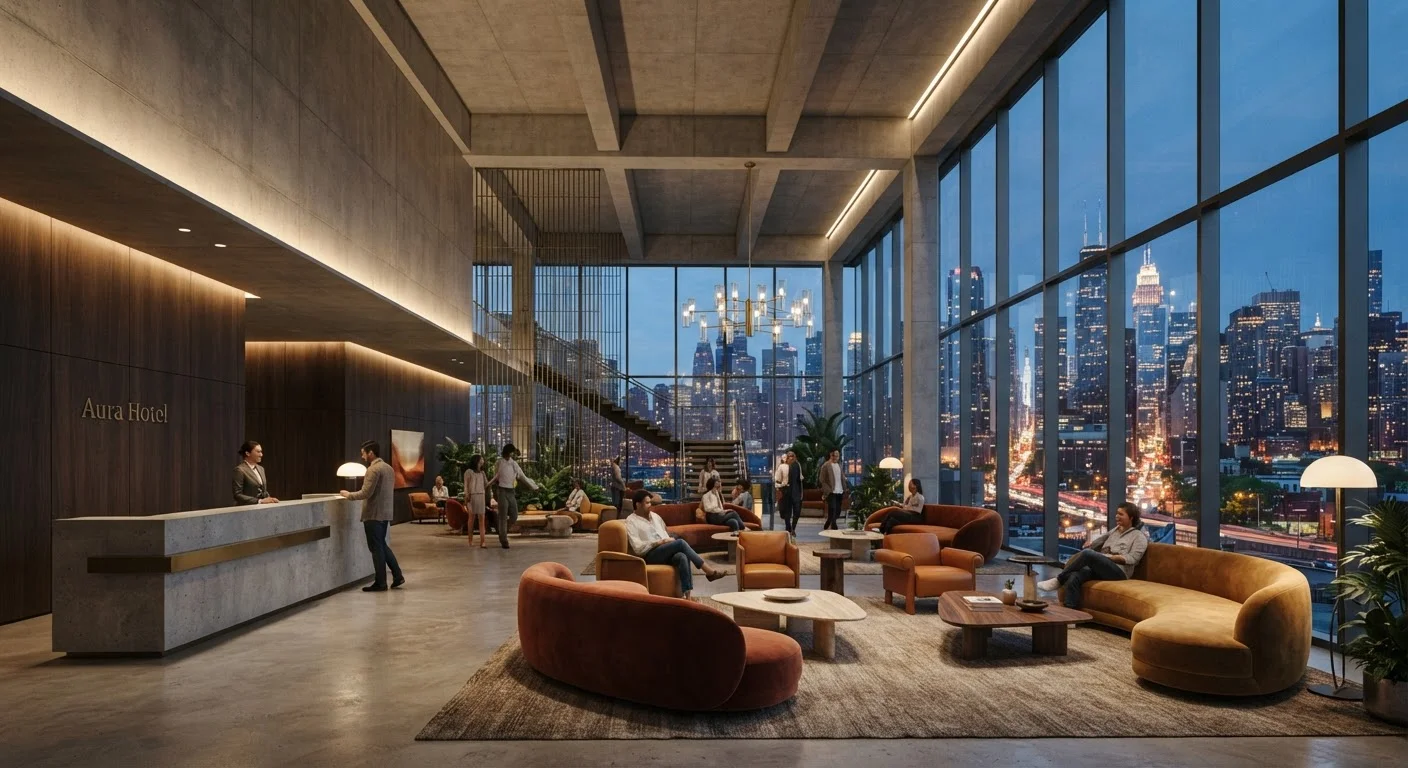
Photo credit: ExploreRoute.net | Travel Made Simple
In this article
Some hotels are built around a design vision as much as a location. What defines a true design hotel and why it matters for certain travelers.
Key Takeaways
- Design hotels treat architecture and interiors as primary guest experiences, not background aesthetics.
- The category is unregulated — interpreting a hotel's self-description critically is essential.
- Design hotels suit travelers who engage with space as a form of cultural experience.
- Location still matters, but for design-focused travelers, the building itself is often half the reason to visit.
- Not every design hotel is a luxury hotel — the category spans a wide range of price points and scales.
Why the Space Itself Becomes the Experience
Most hotels are designed to fade into the background — comfortable, functional, inoffensive. A design hotel operates on the opposite premise: the physical environment is meant to be noticed, felt, and remembered. The lobby is not a waiting room; it's the opening argument. The corridor is not a hallway; it's a transition between spatial ideas.
This distinction matters for frequent travelers who've grown fluent in the language of conventional hospitality. When you already know how a five-star room functions, what's left to engage with? For many, the answer is the building itself — its materiality, its logic, its relationship to light, landscape, and local context. Design hotels serve exactly this appetite.
The result is that staying in a genuinely design-forward property can feel less like checking into accommodation and more like inhabiting a living gallery or visiting a piece of architecture from the inside. That's not hyperbole; it's the stated ambition of many of the world's most serious hospitality design projects. For travelers who connect to this, the hotel stop being background and becomes foreground — part of why you chose the destination at all.
“A hotel is a building that must communicate something beyond shelter. When it succeeds architecturally, a guest doesn't just stay there — they experience it, remember it, and are changed in small ways by having been inside it.”
— Ilse Crawford, Interior designer and founder of Studioilse, known for her work on hospitality environments
What Separates a Design Hotel From a Hotel That Uses the Word
'Design' has become one of the most elastic words in hotel marketing. It now appears on properties ranging from genuinely conceived architectural projects to rooms with a Pantone-curated color scheme and a pendant lamp. The category is unregulated, which means travelers need to do their own interpretive work.
Genuine design hotels share a few recognizable qualities. First, there is usually a coherent concept — an idea that explains why the space looks and feels the way it does, whether that's a response to the local vernacular, an abstract aesthetic philosophy, or a specific material obsession. Second, that concept extends throughout the property rather than existing only in the lobby or the suite photography. Third, there is often accountability: a named architect, interior designer, or creative director whose vision the property represents.
Reading between the lines of a hotel's own description is a practical skill here. Properties with genuine design credentials tend to describe themselves in specific, concept-driven language. Properties borrowing the label tend to rely on adjectives — 'chic,' 'stylish,' 'modern' — without a supporting idea underneath.
How to Evaluate a Design Hotel's Claims
Search specifically for the name of the architect or designer involved — not just the property's own marketing language. If a hotel website mentions a design philosophy without crediting a creative, look for editorial coverage in architecture or design publications as an independent signal. Press coverage in dedicated design media is among the more reliable indicators that a property's credentials are substantive.
How Design Hotels Differ From Boutique and Experiential Formats
Design hotels are frequently confused with boutique hotels, and the two categories do intersect. But as explored in our piece on what genuinely distinguishes boutique hotels, the boutique label is primarily about scale and service philosophy. A boutique hotel may be warmly personal and beautifully furnished without ever making a design statement. A design hotel, by contrast, may be impersonal or even cool in atmosphere — the point is the space, not the interaction.
Similarly, design hotels differ from experiential formats like overwater bungalows and other setting-driven concepts, where the draw is primarily the physical or natural context — a lagoon, a canopy, a cliff face. Design hotels locate their value in human-made intervention: the decisions made by an architect or designer in response to a site, a client brief, or a cultural moment.
For travelers wondering whether a design hotel or a truly memorable unique stay is the right fit, the question comes down to what kind of engagement you seek. Design hotels reward attention to the built environment. Unique stays often reward openness to surprise and novelty.
72%
Travelers who say hotel design affects destination choice
According to a survey by the American Society of Interior Designers, a strong majority of travelers report that a hotel's design aesthetic influences where they decide to travel.
3x
Social media engagement for design-forward hotel content
Hospitality industry research has consistently found that architecturally distinctive hotels generate significantly higher organic social media content from guests compared to standard properties.
Matching This Hotel Style to Your Traveler Personality
Design hotels are not for everyone, and that's the point. They suit travelers who are already oriented toward the visual and spatial — people who photograph interiors, follow architects on social media, or feel genuinely altered by moving through well-conceived space. They also work exceptionally well for urban trips where the hotel is a base for engaging with a city's creative scene, since design-forward properties tend to cluster in culturally active neighborhoods.
Where a hotel sits within a city matters enormously in this context. A design hotel positioned in a district rich in architecture, galleries, and studios compounds its own value — the experience of the property extends into the surrounding streets. Conversely, a design hotel in a generic commercial corridor may feel isolated from any cultural current, which undercuts what made it worth choosing.
Travelers who prioritize family comfort, resort amenities, or service warmth above all else may find design hotels less satisfying — not because the properties are inferior, but because the design-forward ethos sometimes involves trade-offs in softness, familiarity, or conventional luxury signifiers. Knowing this going in is what allows a traveler to make a well-matched choice rather than an aspirational mistake.
Design Ambition and Practical Comfort Aren't Always Aligned
Some of the most praised design hotels have famously uncomfortable beds, acoustically challenging rooms, or bathrooms that prioritize aesthetics over function. This isn't a reason to avoid them, but it is worth researching practically before booking. Guest reviews that specifically address comfort — not just atmosphere — are useful calibration alongside architectural press coverage.
Frequently Asked Questions

Author
Where to Stay Editorial Team
Where to Stay Editorial Team is the collective byline for our editorial team and contributor network. Articles published under this byline or an editorial pen name are researched, written, and reviewed according to our editorial standards for clarity, consistency, and independence before publication.
View all articles →