
Overwater Bungalows and Other Experiential Hotel Formats Worth Understanding
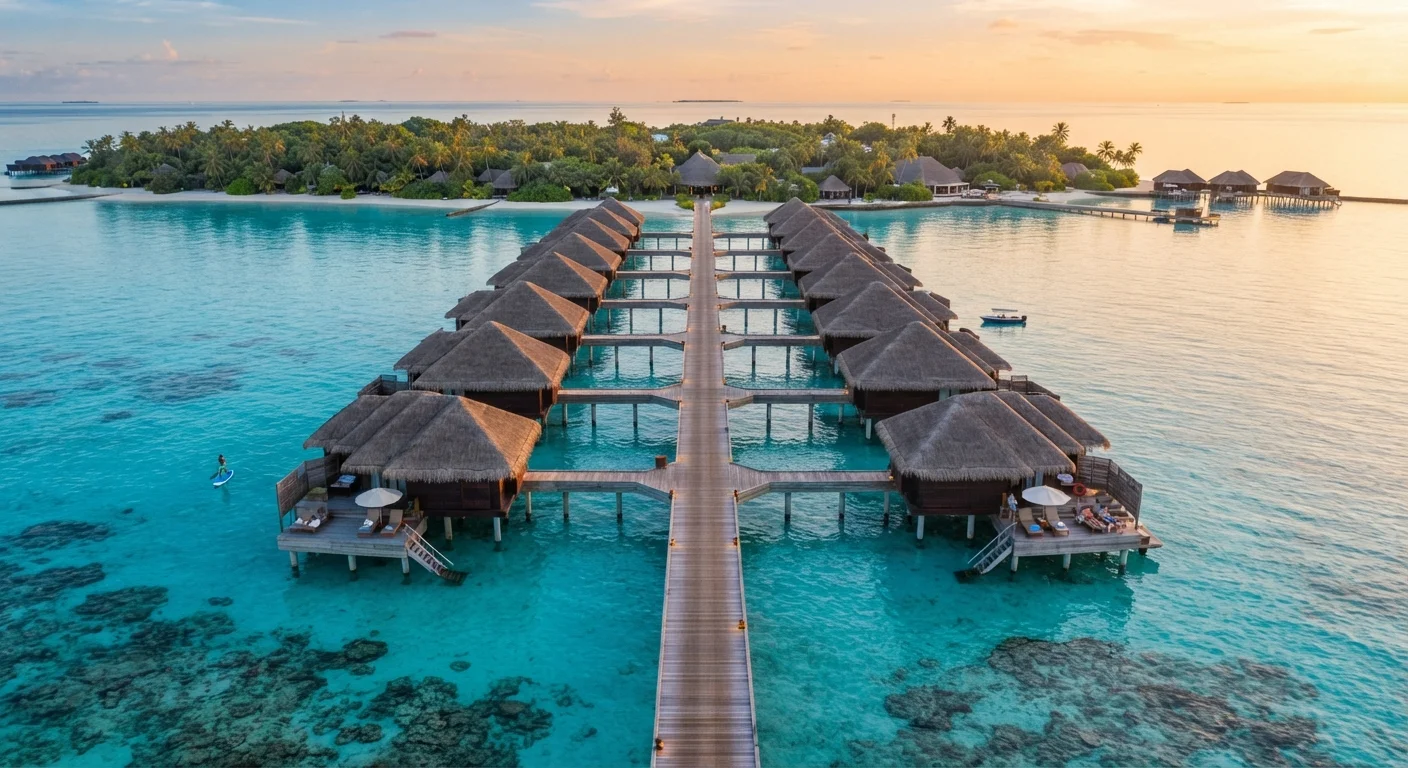
Photo credit: ExploreRoute.net | Travel Made Simple
In this article
Some hotel styles are defined by their physical setting rather than their service tier. What travelers should know before seeking out experiential formats.
Key Takeaways
- Experiential hotel formats are defined by their physical setting, not their service tier or star rating.
- Each format carries inherent trade-offs in accessibility, comfort, and practicality that travelers should weigh in advance.
- Matching your personality and trip purpose to a hotel format produces more satisfying stays than chasing novelty alone.
- Some formats suit specific traveler types — couples, solo adventurers, families — more than others.
- Understanding what a format actually delivers helps calibrate expectations before booking.
When the Room Itself Is the Experience
Most hotel categories are defined by price point, service philosophy, or brand positioning. Experiential formats break that logic entirely. An overwater bungalow in French Polynesia, a cliff-edge cave suite in Cappadocia, or a converted lighthouse on the Maine coast are not distinguished by thread count or concierge responsiveness — they're distinguished by the fact that the physical structure and setting are, themselves, the primary draw.
This shift in what a stay is for changes how travelers should evaluate and choose accommodation. Matching your trip purpose to the right hotel style is always relevant, but experiential formats add another layer: you're not just choosing a base of operations, you're choosing an environment to inhabit. The formats below represent the most meaningful categories worth understanding — not as aspirational bucket-list items, but as distinct lodging philosophies with real implications for how a trip unfolds.
Start with the Setting, Not the Aesthetic
Before committing to an experiential format, ask what the setting requires of you rather than what it offers. Does the environment demand physical agility, tolerance for humidity, or a willingness to disconnect from urban infrastructure? Travelers who answer those questions honestly before booking tend to arrive with better-calibrated expectations — and leave with more genuine satisfaction.
Seven Experiential Hotel Formats and What They Actually Deliver
Overwater Bungalows
The overwater bungalow — most closely associated with the Maldives, Bora Bora, and French Polynesia — places the guest room directly above a lagoon or calm sea, typically on stilts, with direct water access from a private deck. The format prioritizes immersion in a marine environment above almost every other consideration.
What travelers should understand: remoteness is structural, not incidental. Many overwater properties sit on private islands or atolls accessible only by seaplane or boat transfer, which adds both cost and logistical complexity. The experience is most rewarding for travelers who genuinely want to slow down in a contained aquatic environment. Those who prefer urban access, varied dining, or cultural programming may find the format limiting. For a deeper look at comfort and access trade-offs across water-based formats, the distinctions between overwater bungalows, floating hotels, and houseboats are worth understanding before booking.
The overwater bungalow rewards travelers who want to slow down, not those seeking varied cultural access.
Cave and Rock-Cut Dwellings
Cappadocia in Turkey is the most recognized example, but cave accommodation also exists in parts of Spain, Greece (particularly Santorini), and the American Southwest. These structures are either carved directly into volcanic rock or built within natural cave formations, producing a thermal environment that stays cool in summer and warm in winter without mechanical intervention.
The appeal is sensory and historical — the feeling of inhabiting a landscape rather than sitting atop it. Trade-offs include limited natural light in deeper rooms, irregular floor plans that may not suit travelers with mobility considerations, and occasional acoustic quirks. The format suits travelers drawn to geological drama and cultural depth over resort-style amenity stacks.
Cave dwellings offer a rare sensory experience — inhabiting a landscape rather than simply looking at it.
Treehouse Accommodation
Contemporary treehouse stays range from architect-designed platforms in Pacific Northwest forests to open-air structures in Costa Rican cloud forest canopies. The format has matured significantly from its novelty origins — many properties now offer full plumbing, climate control, and serious design intent alongside the elevated position.
The defining characteristic is vertical separation from the forest floor, which changes how sound, light, and wildlife encounters work. Travelers who value proximity to nature without full wilderness immersion often find the treehouse format a productive middle ground. It's worth noting that access almost always involves stairs or ladders, making it a poor fit for guests with mobility limitations. A field guide to unconventional stays covers how this category compares to other alternative lodging types.
Treehouse stays have matured into design-led experiences — not just novelty perches in the canopy.
Desert Camps and Glamping Formats
Structured camps in environments like the Wadi Rum desert in Jordan, Namibia's dunes, or the American canyon country operate on a different logic from permanent hotels. The impermanence of the structure is often intentional — part of what makes the format feel appropriate to its landscape. High-end versions (sometimes called glamping) add insulated canvas walls, proper beds, and private bathroom facilities without eliminating the exposure to night sky, silence, and terrain that defines the setting.
This format suits travelers who are motivated by landscape access above all else — those who want to sleep under the Milky Way, not merely photograph it from a terrace. Seasonal viability matters: extreme temperatures in desert environments can make certain months genuinely uncomfortable, and travelers should research conditions specific to their destination and planned dates.
Desert camps suit travelers motivated by landscape access and astronomical darkness, not amenity depth.
Houseboats and Floating Structures
Distinct from overwater bungalows, which are fixed on stilts above water, houseboats are buoyant structures that move or can move, moored in harbors, rivers, lakes, or coastal inlets. Kerala's backwater kettuvallam, Amsterdam's canal houseboats, and various lake-moored options in the Pacific Northwest each offer a fundamentally different relationship with water — one that involves gentle motion, changing light, and proximity to working waterways.
The format suits travelers who find the rhythm of water calming and who are comfortable in compact, non-rectangular living spaces. Motion sensitivity is a genuine consideration; even moored vessels move perceptibly in wind or wake, and travelers prone to motion discomfort should factor this in carefully.
Houseboats offer a living relationship with water — including its motion — that fixed structures can't replicate.
Converted Heritage Structures
Lighthouses, monasteries, industrial warehouses, railway carriages, and historic fortifications repurposed as accommodation represent a category where architectural history is the primary guest experience. Unlike design hotels where architecture is a curatorial statement, converted heritage stays involve structures that predate any hospitality intent — the building was built for something else entirely, and the stay is partly about understanding that original purpose.
Trade-offs include irregular room shapes, acoustic idiosyncrasies, and occasional limitations on contemporary amenities that can't be installed without compromising historic fabric. The format rewards historically curious travelers and tends to disappoint those expecting seamless modern hotel functionality in an interesting wrapper.
Converted heritage stays work best for travelers curious about a building's original purpose, not just its aesthetics.
Ryokans, Riads, and Regionally Specific Traditional Forms
Some experiential formats are inseparable from their cultural context. Japanese ryokans, Moroccan riads, Brazilian pousadas, and Georgian guesthouses (among many others) are not merely aesthetically distinctive — they encode specific hospitality philosophies, spatial logics, and daily rhythms. A ryokan structures the guest's day around communal bathing, kaiseki dining, and tatami sleeping arrangements. A riad organizes life around an interior courtyard that shields against the medina's noise. The format teaches you something about how a culture organizes domestic space and hospitality.
Traditional lodging styles from around the world deserve their own framework — they're less about novelty than about genuine cultural encounter baked into the building itself. Travelers willing to adjust their own routines to meet a format's logic tend to get the most from these stays.
Traditional lodging forms teach you how a culture organizes hospitality — if you're willing to meet the format's logic.
Experiential Formats Aren't Defined by Price
A common misconception is that experiential hotel formats are exclusively luxury territory. While some — particularly overwater bungalows and high-end desert camps — skew toward premium pricing due to their remote locations and operational costs, others (houseboats, certain cave guesthouses, heritage conversions) exist across a wide range of price points. The format and the service tier are separate variables. Understanding the full hotel style spectrum can help travelers separate format from cost expectations.
Choosing Format Over Familiarity
Experiential stays require more deliberate planning than conventional hotels precisely because the format is doing so much work. Comfort expectations, mobility needs, travel companions, and even climate tolerance all bear on whether a given format will delight or frustrate. Unique stays can fall short when expectations aren't calibrated — a point worth sitting with before committing to a remote format with limited fallback options.
Travelers who approach experiential formats with genuine curiosity about what a setting offers — rather than a desire to photograph it — tend to come away with the most lasting impressions. The format is the invitation. What you do inside it is still up to you. For a broader map of how geography shapes the experience of any stay, a location-first planning framework can help ground decisions before the novelty takes over.

Author
Where to Stay Editorial Team
Where to Stay Editorial Team is the collective byline for our editorial team and contributor network. Articles published under this byline or an editorial pen name are researched, written, and reviewed according to our editorial standards for clarity, consistency, and independence before publication.
View all articles →