
The Complete Guide to Unique Stays: From First Curiosity to Confident Booking
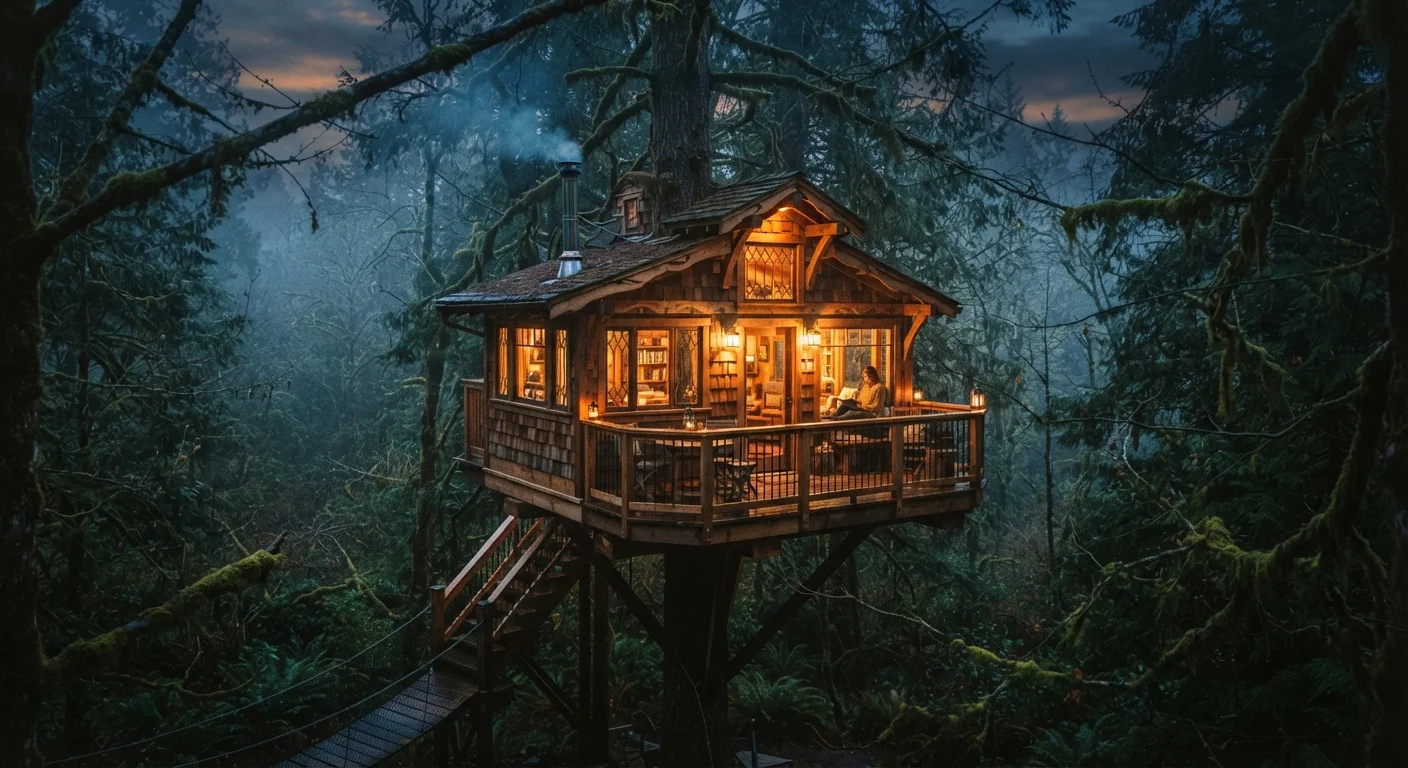
Photo credit: ExploreRoute.net | Travel Made Simple
In this article
Everything you need to understand, find, and get the most from unconventional lodging — from treehouses to underground caves and beyond.
Key Takeaways
- Unique stays range from treehouses and caves to converted silos and underwater rooms — each with distinct trade-offs.
- The best offbeat lodging enhances your destination experience rather than existing as a novelty in isolation.
- Thorough vetting — reading policies, checking accessibility, and confirming amenities — prevents common disappointments.
- Calibrating expectations honestly is the single biggest factor in a successful unconventional stay.
- Many unique accommodations require flexible cancellation planning and earlier booking windows than standard hotels.
What Counts as a Unique Stay?
The term "unique stay" gets stretched in every direction by marketing copy, but editorially it refers to lodging that meaningfully differs from a standard hotel room in structure, setting, or concept — and where that difference is central to the experience rather than incidental to it. A yurt on a working ranch, a renovated lighthouse on a coastal headland, an underground cave suite carved into Cappadocian rock: these places ask something of you as a traveler. They require a willingness to trade predictability for immersion.
What they are not is simply boutique or design-forward. A stylish hotel with an unusual lobby does not qualify. The distinction matters because it shapes how you research, book, and behave once you arrive. Unique stays often come with operational realities — limited cell service, composting toilets, no room service, or communal spaces — that a traveler expecting a hotel experience will find jarring.
For a deeper look at what separates a genuinely transformative lodging from a gimmick, see The Anatomy of a Truly Memorable Unique Stay.
The Spectrum of Unconventional Lodging
Unique stays exist on a broad continuum. At one end sit accommodations that are unusual primarily in structure but otherwise comfort-forward: high-end treehouses with king beds and rainfall showers, converted vintage train carriages with full concierge service, or glass-pod cabins in Scandinavia equipped with heated floors. These require minimal adjustment and suit travelers who want novelty without sacrifice.
Further along the spectrum are places where the experience is genuinely immersive and demands more: off-grid desert camps where water is limited and stars replace ceiling fans, working farm stays where breakfast depends on what was harvested that morning, or cave dwellings where temperature and humidity behave unlike any climate-controlled room. These reward travelers who approach them with curiosity rather than expectations.
60%+
Travelers seeking non-traditional accommodations
Industry surveys from hospitality research groups have consistently found growing traveler interest in experiential and non-hotel lodging options over recent years.
1–2 units
Typical inventory at boutique unique properties
Many offbeat stays — cave suites, treehouses, lighthouse conversions — operate with only one or two bookable units, making availability genuinely limited.
3–6 months
Common advance booking window for sought-after unique stays
Properties with limited inventory in popular regions often fill peak-season dates months earlier than comparable traditional hotels.
At the far end are truly experimental concepts — underwater hotel rooms, ice hotels rebuilt each winter in Scandinavia, or cliff-face lodges accessible only by zip line — where the structural novelty is the entire point. These tend to be short-stay, high-cost, and highly polarizing. They are worth understanding within the broader landscape of hotel styles before committing.
How to Evaluate Whether a Unique Stay Is Right for You
The most useful question is not "Is this place cool?" but rather "Does this place serve this trip?" A treehouse in the Daintree Rainforest is extraordinary — and also involves humidity, insects, and no urban conveniences. For a solo traveler on a nature immersion trip, that trade-off is the point. For a couple celebrating an anniversary expecting pampering, it may not be.
Treat the property's listing photographs as a best-case scenario and actively seek reviews written during poor weather or off-season — those reveal the true baseline experience.
Unique stays are highly weather-dependent and structurally varied; conditions that are charming in summer can become genuinely uncomfortable in winter without proper insulation or heating.
Message the host with one or two specific questions before booking — their response speed and quality tells you more about the stay than any star rating.
At properties without front-desk staff, host responsiveness is your primary safety net; a host who is slow to respond pre-booking is unlikely to be faster mid-stay.
Consider the following dimensions honestly before booking:
- Comfort baseline: What amenities are non-negotiable for you — private bathroom, climate control, reliable Wi-Fi, accessible entry?
- Trip context: Is the accommodation meant to be the destination itself, or a base for exploring a region? Unique stays that double as destinations justify their quirks more readily.
- Travel companions: A solo adventurer and a family with young children have entirely different tolerance thresholds for unconventional infrastructure.
- Physical accessibility: Many unique stays involve ladders, uneven terrain, or structures without elevator access. Confirm specifics with the host before booking.
For an honest assessment of where unique stays frequently disappoint, Where Unique Stays Fall Short is worth reading before you commit.
Novelty Alone Is Not Enough
A stay that is unusual in structure but poorly maintained, inaccessibly located without disclosure, or run by an unresponsive host will be memorable for the wrong reasons. Prioritize operational reliability and honest communication from hosts over the appeal of the concept itself. The most visually striking properties and the most satisfying guest experiences do not always overlap.
Finding and Vetting Offbeat Accommodations
Discovery often happens through word of mouth, travel editorial, or niche platforms that specialize in unusual lodging. General travel research methodology — covering destination discovery, logistics, and verification — applies here too; see the complete trip research guide for a full framework.
When vetting a specific property, go beyond the photography. Request or locate:
- Floor plans or structural diagrams if sleeping areas are elevated or enclosed
- Clear descriptions of bathroom facilities — shared, composting, or outdoor arrangements should be stated explicitly
- Host response rate and response time, which signal operational reliability
- Reviews that mention weather, noise, or off-season conditions — these reveal realities the listing photographs conceal
- Cancellation and refund policy, since unique stays often have stricter terms than chain hotels
If the property sits in a remote location, verify independently how it is accessed, whether roads are seasonal, and what the nearest medical facility is. This is particularly important for stays in wilderness settings or developing destinations.
Seasonal Conditions Can Change Everything
Many unique stays are significantly affected by season in ways standard hotels are not. A riverside floating cabin may be inaccessible during spring flood conditions. A desert glamping camp may close entirely in summer heat. Always verify the property's operating season and ask specifically whether your travel dates fall within normal operating conditions.
Booking with Confidence
Unique stays frequently book further in advance than equivalent-tier hotels, particularly for properties with only one or two units. If a property has a single cave suite or one treehouse, availability compresses quickly around school holidays, shoulder season weekends, and local festivals.
When booking, confirm the following in writing before payment clears:
- Check-in and check-out logistics — many remote properties have narrow arrival windows or require host-guided orientation
- What is and is not included (linens, firewood, breakfast, park entry fees)
- Emergency contact procedures and host availability during your stay
- Any age, weight, or mobility restrictions relevant to the structure
Travel insurance is worth serious consideration for non-refundable unique stays, particularly those involving international travel or significant upfront cost. Consult your insurer directly about what is and is not covered under your specific policy. For an instructive contrast in how different lodging models handle inclusions and expectations, the full picture on all-inclusive resorts illustrates why reading the fine print matters across all accommodation types.
Confirm Arrival Logistics in Writing
Many unique stays involve host-dependent check-in — a physical key handoff, a gate code sent day-of, or a guided orientation on arrival. Confirm the exact process and a backup contact number before you travel. Arriving after dark at an off-grid property with no confirmed access plan is a stress no photography can compensate for.
Making the Most of Your Stay
Arrive oriented rather than surprised. If the property sent pre-arrival materials, read them. If not, ask the host in advance about the quirks — where the light switches are, how the wood stove works, what the protocol is if water pressure drops. Hosts of unique properties almost always have institutional knowledge about their space that isn't in the listing, and asking signals that you're an engaged guest rather than an entitled one.
Lean into the constraints. The absence of room service or a concierge is not a failure of hospitality — it is the condition that makes the stay memorable. Travelers who adapt their pace and expectations to the property's logic, rather than imposing hotel-world habits onto it, consistently report more satisfying experiences.
Finally, consider what the stay is asking you to notice. A working vineyard estate asks you to pay attention to the landscape and the rhythm of agricultural seasons. A clifftop lighthouse asks you to notice the water, the weather, the light. The most rewarding unique stays are those where the accommodation functions as an act of deliberate location — where where you sleep shapes what you see. That relationship between place and lodging is what elevates a night in an unusual room into something genuinely worth the journey.

Author
Where to Stay Editorial Team
Where to Stay Editorial Team is the collective byline for our editorial team and contributor network. Articles published under this byline or an editorial pen name are researched, written, and reviewed according to our editorial standards for clarity, consistency, and independence before publication.
View all articles →