
Where Unique Stays Fall Short — And When That's Worth Knowing
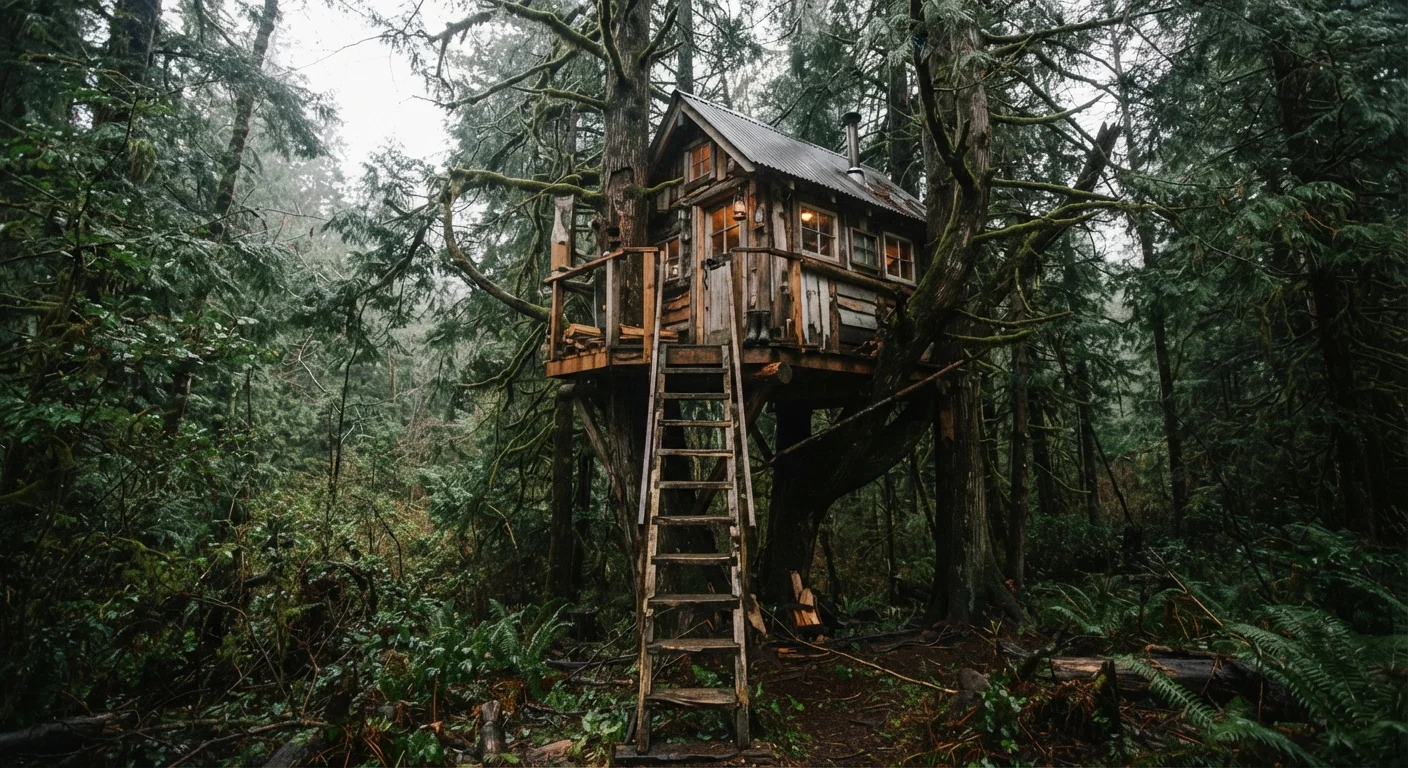
Photo credit: ExploreRoute.net | Travel Made Simple
In this article
Offbeat accommodation can disappoint when expectations aren't calibrated. Here's an honest look at the trade-offs involved.
Key Takeaways
- Unique stays frequently trade comfort and convenience for atmosphere and novelty.
- Remoteness, limited amenities, and variable service quality are the most common friction points.
- Knowing your own travel priorities before booking is the most reliable way to avoid disappointment.
- Accessibility limitations at unconventional properties are real and often underreported.
- The experience gap between expectation and reality is widest when a stay is chosen for aesthetics alone.
Delivers atmosphere no standard hotel can replicate
A treehouse, converted windmill, or cliff-edge geodome creates a sensory and emotional context that shapes the entire trip. For experience-driven travelers, that immersive quality is the primary value of the stay.
Creates genuinely lasting travel memories
Unconventional settings tend to be recalled more vividly than conventional ones — the specificity of place (the sound of the canopy, the smell of the cave) encodes the experience more deeply than a well-appointed hotel room.
Often located in places mainstream lodging ignores
Unique properties frequently occupy landscapes — remote coastlines, dense forests, desert plateaus — that traditional hotel development bypasses entirely. The accommodation becomes the reason to reach places that would otherwise go unvisited. See lodging options by destination type for location-specific guidance.
Supports smaller, independent operators
Most offbeat stays are owner-operated or small-scale enterprises rather than chain properties, meaning spending tends to circulate more directly in local and regional economies.
Scales well with trip context and intention
For milestone trips, creative retreats, or deliberately slow travel, a unique stay can anchor an entire journey in a way that a conventional hotel rarely does.
Comfort levels frequently below conventional hotel standards
Beds in converted structures, limited climate control, composting toilets, and minimal storage are common features of architecturally distinctive properties. These aren't oversights — they're often inherent to the structure — but they can significantly affect sleep quality and daily comfort.
Remote locations limit flexibility and mobility
Many unique stays are purposefully difficult to reach, which also means difficult to leave. Poor weather, a medical need, or simply wanting to explore a wider area can all become logistically complicated when you're an hour from the nearest paved road.
Accessibility barriers are widespread and underreported
Spiral stairs, uneven terrain, outdoor facilities, and low clearances are standard features at many unconventional properties. Travelers with mobility considerations need to verify specifics directly with the property, as listing descriptions often omit critical physical details.
Price premium rarely reflects proportionate comfort
The novelty factor commands a significant markup at many unique stays, meaning guests can pay luxury-tier prices for what amounts to a rustic or basic physical experience. The value is experiential, not amenity-based — a distinction worth making explicit before booking.
Service infrastructure is often minimal or absent
Front desks, concierge services, housekeeping, and on-site dining are the exception rather than the rule at owner-run unique properties. Self-sufficiency is generally expected, which can feel like charm or friction depending on the traveler.
Photographs routinely outperform the reality
Wide-angle lenses, favorable lighting, and selective framing routinely make small, basic spaces appear expansive and refined. The visual gap between listing imagery and lived experience is particularly pronounced in the unique-stay category.
What 'Unique' Actually Costs You
The appeal of a converted lighthouse, a desert cave suite, or a floating cabin is rarely in doubt. The question worth asking before booking is simpler: what are you giving up to get there?
Offbeat accommodation is, almost by definition, built around a concept rather than around operational efficiency. That creative priority shapes everything — from the size of the bathroom to the reliability of the Wi-Fi. The trade-offs aren't flaws so much as features of the category. But travelers who arrive expecting hotel-grade consistency are routinely disappointed, and that gap between expectation and experience is the root of most negative reviews unique stays attract.
For a sharper lens on what distinguishes a genuinely memorable stay from one that's merely unusual, see The Anatomy of a Truly Memorable Unique Stay. And for a broader orientation to the category, The Complete Guide to Unique Stays covers the full landscape from treehouses to underground properties.
Delivers atmosphere no standard hotel can replicate
A treehouse, converted windmill, or cliff-edge geodome creates a sensory and emotional context that shapes the entire trip. For experience-driven travelers, that immersive quality is the primary value of the stay.
Creates genuinely lasting travel memories
Unconventional settings tend to be recalled more vividly than conventional ones — the specificity of place (the sound of the canopy, the smell of the cave) encodes the experience more deeply than a well-appointed hotel room.
Often located in places mainstream lodging ignores
Unique properties frequently occupy landscapes — remote coastlines, dense forests, desert plateaus — that traditional hotel development bypasses entirely. The accommodation becomes the reason to reach places that would otherwise go unvisited. See lodging options by destination type for location-specific guidance.
Supports smaller, independent operators
Most offbeat stays are owner-operated or small-scale enterprises rather than chain properties, meaning spending tends to circulate more directly in local and regional economies.
Scales well with trip context and intention
For milestone trips, creative retreats, or deliberately slow travel, a unique stay can anchor an entire journey in a way that a conventional hotel rarely does.
Where Unique Stays Genuinely Fall Short
The disadvantages of unconventional lodging cluster around a few consistent themes: physical access, service infrastructure, location convenience, and price-to-comfort ratio. None of these is universal, but each appears frequently enough to deserve honest attention.
Comfort levels frequently below conventional hotel standards
Beds in converted structures, limited climate control, composting toilets, and minimal storage are common features of architecturally distinctive properties. These aren't oversights — they're often inherent to the structure — but they can significantly affect sleep quality and daily comfort.
Remote locations limit flexibility and mobility
Many unique stays are purposefully difficult to reach, which also means difficult to leave. Poor weather, a medical need, or simply wanting to explore a wider area can all become logistically complicated when you're an hour from the nearest paved road.
Accessibility barriers are widespread and underreported
Spiral stairs, uneven terrain, outdoor facilities, and low clearances are standard features at many unconventional properties. Travelers with mobility considerations need to verify specifics directly with the property, as listing descriptions often omit critical physical details.
Price premium rarely reflects proportionate comfort
The novelty factor commands a significant markup at many unique stays, meaning guests can pay luxury-tier prices for what amounts to a rustic or basic physical experience. The value is experiential, not amenity-based — a distinction worth making explicit before booking.
Service infrastructure is often minimal or absent
Front desks, concierge services, housekeeping, and on-site dining are the exception rather than the rule at owner-run unique properties. Self-sufficiency is generally expected, which can feel like charm or friction depending on the traveler.
Photographs routinely outperform the reality
Wide-angle lenses, favorable lighting, and selective framing routinely make small, basic spaces appear expansive and refined. The visual gap between listing imagery and lived experience is particularly pronounced in the unique-stay category.
Remoteness deserves special mention. Properties in dramatic natural settings — clifftops, deep forest, off-grid islands — often pair their visual appeal with genuinely challenging access. What reads as "secluded" in marketing copy may mean a 40-minute unpaved road, no cell coverage, and no ability to leave easily if conditions change. Misconceptions About Remote Lodging examines this gap in detail.
Accessibility is another underreported dimension. Spiral staircases, low doorways, outdoor composting toilets, and uneven terrain are common features at architecturally distinctive properties — features that may be entirely incompatible with certain mobility needs. Planning a Unique Stay Around Accessibility Needs provides a practical framework for assessing this before committing.
The Photography Problem in Unique Stays
Listing imagery for unconventional accommodation is particularly susceptible to selective framing. A treehouse that appears spacious and light-filled in photos may have low ceilings, limited natural light, and a platform measured in square feet rather than square meters. Reading recent guest reviews with attention to physical descriptions — not just sentiment — is one of the more reliable correctives. Reading Between the Lines offers useful tools for evaluating travel content more critically.
When the Trade-Offs Are Worth It — And When They Aren't
The traveler most likely to be satisfied by a unique stay is one who chose it for a specific, concrete reason — not because a photo looked striking on a social platform. If the draw is sleeping under a glass roof in a northern forest to watch the aurora, the cold temperatures and limited in-room amenities are part of the point. If the draw is "doing something different" without a strong sense of what that means personally, the property's quirks will likely feel like deficiencies rather than character.
1 in 3
Unique stay guests cite unmet expectations as their primary complaint
Industry hospitality research consistently finds that expectation misalignment — not objective quality failures — drives the majority of negative reviews for unconventional accommodation.
40%+
Price premium over comparable conventional lodging
Analysis of short-term rental and boutique lodging markets suggests novelty and uniqueness consistently command a significant markup above functionally equivalent standard accommodation.
Context also matters significantly. A unique stay can be a genuinely transformative centerpiece for a milestone trip — an anniversary, a solo journey, a deliberate reset. The same property booked as a stopover between transit legs, or chosen primarily on price, is far more likely to disappoint. For travelers weighing budget against experience quality more broadly, Why 'Cheap Travel' Isn't Always Low-Cost offers a parallel reckoning.
For niche property types with specific verification considerations — cave hotels being one clear example — doing property-level due diligence before booking is essential. What to Check Before Booking a Cave Hotel models the kind of targeted research that applies across many unconventional stay categories.
Ultimately, the traveler who benefits most from this category is one who has honestly answered a prior question: am I drawn to what this place genuinely is, or only to what it looks like? That distinction, more than any amenity checklist, determines whether a unique stay becomes a highlight or a lesson.

Author
Where to Stay Editorial Team
Where to Stay Editorial Team is the collective byline for our editorial team and contributor network. Articles published under this byline or an editorial pen name are researched, written, and reviewed according to our editorial standards for clarity, consistency, and independence before publication.
View all articles →