
Southeast Asia by Sea: Navigating the Region's Cruise Routes
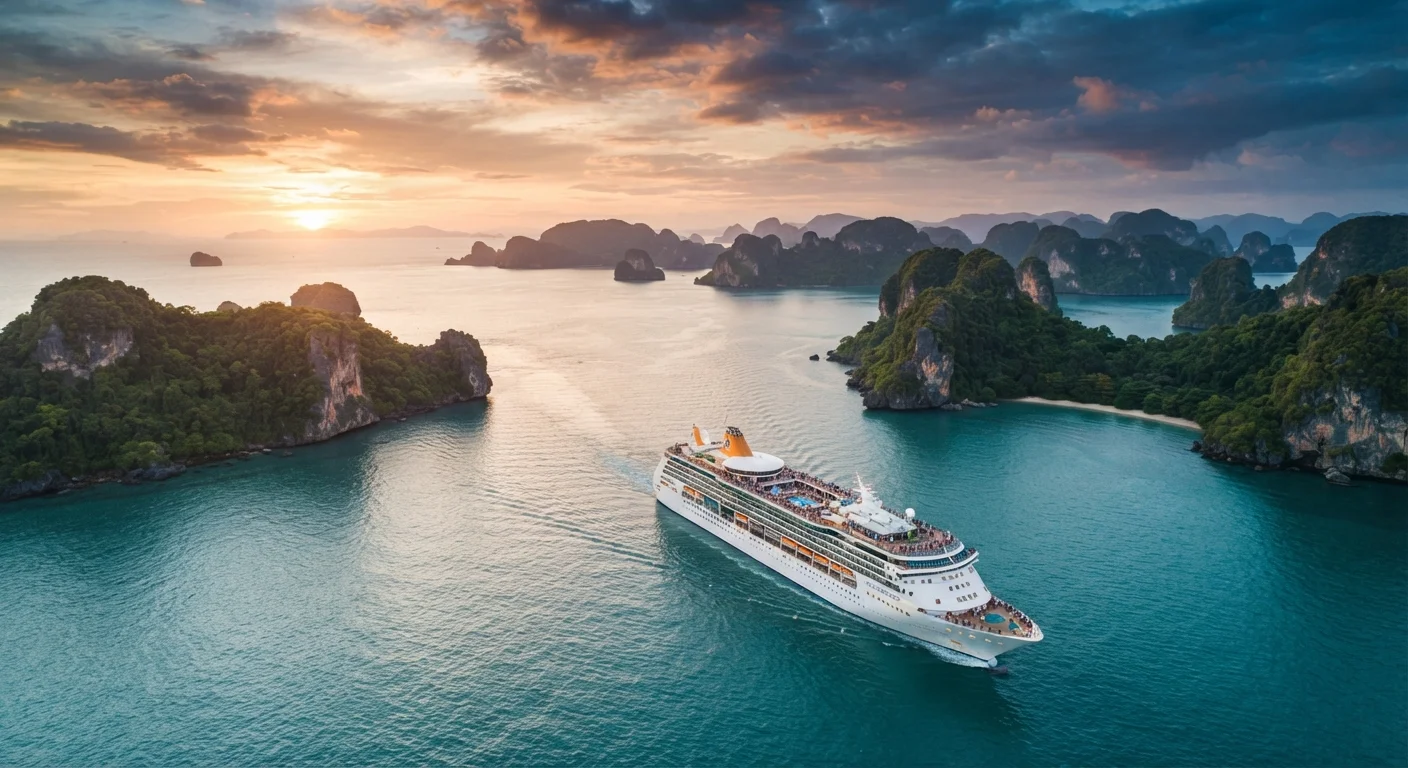
Photo credit: ExploreRoute.net | Travel Made Simple
In this article
- Why Southeast Asia Demands Its Own Cruise Framework
- River Cruising: The Mekong and Irrawaddy Routes
- Coastal and Island Routes: The South China Sea and Beyond
- The Strait of Malacca and Singapore Hub Itineraries
- Seasonality, Port Conditions, and Practical Considerations
- Matching Your Voyage Style to the Right Route
From the Mekong Delta to the Strait of Malacca, Southeast Asia's cruise itineraries span river, coastal, and island routes worth understanding.
Key Takeaways
- Southeast Asia encompasses river, coastal, and open-ocean cruise formats that each suit different travel styles.
- The Mekong and Irrawaddy rivers offer intimate, slow-travel itineraries that ocean ships cannot replicate.
- Singapore functions as the primary hub for regional ocean itineraries, connecting Malaysia, Indonesia, Vietnam, and Thailand.
- Seasonality is critical — monsoon patterns vary significantly between the Gulf of Thailand, Andaman Sea, and South China Sea.
- Visa, health, and entry requirements differ substantially by country; always verify with official sources before travel.
Why Southeast Asia Demands Its Own Cruise Framework
Southeast Asia resists one-size-fits-all cruise logic. Unlike the structured corridors of Mediterranean itineraries, the region spans eleven countries, multiple seas, navigable inland rivers, and thousands of islands scattered across roughly four million square miles of water. A traveler planning a Mekong Delta voyage is making a fundamentally different decision from one booking a Singapore-to-Bali sailing — in vessel type, pace, port access, and cultural depth.
Understanding this variety begins with recognizing that Southeast Asian cruise routes fall into three broad categories: river voyages, coastal and island circuits, and longer deep-water ocean itineraries. Each has distinct vessel requirements, port infrastructure, and shore-time dynamics. Travelers already familiar with the core differences between ocean and river cruise formats will find those distinctions amplified here — Southeast Asia's geography makes route-type selection more consequential than almost anywhere else.
11
Countries spanning the Southeast Asian cruise region
Southeast Asia comprises eleven nations, each with distinct entry requirements, port infrastructure, and seasonal sailing windows.
2,700 mi
Total length of the Mekong River
The lower Mekong — between Cambodia and southern Vietnam — is the primary segment accessible to passenger river cruise vessels.
7,600+
Islands in the Philippine archipelago
The Philippines' vast island geography presents both exceptional destination variety and significant port infrastructure limitations for cruise vessels.
River Cruising: The Mekong and Irrawaddy Routes
The Mekong River runs roughly 2,700 miles from the Tibetan Plateau through China, Myanmar, Laos, Thailand, Cambodia, and Vietnam before emptying into the South China Sea. Cruise segments accessible to travelers typically cover the lower Mekong — between Siem Reap (the gateway to Angkor Wat) in Cambodia and Ho Chi Minh City in southern Vietnam. These voyages average seven to fourteen nights and use small, purpose-built river vessels carrying between 30 and 130 passengers.
What distinguishes this route is density of cultural access. Port stops include riverside villages, floating markets, Buddhist monasteries, and French colonial-era towns that larger ships cannot reach. Pacing is unhurried; multiple stops per day are common, and gangways connect directly to riverbanks rather than tender docks or commercial port terminals.
The Irrawaddy in Myanmar offers a parallel experience further north, connecting Mandalay to Bagan through a landscape largely unchanged in decades. However, travelers should consult current government travel advisories before considering Myanmar itineraries, as political conditions can affect safety and operational access significantly.
When evaluating Mekong itineraries, prioritize operators whose vessels were purpose-built for the river rather than retrofitted ocean ships — draft depth and maneuverability differ significantly and affect which villages and tributaries you can access.
Shallow-draft river vessels can navigate seasonal water-level fluctuations and reach smaller tributaries that deeper-hulled ships must bypass, directly expanding your cultural itinerary.
Book Ha Long Bay itineraries that include at least one overnight anchor in the bay rather than a single-day call — the bay's atmosphere at dawn, before day-trippers arrive by boat, is one of the most distinctive experiences in Asian cruising.
Ha Long Bay draws significant day-tour traffic; overnight vessels experience the karst landscape in near-silence during early morning hours, a qualitative difference that single-day port calls cannot replicate.
Coastal and Island Routes: The South China Sea and Beyond
Ocean itineraries in Southeast Asia most commonly thread through the South China Sea, linking Vietnam's coastline — Da Nang, Hue, and Ha Long Bay among the most prominent stops — with ports in the Philippines such as Manila and Puerto Princesa, and Indonesian gateways including Bali (Benoa port) and Komodo Island. Ha Long Bay merits particular attention: its karst limestone formations and protected UNESCO status make it one of the region's most visually distinctive port calls, though vessel-size restrictions and bay traffic management apply.
The Philippines archipelago presents logistical complexity — over 7,600 islands with limited deep-water port infrastructure outside Manila — but also some of the most rewarding off-itinerary destinations in Asia. Coron in Palawan, increasingly appearing on expedition-style itineraries, offers wreck diving and inland lakes largely absent from mainstream cruise routing.
Verify Myanmar Travel Advisories Before Booking
Political and security conditions in Myanmar have been volatile since 2021. Irrawaddy river cruise itineraries that were operational prior to that period may be suspended, modified, or inadvisable depending on current circumstances. Always consult your government's official travel advisory (such as travel.state.gov for US citizens) before booking any itinerary that includes Myanmar ports.
For travelers drawn to purpose-built experiences, themed and specialty itineraries are beginning to emerge in this corridor — culinary-focused sailings through Vietnam and expedition routes through Indonesian archipelagos among them.
The Strait of Malacca and Singapore Hub Itineraries
Singapore is the undisputed hub of Southeast Asian ocean cruising. Its deep-water Marina Bay Cruise Centre and Harbourfront Terminal handle major vessels year-round, and its position at the southern tip of the Malay Peninsula places it within direct sailing range of Penang and Langkawi in Malaysia, Phuket and Koh Samui in Thailand, and the Indonesian islands of Bintan and Batam. Round-trip Singapore itineraries of seven to fourteen nights form the backbone of the region's ocean cruise calendar.
The Strait of Malacca — the narrow channel between the Malay Peninsula and Sumatra — is one of the world's busiest shipping lanes and a navigational constant on these routes. Penang, a UNESCO-listed port city, is typically the most substantive cultural stop on western Malaysia sailings, offering street art, heritage shophouses, and some of the most celebrated street food in Southeast Asia.
Port Fees and Taxes Vary Widely in This Region
Southeast Asian ports apply a wide range of port taxes, environmental levies, and government fees that are typically added to your cruise fare at booking. Singapore, in particular, applies its own set of port and goods-and-services taxes. Review the full fare breakdown on your booking document carefully, and consult the itinerary terms glossary if any line items are unclear.
Travelers unfamiliar with how homeports, turnaround days, and repositioning legs work within regional itineraries will find the cruise itinerary terms glossary a useful reference before booking.
Seasonality, Port Conditions, and Practical Considerations
Monsoon timing is the single most important variable in Southeast Asian cruise planning. The region does not experience a uniform wet season — the Gulf of Thailand, Andaman Sea, and South China Sea each follow different rainfall and swell patterns, meaning a route that is calm in November may be rough or operationally restricted in August. Broadly, November through April represents the most reliably favorable sailing window across the majority of the region, though specific sub-regions vary.
Port infrastructure quality varies dramatically. Singapore, Hong Kong, and Bangkok's Laem Chabang are well-equipped for large ocean vessels; smaller stops may require tendering (arriving by small boat) or involve basic pier facilities. Ha Long Bay, for instance, involves specific anchoring protocols and local regulations that affect how time in the bay is structured.
Entry requirements across the region — visas, vaccination documentation, and health checks — differ by nationality and can change. Always verify current requirements with the official embassy or consulate of each country on your itinerary well in advance of travel. Do not rely solely on your cruise line's documentation guidance as the authoritative source for immigration compliance.
Entry Requirements Change — Verify Officially
Visa-on-arrival policies, vaccination requirements, and port health protocols across Southeast Asia have shifted repeatedly and can change with limited notice. Do not treat cruise line pre-departure documentation as a substitute for checking each country's official embassy or consulate requirements. US travelers should consult travel.state.gov for country-specific entry and safety information well before departure.
Matching Your Voyage Style to the Right Route
The most effective way to choose a Southeast Asian itinerary is to first define what kind of traveler you are in this specific context. River cruising on the Mekong rewards those who prioritize cultural immersion, slow pace, and direct community access over amenity-rich ships and sea days. Coastal island circuits suit travelers who want visual drama — limestone karsts, tropical beaches, active shorelines — within a more conventional ocean cruise format. Singapore-hub itineraries work well for travelers who want logistical ease, familiar ship infrastructure, and a mix of urban and natural ports without venturing too far from reliable services.
Expedition-style voyages, while less common in Southeast Asia than in Patagonia or Antarctica, are growing in Indonesian and Philippine waters and suit travelers comfortable with smaller vessels, less predictable port access, and itineraries that may adapt to conditions. This style of travel overlaps meaningfully with matching a cruise itinerary to your actual travel style — a framework worth working through before committing to any route in this region.
“Southeast Asia's cruise potential is deeply underestimated by travelers who approach it as a single destination. The region's real value is its layering — river, coast, and open ocean — each operating on entirely different logic.”
— Cruise Journeys Editorial Team, Cruise travel specialists with expertise in Asia-Pacific itinerary planning
Southeast Asia does not offer a single definitive cruise experience. It offers a matrix of them — each with distinct tradeoffs between comfort, cultural access, geographic ambition, and logistical complexity. The travelers who get the most from this region are those who understand that choice before they board.

Author
Cruise Journeys Editorial Team
Cruise Journeys Editorial Team is the collective byline for our editorial team and contributor network. Articles published under this byline or an editorial pen name are researched, written, and reviewed according to our editorial standards for clarity, consistency, and independence before publication.
View all articles →