
Cruise Ship Myths That Keep Travellers From Booking
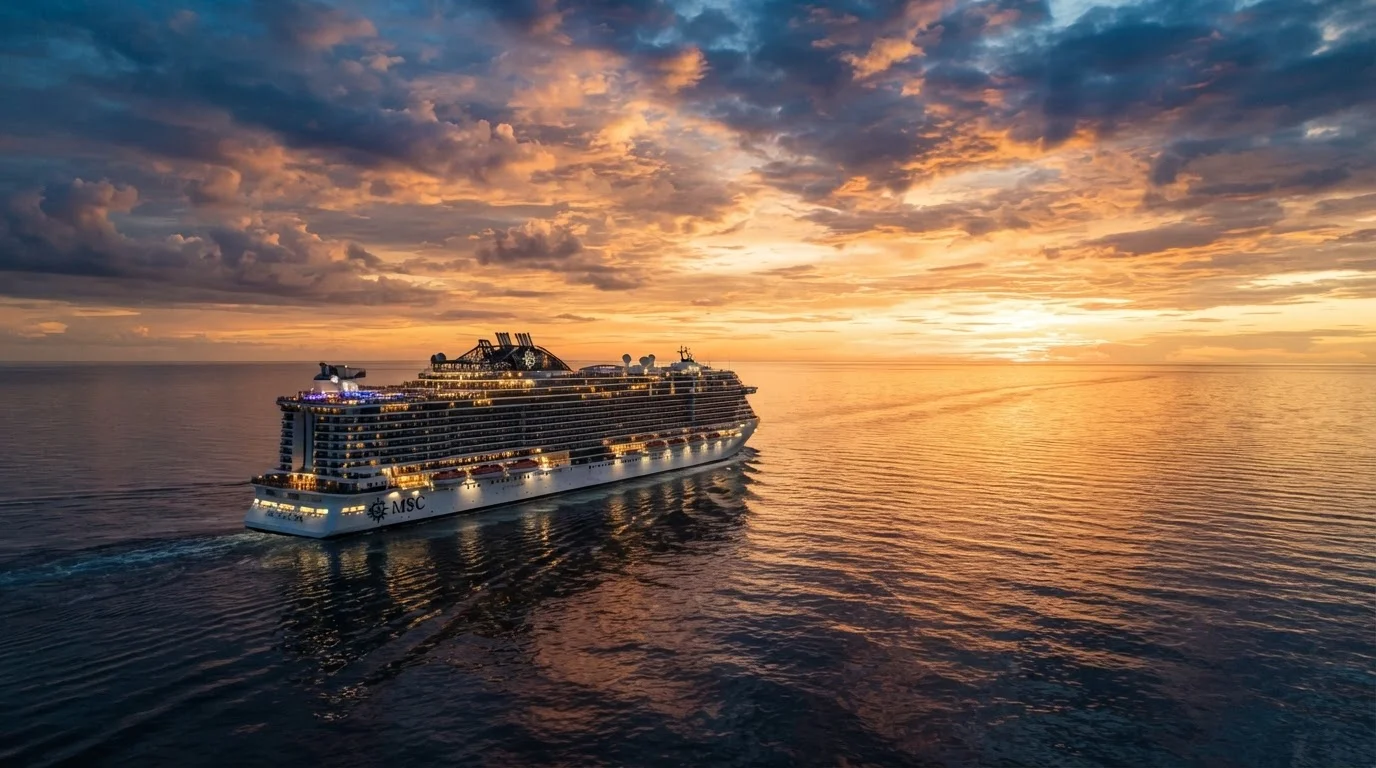
Photo credit: ExploreRoute.net | Travel Made Simple
In this article
From overcrowding to seasickness guarantees, common cruise misconceptions are examined against what passengers typically experience.
Key Takeaways
- Seasickness is manageable for most cruisers, especially on larger modern ships sailing calm itineraries.
- Cruises are not exclusively for retirees — demographics have shifted significantly toward younger and family travelers.
- All-inclusive pricing varies by line, but costs are often more predictable than comparable land-based vacations.
- Sea days provide genuine leisure value and are considered highlights by many experienced cruisers.
- Ship size and itinerary design, not fleet size alone, determine how crowded an experience actually feels.
Why Cruise Myths Persist — and Who They Hurt
Cruise travel sits at an unusual intersection: it is one of the most researched vacation categories and simultaneously one of the most misunderstood. Many travelers who would genuinely enjoy a voyage never book one because a handful of durable misconceptions go unchallenged. These myths tend to circulate through secondhand accounts, outdated media portrayals, and the natural tendency to repeat vivid — if unrepresentative — stories. The result is a segment of the travel market that systematically underestimates what modern cruising actually delivers.
Understanding where these beliefs come from, and what the evidence actually shows, is the first step toward making an informed decision. Whether you are a first-time cruiser on the fence or a frequent traveler curious about expanding your itinerary options, separating perception from reality matters. For context on how similar myths distort broader travel planning, see our itinerary myth breakdown.
Myth
Seasickness will ruin my cruise — modern ships are just as rough as older vessels.
Fact
Modern large ships use stabiliser technology and strategic routing that significantly reduces motion for most passengers, though individual susceptibility varies.
Motion sickness at sea is a genuine physiological phenomenon, but it is neither universal nor inevitable. Contemporary cruise ships — particularly large ocean vessels — are equipped with active stabilisers that dampen rolling motion considerably. Itinerary choice also matters: Caribbean and Mediterranean routes tend to feature calmer sea states than North Atlantic crossings. Cabins located midship and on lower decks experience measurably less movement than those at the bow or stern on higher floors. For a thorough look at the science behind motion sickness and how cruisers manage symptoms, see seasickness at sea explained. Travelers with known susceptibility should consult a healthcare professional about preventive options before sailing.
Myth
Cruises are only for retirees — the demographic is overwhelmingly older travelers.
Fact
Cruise passengers now span a wide demographic range, with families, couples in their 30s and 40s, and solo travelers representing substantial and growing segments.
The retiree-only stereotype is rooted in the industry's early mass-market era and no longer reflects the passenger mix on most contemporary sailings. Family-oriented ships with dedicated children's programming, adventure-focused itineraries with kayaking, snorkeling, and expedition landings, and river cruises designed around cultural immersion all attract distinctly different demographics. Solo traveler cabins — once rare — are now offered by multiple cruise categories, removing the traditional single-supplement barrier. The itinerary and ship type you choose will define the demographic mix you encounter far more than the format of cruising itself.
Myth
Cruises are always overcrowded — you spend more time in queues than enjoying yourself.
Fact
The experience of crowding depends heavily on ship size, itinerary design, and sailing period — not all cruise ships carry thousands of passengers.
Passenger capacity ranges from under 100 on small expedition vessels to over 6,000 on the largest resort ships. The relevant figure is not raw capacity but passenger-to-space ratio and how activity flow is managed. Ships designed for sea-day relaxation often spread passengers across multiple pools, dining venues, and entertainment spaces in ways that minimise bottlenecks. Shoulder-season sailings and smaller vessel categories reduce density further. Port congestion is a separate but related variable — port scheduling realities explains why itinerary design matters beyond simple passenger counts.
Myth
Everything is included in the fare — there are no additional costs once you board.
Fact
Cruise pricing structures vary significantly; most mainstream fares cover accommodation and main dining, but specialty restaurants, gratuities, excursions, and beverages are often charged separately.
The all-inclusive label means different things across different cruise categories. Luxury and ultra-luxury lines typically bundle beverages, gratuities, and sometimes excursions into base fares. Mainstream lines generally do not, meaning that actual onboard spend can diverge substantially from the advertised cabin price. This is not inherently a disadvantage — travelers who moderate bar spend and book independent shore activities may find mainstream pricing highly competitive. The key is building an accurate total-cost estimate before comparing cruise value against land-based alternatives. Clear-eyed budgeting prevents the most common source of post-cruise disappointment.
Myth
Sea days are wasted time — you should only book itineraries with a port every day.
Fact
Sea days are valued by many experienced cruisers as among the most relaxing and enriching parts of a voyage, offering onboard programming unavailable in port.
The assumption that value is proportional to port count is one of the more persistent cruise planning myths. Sea days open up the full range of onboard amenities — cooking demonstrations, lectures by expedition naturalists, spa access without the crowds, and unstructured time that land itineraries rarely offer. For travelers accustomed to back-to-back sightseeing schedules, the decompression a sea day provides often registers as an unexpected highlight. The cruise itinerary myth guide covers this and related planning assumptions in more depth.
Myth
Cruise ships are unsafe — crime and health outbreaks are constant risks.
Fact
Cruise ships are subject to international maritime safety regulations and regular inspections; documented serious incidents represent a small fraction of total sailings.
Ships operating from U.S. ports are subject to sanitation inspections by the U.S. Centers for Disease Control and Prevention's Vessel Sanitation Program, and results are publicly available. Maritime law requires ships to maintain security personnel and report crimes to relevant authorities. This does not mean risks are zero — as with any travel environment, situational awareness remains important. Travelers should review official government travel advisories for their itinerary regions and ensure travel insurance coverage is appropriate for their needs. Treating cruise safety as categorically worse than hotel or resort travel is not supported by available evidence.
What These Corrections Mean for Your Planning
Myths about cruising do not just distort expectations — they actively shape poor planning decisions. Travelers who believe every sailing will leave them seasick may avoid ocean itineraries entirely, missing routes that would suit them perfectly. Those who assume cruises are uniformly expensive may not look closely enough to find structures that compare favourably to comparable hotel-and-flight combinations. Our travel budget myth guide explores how similar cost assumptions lead travelers astray across other trip types.
For cruise-specific itinerary misconceptions — including the belief that more ports always equals a better trip — the cruise itinerary myth article offers a detailed counterpoint. And if shore excursion assumptions are part of your hesitation, shore excursion myths examined addresses those directly.
~31M
Global cruise passengers annually (pre-pandemic baseline)
According to the Cruise Lines International Association (CLIA), global cruise passenger volumes reached approximately 31 million in 2019, reflecting sustained multi-decade growth across all age demographics.
Under 50
Average age of cruise passengers
CLIA data has consistently shown that the average age of cruise passengers is below 50, contradicting the persistent perception that cruising skews exclusively toward retirees.
100–6,000+
Passenger capacity range across cruise ships
Vessel size varies enormously across the cruise industry, from intimate expedition ships carrying fewer than 100 guests to the largest resort ships exceeding 6,000 passengers.
Verify Entry and Health Requirements Before You Sail
Port-of-call entry requirements, visa rules, and health documentation standards change without notice and vary by nationality. Do not rely on cruise line marketing materials as your sole source of this information. Always check official government travel advisory websites and your cruise line's current requirements well in advance of departure. Requirements that applied on a previous voyage may not apply — or may have been superseded — on your next sailing.
The practical takeaway is straightforward: cruise travel rewards travelers who approach it with accurate information rather than inherited assumptions. Ship size, itinerary region, sailing season, and onboard configuration all interact to produce experiences that vary far more widely than most myths acknowledge. Consulting verified sources — including cruise line documentation and government travel advisories for ports of call — remains essential before any booking decision.

Author
Cruise Journeys Editorial Team
Cruise Journeys Editorial Team is the collective byline for our editorial team and contributor network. Articles published under this byline or an editorial pen name are researched, written, and reviewed according to our editorial standards for clarity, consistency, and independence before publication.
View all articles →