
Coastal Gems Along the Azores, Canaries, and Madeira: What Makes Atlantic Island Ports Unique
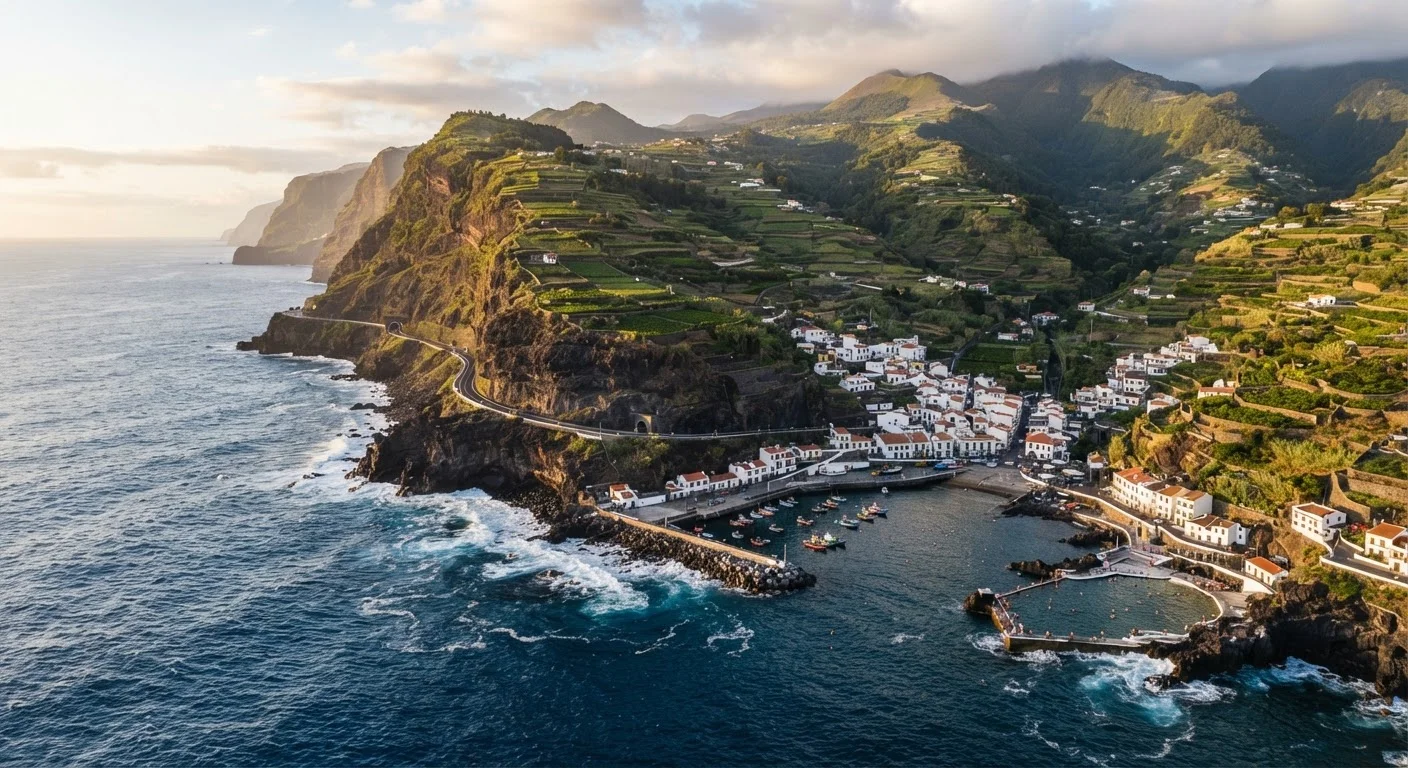
Photo credit: ExploreRoute.net | Travel Made Simple
In this article
Far from mainstream cruise routes, these Atlantic island ports offer volcanic terrain, endemic wildlife, and uncrowded waterfront culture.
Key Takeaways
- Each island group has a distinct geological origin, shaping entirely different shore landscapes and wildlife.
- Shore time is often limited to six to ten hours — knowing each port's highest-value zones is essential.
- Endemic species, volcanic calderas, and living wine cultures are among the defining draws of these Atlantic ports.
- Crowds remain far lower here than at comparable Mediterranean or Caribbean stops, even during peak season.
- Local transportation networks vary significantly between islands; pre-planning ground logistics can unlock far more of each stop.
Why Atlantic Island Ports Demand a Different Shore Strategy
Most cruisers who have mastered ports like Santorini or Nassau arrive at Atlantic island stops with the same checklist approach — and miss the point entirely. The Azores, Canary Islands, and Madeira belong to a different category of destination: their value lies not in concentrated historic centers or resort beaches, but in vertical landscapes, rare ecosystems, and an island culture that is neither overtly touristy nor undeveloped. Getting the most from these stops requires rethinking how you allocate your hours ashore.
Unlike Mediterranean ports where the old town is often steps from the pier, Atlantic island ports frequently demand a commitment to movement — whether that means a winding mountain road, a ferry to a smaller neighboring island, or a levada (irrigation channel trail) threading through laurel forest. For cruisers already comfortable reading a port beyond its waterfront, this guide to port towns as full destinations provides useful framing before you go deeper. The archipelagos discussed here reward those who prioritize experience over coverage — go fewer places, go further.
Ponta Delgada (São Miguel, Azores): Go Straight for the Calderas
Ponta Delgada is the most commonly visited Azorean port, but the waterfront itself is not the destination — it's the gateway. The twin calderas of Sete Cidades and Furnas, both reachable within an hour by road, are among the most visually arresting volcanic landscapes in the Atlantic. Sete Cidades features a collapsed crater cradling two differently colored lakes separated by a narrow bridge; Furnas holds steaming geothermal vents alongside a lake whose shores host natural hot-spring pools.
Arrange ground transportation — private taxis, organized shore excursions, or locally rented vehicles — before arrival. The island's interior roads are well-maintained but narrow, and turnaround times from town to caldera and back should account for at least four hours minimum. Furnas also offers cozido das Furnas, a traditional slow-cooked stew prepared underground using geothermal heat — a genuinely unique cultural-culinary experience that should not be skipped if time allows.
Sete Cidades and Furnas reward those who move quickly and go inland without hesitation.
Funchal (Madeira): Use the Cable Cars and Levadas Strategically
Funchal is one of the more port-accessible stops in the Atlantic island group, with its hillside neighborhoods, covered market, and botanical garden all within reasonable reach of the pier. But the defining Madeiran experience — the levada walk — requires ascending above the city. The island's centuries-old system of narrow irrigation channels carves through laurisilva (laurel forest), a UNESCO-recognized ecosystem that is a remnant of the subtropical forest that once covered much of southern Europe and North Africa.
The Monte Cable Car provides fast access from the seafront to the upper town; from Monte, local transportation can connect walkers to trailheads for levada circuits at varying difficulty levels. Even a moderate two-hour levada walk through endemic forest delivers a fundamentally different experience than anything available at a Mediterranean stop. Funchal's Mercado dos Lavradores (Farmers' Market) is worth a brief stop for local passion fruit, espada (black scabbardfish), and endemic flora — it is genuinely local commerce, not a tourist market reproduction.
Madeira's levada trail network puts UNESCO-recognized endemic forest within reach of nearly any shore excursion.
Las Palmas (Gran Canaria): Split Your Time Between the Dunes and the Old City
Gran Canaria is the most geographically diverse single island in the Canary archipelago — sometimes described as a continent in miniature — and Las Palmas is a working, fully-formed city with an underappreciated historic center. The Vegueta neighborhood, the oldest district in the Canaries, contains a 15th-century cathedral and colonial architecture that predates the settlement of much of the Americas. It is rarely crowded by cruise passengers and is walkable from the port.
For those willing to travel south (roughly 45 minutes by express bus or car), the Maspalomas dunes form a genuinely unusual landscape: a shifting desert of pale sand abutting the Atlantic, backed by a nature reserve. The contrast between Las Palmas's urban energy and the silent, windswept dunes at the island's southern tip illustrates exactly why Gran Canaria resists easy categorization. Cruisers with only one priority should decide in advance whether they want city or nature — attempting both in limited shore time often means experiencing neither fully.
Gran Canaria's geographic range means choosing between colonial old city and desert dunes — not both in one day.
Lanzarote: Timanfaya and the Architecture of Volcanic Discipline
Lanzarote presents a shore experience unlike any other Atlantic island port: the landscape is dominated by the Timanfaya National Park, a protected volcanic field of solidified lava flows and cinder cones created by eruptions in the 18th and early 19th centuries. Geothermal activity remains close to the surface — demonstrations at the park visitor area show heat at extremely shallow depths. Access to the park interior is restricted and only possible via guided buses, which ensures preservation but also means timing your visit carefully relative to ship departure.
The island's visual identity was shaped significantly by the local artist and architect César Manrique, whose philosophy of integrating construction with volcanic topography produced a series of public spaces and cultural sites — including a concert hall inside a lava cave — that are worth including in any itinerary beyond the national park. Lanzarote also produces notable wines from the Malvasía grape variety, grown in volcanic ash hollows in the La Geria wine region; a brief stop at any working bodega (winery) in that valley offers context that no other island in this group can replicate.
Timanfaya's active geothermal landscape and La Geria's volcanic wine culture make Lanzarote the most geologically immersive stop.
Horta (Faial, Azores): Whale Watching Capital and the Caldera Rim
Horta's marina is famous among transatlantic sailors for its hand-painted murals — a tradition where crews paint a panel before departure, believed to bring safe passage — creating an extraordinary open-air gallery that lines the quayside. It is immediately accessible and genuinely unique, requiring no transport and no planning. Beyond the marina, Faial is one of the primary departure points for whale watching in the Azores, a region that supports year-round cetacean populations including sperm whales, which are resident rather than migratory.
The caldera of Faial is accessible by road and offers a rim walk around a collapsed crater filled with endemic vegetation. Weather on Faial can change rapidly; morning excursions are generally more reliable for caldera visibility than afternoon. For cruisers comparing this type of nature-immersive Atlantic port experience against other off-the-beaten-path destinations globally, our overview of overlooked regions that reward curious travelers offers useful perspective on what makes these experiences genuinely distinctive.
Horta combines accessible cultural art at the marina with world-class cetacean encounters just offshore.
Tenerife (Santa Cruz / Los Cristianos): Teide Is the Non-Negotiable
Tenerife is the largest of the Canary Islands and receives the most cruise traffic, with ships calling at both Santa Cruz in the northeast and Los Cristianos in the south. Regardless of which port your ship uses, the dominant priority is the same: Mount Teide, a 3,715-meter (12,188-foot) stratovolcano and Spain's highest peak, rising from a national park that is also a UNESCO World Heritage Site. The landscape around Teide's base — the Cañadas del Teide, a high-altitude caldera plateau — is otherworldly, with pumice fields, rock formations, and near-total absence of vegetation at the highest elevations.
Cable car access to near the summit is popular and capacity is limited; advance reservations for the upper cable car and summit access permit are advisable for any visit. The drive from either port to the national park takes approximately 45 to 90 minutes depending on traffic and route. Shore excursions that frame the visit entirely around the summit tend to underuse the extraordinary mid-altitude zone, which offers far more accessible walking and better wildlife spotting. Tenerife's coastal towns are pleasant but represent a significant underuse of what is genuinely one of the most remarkable volcanic environments in the Atlantic.
Teide's caldera plateau is Spain's highest terrain and among the most striking volcanic landscapes accessible by cruise ship.
Making the Most of Every Hour in Port
Time management across these island ports is genuinely different from more linear cruise itineraries. Terrain is the variable most travelers underestimate — distances that look modest on a map can involve significant elevation gain, one-lane roads, and transport schedules that don't bend to ship departure times. Build buffer time into any inland excursion, particularly on the Azores islands of Flores or Faial, where weather can shift rapidly and alter road conditions.
Plan Ground Transport Before You Dock
On Atlantic island stops, local bus networks are reliable and inexpensive but rarely timed to cruise schedules. Private taxis or pre-arranged excursions give you the flexibility to set return times with a safety buffer before all-aboard. Always confirm your ship's all-aboard time against realistic road travel durations — mountain routes consistently take longer than mapping apps suggest.
For cruisers comparing Atlantic island itineraries against other nature-forward cruise regions, it's worth understanding how these ports differ from higher-latitude options. The Baltic and Norwegian fjord shore experience centers on dramatic water-level scenery and historic cities; Atlantic island ports invert that — the most compelling terrain is almost always uphill, inland, or underwater. Knowing that distinction helps set realistic expectations and better itinerary choices. For broader context on curated cruise routes and itinerary planning, consult our full itinerary hub before booking.

Author
Cruise Journeys Editorial Team
Cruise Journeys Editorial Team is the collective byline for our editorial team and contributor network. Articles published under this byline or an editorial pen name are researched, written, and reviewed according to our editorial standards for clarity, consistency, and independence before publication.
View all articles →