
Shore Excursions vs. Independent Exploration: Weighing Your Options at Port
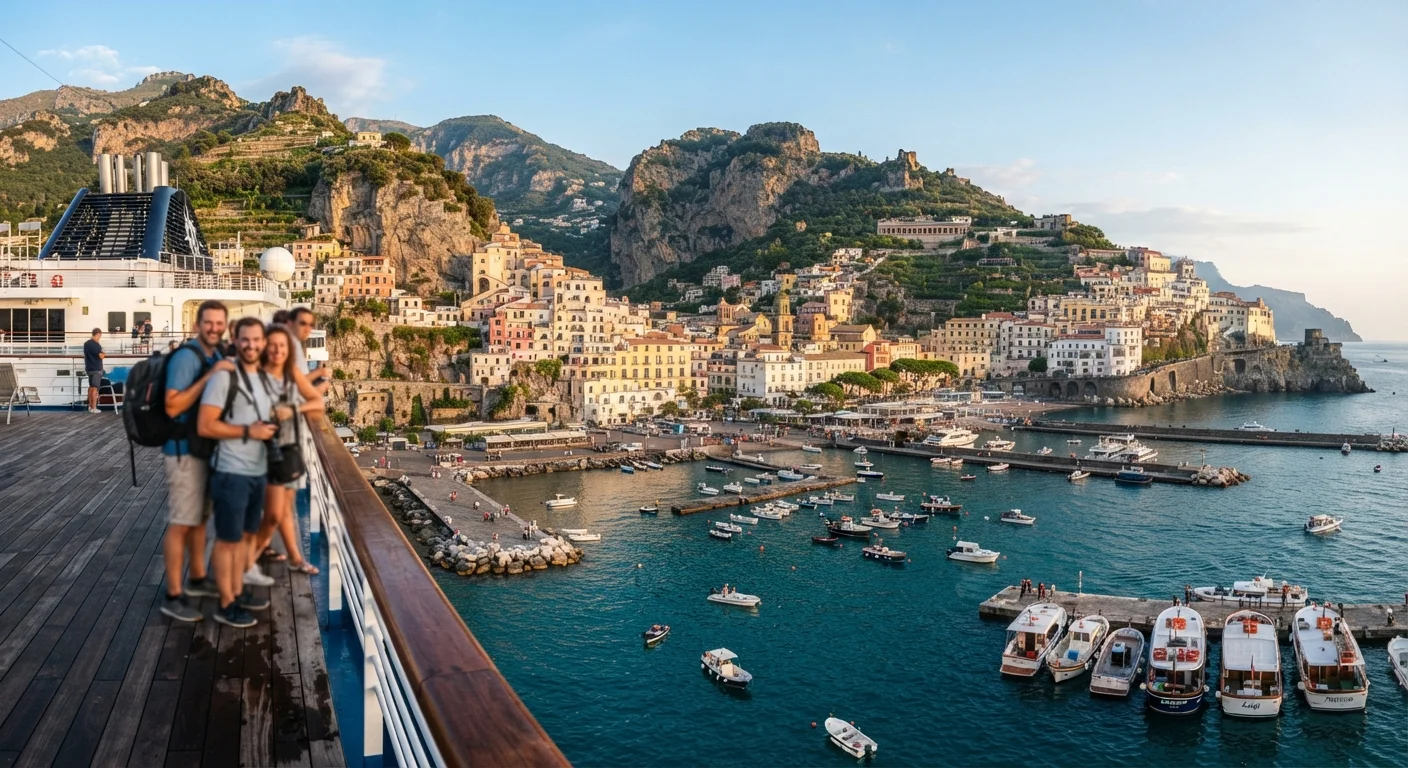
Photo credit: ExploreRoute.net | Travel Made Simple
In this article
Organized excursions or solo wandering? Understand the real trade-offs so you can decide what suits each port of call.
Key Takeaways
- Shore excursions offer guaranteed ship return times and curated access, but typically cost more per hour of exploration.
- Independent exploration allows greater flexibility and local immersion, but demands more advance research and time management.
- The right choice varies by port — complex, remote, or infrastructure-challenged destinations often favor organized tours.
- Missing the ship's departure when traveling independently is a real risk that requires strict personal time discipline.
- Many seasoned cruisers use a hybrid strategy, booking excursions selectively and exploring independently at familiar ports.
- Port size, language barriers, and available transport all affect how viable independent exploration is at any given stop.
What Each Approach Actually Offers
When a cruise ship docks, passengers face an immediate fork in the road: join an organized excursion or walk ashore independently. Neither choice is universally superior — both carry genuine advantages and real limitations that shift depending on the port, the traveler, and the day's goals.
Shore excursions — whether booked through the cruise line or a third-party operator — deliver pre-packaged experiences with a logistics backbone already in place. Transport from the pier, entry fees, local guides, and crucially, a guaranteed return window synchronized with the ship's departure are all bundled in. For travelers arriving at a port where language barriers are significant, public transport is sparse, or key sites lie far from the terminal, that infrastructure is worth a premium. Cruise line excursions also carry an implicit safety net: if a ship-sold tour runs late due to circumstances outside your control, the vessel waits.
Independent exploration operates on an entirely different premise. You disembark, consult your own research, and shape the day as it unfolds. This approach rewards preparation and suits ports where local transit is reliable, distances are walkable, and the most compelling experiences — local markets, neighborhood restaurants, historic districts — aren't locked behind admission gates or operator permits. If you're new to exploring beyond the terminal, see our first-timer's orientation to port towns for essential context on how these destinations function.
| Criterion | Shore Excursions | Independent Exploration |
|---|---|---|
| Cost | Higher — bundled pricing | Generally lower, variable |
| Ship return guarantee | Yes (ship-sold tours only) | No — self-managed risk |
| Flexibility | Low — fixed itinerary | High — fully self-directed |
| Local immersion | Moderate — curated experience | High — organic encounters |
| Logistics complexity | Low — pre-arranged | High — requires research |
| Best for remote ports | Strong — transport included | Challenging — limited options |
| Group suitability | High — managed logistics | Best for small, aligned groups |
| Accessibility options | Increasingly available | Varies widely by port |
The Real Trade-Offs: Time, Money, and Risk
Cost is often the first comparison point, and the gap can be significant. Ship-organized excursions at popular Caribbean or Mediterranean ports routinely run $80–$200 per person for a half-day program. Independent travelers covering the same ground via local taxi, bus, or foot often spend a fraction of that — though independently arranging specialized activities (diving, private guided tours, vehicle hire) can narrow the gap considerably. For a deeper look at port-day spending strategies, shore time on a budget covers practical approaches worth reading alongside this comparison.
Time efficiency cuts both ways. Organized tours often include travel to popular sites that would require complex independent logistics, but they also introduce waiting — for fellow passengers, for coach loading, for pre-arranged meal stops you didn't choose. Independent travelers move at their own pace but may lose time orienting themselves, finding transport, or navigating a language barrier at a ticket window.
The highest-stakes variable, however, is the ship departure. Missing the vessel when traveling independently is a real and non-trivial risk. Cruise lines will not delay departure for independent travelers, and catching up to the next port at your own expense is both costly and disruptive. This risk requires honest self-assessment — not just of your time management, but of the port's transport reliability on that specific day.
~60%
Cruisers who book at least one shore excursion per voyage
Industry estimates from cruise research groups consistently indicate the majority of passengers purchase at least one organized excursion during a typical cruise.
$100–$200
Average per-person cost of a ship-sold half-day excursion
Pricing varies significantly by destination and activity type; adventure-focused or specialty tours typically fall at the higher end of this range.
30–60 min
Typical buffer before ship departure independent travelers should target
Most experienced cruisers and port agents recommend returning to the pier well before the posted all-aboard time to account for unexpected transit delays.
Port-by-Port Thinking: When to Choose Which
The most effective approach isn't a blanket preference for one method — it's developing port-specific judgment. Several factors should inform that decision for each stop on your itinerary.
- Infrastructure and accessibility: Ports with efficient public transit, well-marked walking routes, and central terminals (think Dubrovnik, Nassau, or Juneau's downtown core) reward independent travelers. Ports where key sites require long transfers, private vehicles, or permitted access — certain Alaskan wilderness areas, some Pacific island stops — shift the calculus toward organized tours.
- Dwell time: A six-hour port call is very different from a ten-hour one. Shorter windows favor excursions because maximizing experience-to-logistics ratio matters more when every minute counts.
- Familiarity: Returning to a port you've visited before removes much of the uncertainty that makes organized tours attractive. First-time stops in unfamiliar regions warrant more structure.
- Language and signage: In destinations where English signage is limited and phrasebook navigation is unrealistic for a half-day visit, a local guide's value rises substantially.
Many experienced cruisers — particularly those with extensive itinerary backgrounds — adopt a deliberate hybrid strategy across a multi-port voyage: booking excursions for technically demanding or remote stops, and exploring independently at well-connected, familiar ports. For broader context on how independent vs. guided choices play out across travel types, solo adventure travel vs. guided expeditions offers a useful parallel perspective. Pairing that thinking with well-researched cruise itineraries helps you anticipate port conditions before you ever set sail.
Third-Party Excursion Operators: A Middle Ground
Between ship-sold tours and fully independent exploration sits a third option: independently booked tours through local or third-party operators. These can offer smaller group sizes, more authentic local guides, and lower prices than cruise line offerings — but without the ship-departure guarantee that comes with cruise line excursions. If your third-party tour runs late, the vessel will not wait. Travelers choosing this route should research operators carefully, build in generous time buffers, and always confirm the pier's location relative to the tour's end point before committing.

Author
Cruise Journeys Editorial Team
Cruise Journeys Editorial Team is the collective byline for our editorial team and contributor network. Articles published under this byline or an editorial pen name are researched, written, and reviewed according to our editorial standards for clarity, consistency, and independence before publication.
View all articles →