
The Complete Guide to Navigating Caribbean Ports of Call
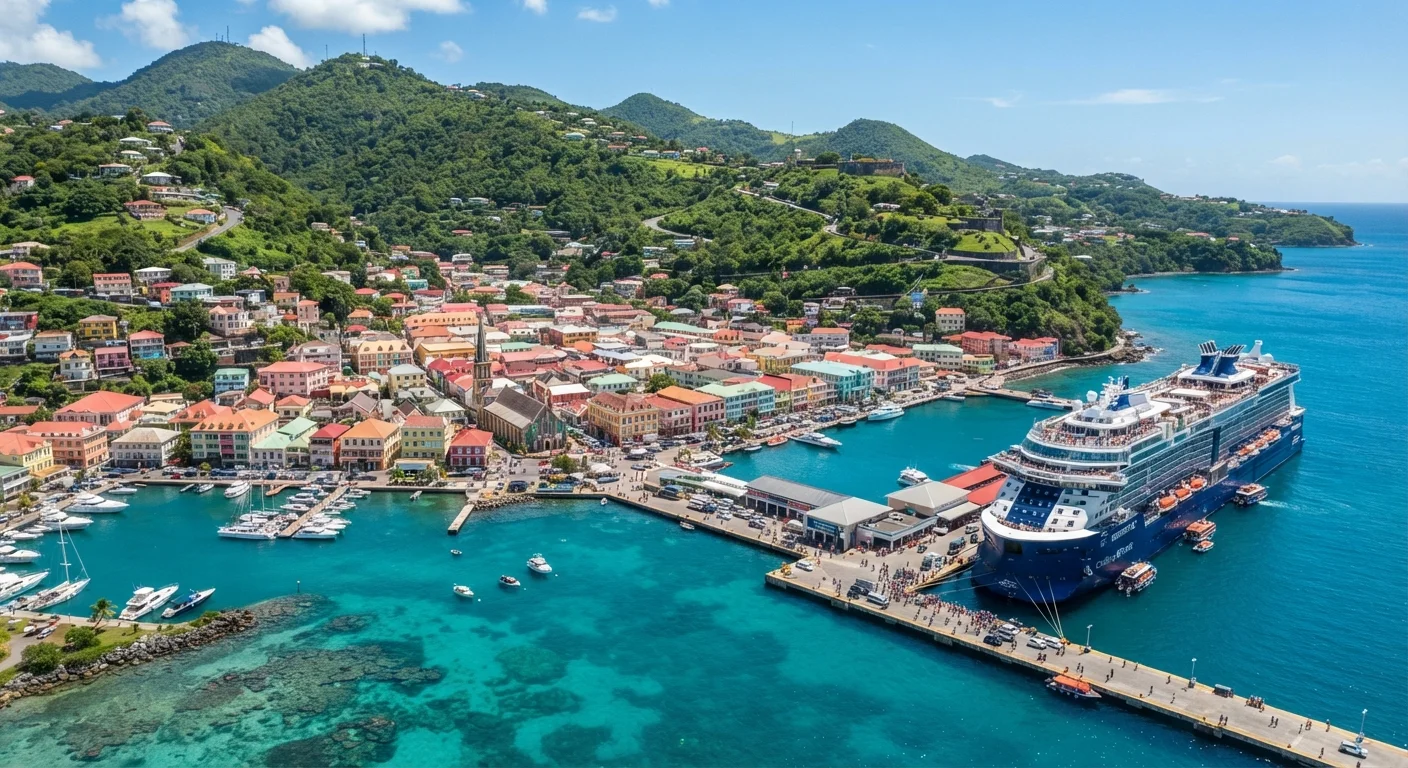
Photo credit: ExploreRoute.net | Travel Made Simple
In this article
From Nassau to Curaçao, this end-to-end guide covers what to know before stepping off the ship at any Caribbean destination.
Key Takeaways
- Knowing a port's layout before arrival dramatically improves how much you experience ashore.
- Ship-sponsored excursions guarantee re-boarding time; independent plans require careful self-management.
- Currency, local customs, and entry requirements vary significantly even within the Caribbean.
- Most ports offer strong independent exploration options well beyond the cruise terminal perimeter.
- Always verify visa, health, and safety conditions through official government sources before sailing.
Understanding How Caribbean Ports Actually Work
Caribbean cruise ports fall into two broad categories: tender ports, where the ship anchors offshore and passengers shuttle in by small boat, and dockside ports, where the ship ties directly to a pier. This distinction shapes your entire day. Tender operations in places like Grand Cayman or Bora Bora can add 30–45 minutes each way, compress usable shore time, and create queues — especially on days when sea conditions slow the tenders down.
Beyond the mechanics, each port sits within a distinct political and logistical reality. Some, like St. Maarten, are split between two sovereign territories with different currencies and customs. Others, like Curaçao's Willemstad, function as genuine city ports where the terminal dissolves into an active urban district within steps of the gangway. Understanding how port towns work before you arrive prevents the disorientation that costs cruisers their best hours ashore.
7,000+
Islands across the Caribbean region
The Caribbean encompasses more than 7,000 islands, cays, and islets spread across roughly a dozen sovereign nations and several overseas territories.
30–45 min
Typical tender transit time per direction
Tender operations at anchor ports such as Grand Cayman can consume 30–45 minutes each way, meaningfully reducing usable shore time on busy ship days.
~60%
Caribbean cruisers who book at least one ship excursion
Industry research suggests the majority of Caribbean cruisers book at least one ship-sponsored shore excursion per voyage, often for logistically complex ports.
Pre-Port Planning: Research That Pays Off
Effective port days begin weeks before departure. A structured research process — covering local geography, transport options, currency norms, and cultural expectations — separates the passengers who return energized from those who spent three hours wandering the pier gift shops. The complete guide to trip research provides a transferable framework that applies directly to building a port-day plan for any Caribbean destination.
For Caribbean-specific prep, focus on four variables: distance from the pier to your target sites, local transport reliability, payment norms (many ports are cash-preferred, and USD is widely accepted though not always advantageous), and re-boarding windows. Cross-reference your ship's all-aboard time against realistic travel distances — Google Maps estimates often understate transit times in busy port towns during peak ship days.
Download offline maps for each port before you leave the ship — cellular data roaming in the Caribbean can be expensive and unreliable outside major towns.
Many Caribbean port towns have limited or costly data coverage away from the terminal district. Offline maps prevent the navigation failures that strand independent travelers.
Check the port's scheduled ship schedule for your arrival day: if three or four large ships are docked simultaneously, factor in significantly higher taxi demand, beach crowding, and longer waits at popular sites.
Multi-ship port days are a consistent friction point for cruisers who plan without accounting for concurrent arrivals. Port authority websites and cruise forum communities often publish ship schedules in advance.
Shore Time Strategy: Making Every Hour Count
The single most consequential decision on any port day is whether to book through the ship or go independently. Ship-sponsored excursions carry a practical guarantee: if they run late, the ship waits. Independent plans carry no such safety net — and ships do sail without passengers who miss the all-aboard time. For first-time visits to a port, or in destinations with complex logistics (remote beaches, small-boat transfers, limited taxi infrastructure), ship excursions often deliver better value than their price implies.
That said, experienced Caribbean cruisers know that many ports reward independent movement. In Nassau, the colonial district and the Queen's Staircase are a walkable 10–15 minutes from the pier. In Philipsburg, St. Maarten, the famous beach sits a short water-taxi ride away. Planning your own route using the itinerary building framework allows you to build in buffer time and prioritize what actually matters to your group.
Build a Port-Day Buffer Into Every Plan
Whatever your planned return time to the pier, add a 45-minute buffer before the all-aboard deadline. Traffic delays, tender queues, and unexpected waits are common in busy Caribbean ports. A buffer turns a stressful sprint into a relaxed stroll back to the gangway.
Port-Specific Considerations Across the Caribbean
The Caribbean spans more than 7,000 islands across a dozen sovereign nations and several territories — and they are not interchangeable. A few distinctions worth noting:
- Nassau, Bahamas: High pedestrian traffic near the pier; the Junkanoo Beach strip and downtown Bay Street are walkable. Taxis are metered; agree on the fare before departing.
- Curaçao (Willemstad): One of the region's most rewarding city ports. The UNESCO-listed waterfront is steps from the terminal. The floating Queen Emma Bridge opens periodically for vessel traffic — plan crossings accordingly.
- St. Lucia (Castries): Heavily dependent on taxis and organized tours to reach the Pitons or Soufrière. Traffic on the west coast road can be significant on busy ship days.
- Roatán, Honduras: Most attractions require transport from the pier. Independent taxis are available but negotiate clearly before departing. Reef snorkeling is accessible without venturing far.
- Grand Cayman (Georgetown): Tender-only port. Seven Mile Beach and Stingray City are the headline draws; water-taxi services run regularly. Allow tender queue time in your calculations.
Before visiting any port, verify current entry requirements, local advisories, and health conditions through official government travel sites. Conditions can change between booking and sailing.
Verify Entry and Safety Requirements Before Sailing
Entry requirements, health advisories, and local safety conditions in Caribbean ports can change between when you book and when you sail. Always check your government's official travel advisory portal (such as travel.state.gov for U.S. travelers) and consult your cruise line's port documentation guidelines before departure. Do not rely solely on third-party travel sites for this information.
Getting Back Safely and On Time
No port day succeeds if it ends with a missed ship. Set at least two alarms synced to ship time — not local time — on your phone before going ashore. Many Caribbean ports operate in different time zones than your departure city, and ships use a consistent internal clock throughout the voyage that may not match local civil time in every port.
Run through the pre-port checklist before each departure: confirm your ship ID card is on your person, know the pier name (not just the town), and identify a local taxi stand or return transport option before you wander far from the terminal. Pair good shore-day logistics with thoughtful packing — the cruise packing list covers shore-excursion essentials from reef-safe sunscreen to a dry bag for tender days.
The Caribbean rewards preparation. Cruisers who invest even modest research time before each port consistently report more meaningful, less stressful experiences ashore — and that is the entire point of showing up somewhere new.
Ship Time vs. Local Time
Some Caribbean ports observe different time zones than the ship's internal clock, particularly during daylight saving transitions. Your ship's daily program will note the local time for each port day — review it carefully the evening before going ashore to avoid any confusion about your all-aboard deadline.

Author
Cruise Journeys Editorial Team
Cruise Journeys Editorial Team is the collective byline for our editorial team and contributor network. Articles published under this byline or an editorial pen name are researched, written, and reviewed according to our editorial standards for clarity, consistency, and independence before publication.
View all articles →