
What 'Tender Port' Actually Means — and How to Prepare for One
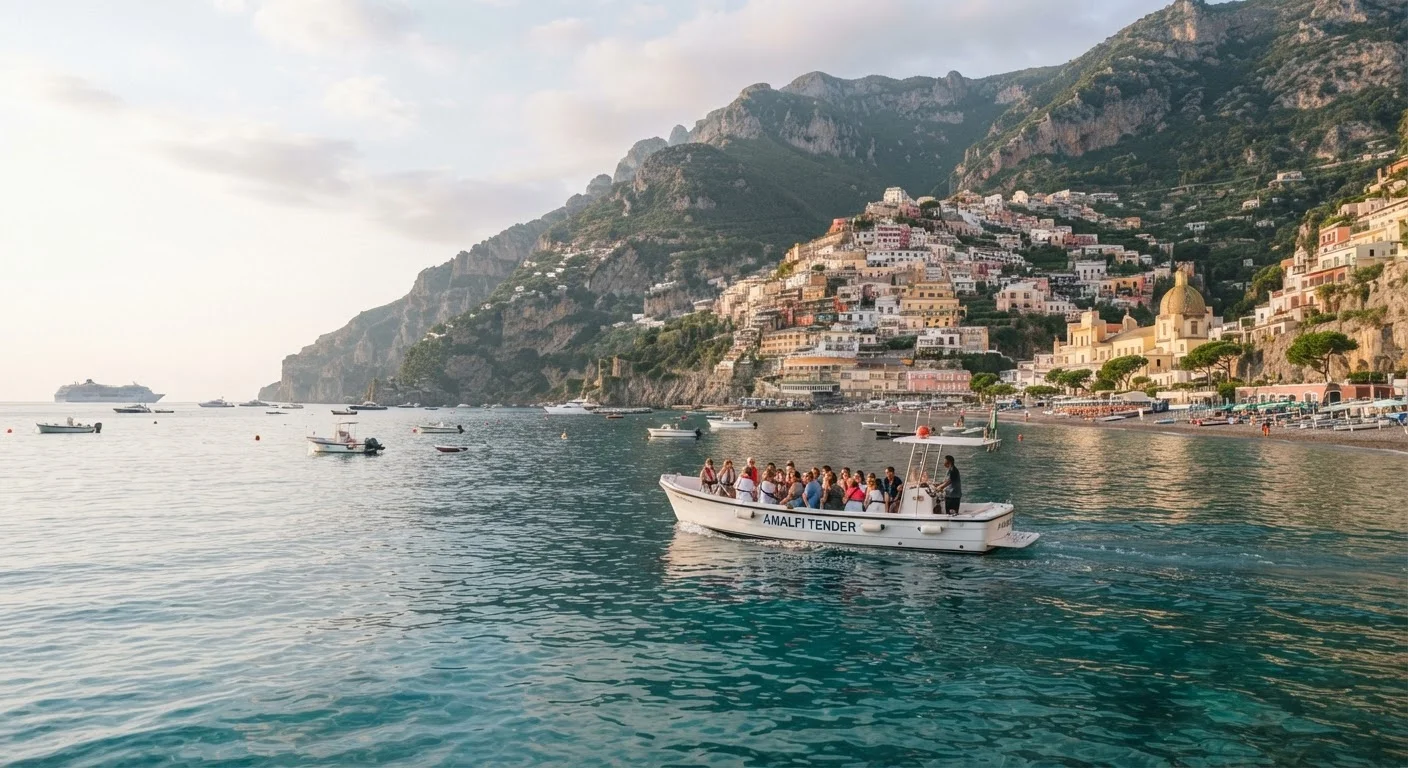
Photo credit: ExploreRoute.net | Travel Made Simple
In this article
Tender ports require a small boat transfer from ship to shore. Here's what that process looks like and what to expect on arrival.
Key Takeaways
- Tender ports require a small-boat transfer between the anchored ship and shore — there is no gangway to a dock.
- You must collect a tender ticket (or queue via ship's app) to secure your spot on a shuttle boat.
- Shore excursion bookings through the ship typically receive priority boarding onto tenders.
- Weather and sea conditions can delay or cancel tendering operations with little advance notice.
- Mobility considerations matter more at tender ports — boarding a moving tender requires stepping between two vessels.
- Build extra time into your day; the tender process adds 15–30 minutes each way compared to a docked port.
Why Ships Don't Always Dock
Not every port on earth was built — or can be expanded — to welcome modern cruise ships. Shallow draft, fragile coral ecosystems, protected heritage harbor layouts, or sheer physical geography can all prevent a large vessel from pulling up to a pier. In these cases, the ship drops anchor in open water and relies on tenders to bridge the gap.
Some of the world's most celebrated cruise destinations — Santorini in Greece, Gustavia in St. Barts, Kotor in Montenegro, and Skagway in Alaska during high volume — are partial or full tender ports. Understanding why tendering happens makes it easier to plan around it rather than be caught off guard.
Before sailing, review your itinerary closely. Reading a cruise itinerary carefully will tell you which ports are anchor calls — critical information when you're budgeting time ashore.
How the Tender Process Actually Works
On a tender port day, the ship anchors offshore and the cruise line deploys small boats — frequently converted lifeboats — to shuttle passengers in rotating trips. The process is managed through a ticketing system to avoid congestion at the tender platform (the lower-deck loading area, sometimes called the marina deck).
Step 1: Collect Your Tender Ticket
Tender tickets are distributed in a designated lounge, or via the ship's app on newer vessels. They're issued in numerical order, and groups are called over the PA system when their tender is ready to board. Arriving early — especially if you have independent plans ashore — matters. Shore excursion guests booked through the ship are typically called first, regardless of when they collected their tickets.
Step 2: Board the Tender
When your group is called, proceed to the boarding platform. Crew members assist passengers stepping across. Keep your movements deliberate — tenders move with the water — and follow crew instructions. Bags should be manageable in size; large suitcases are not appropriate for tender transfers.
Step 3: Return Before the Cutoff
The tender schedule runs in reverse at the end of the day. Pay close attention to the last tender back time announced onboard — this is not the same as the ship's departure time. Missing the last tender has real consequences. Port day mistakes often stem from underestimating how long the return trip takes.
Book Shore Excursions Early for Tender Priority
If you have a packed agenda at a tender port, booking a ship-organized shore excursion — even a shorter one — guarantees you priority access to the early tenders. For independent travelers, arriving at the tender platform within the first 20 minutes of operations opening is the next best strategy for maximizing usable shore time.
Planning Your Time Ashore Strategically
Tender ports reward preparation. Because the transfer process eats into usable shore time — particularly during morning peak queues — passengers who plan ahead consistently get more out of the day.
15–30 min
Extra time added per tender transfer each way
Industry-standard estimate based on typical anchor distance and boarding queue times at major tender ports.
~3 knots
Typical tender boat cruising speed
Most ship tenders operate at low speeds to maintain passenger comfort and stability during transfers.
If you're exploring independently, aim to be at the tender platform before the general boarding rush, typically within the first 30–45 minutes of tendering operations opening. This is especially important in destinations with limited opening hours for attractions or markets.
Research the landing area before you arrive. Some tender piers drop passengers directly into the heart of a town; others leave you at an industrial quay with a walk or taxi ride ahead. Researching a port you haven't visited before helps you map that last mile in advance so no time is wasted figuring it out on the ground.
Also review your pre-port checklist the evening before — currency, ID, re-boarding time, and local considerations should all be sorted before you queue for the tender.
Tender Schedules Can Shift During the Day
The ship will announce tender frequency and last-return times in the morning, but these can change based on passenger volume and sea conditions. Check the ship's app or in-cabin TV for real-time updates while you're ashore, and build a buffer into your return timeline — at least 45 minutes before the last tender is a reasonable cushion.
Accessibility and Weather: The Two Wildcards
Tender ports introduce two variables that docked ports largely eliminate: physical access challenges and weather-driven uncertainty.
The step between the ship's tender platform and the tender boat itself can be significant — and it shifts with the swell. Passengers with mobility limitations, those using wheelchairs, or travelers who are less sure-footed should speak with guest services the evening before a tender port day. Some ships can arrange assisted boarding; others may not be able to accommodate all passengers safely depending on conditions. Being informed early avoids a difficult situation at the platform.
Weather is the other factor no itinerary can fully plan around. Captains have the authority to suspend or cancel tendering when sea state poses a safety risk, and that call can come at any point during the day. If conditions deteriorate mid-afternoon, later tenders may be suspended, meaning passengers already ashore need to return promptly. Always monitor ship announcements when you're in port and don't push right to the last-tender deadline on days when the sea looks unsettled.
Understanding how port towns work also helps — knowing the layout of a tender destination means you can adapt quickly if plans shift due to conditions.
Frequently Asked Questions

Author
Cruise Journeys Editorial Team
Cruise Journeys Editorial Team is the collective byline for our editorial team and contributor network. Articles published under this byline or an editorial pen name are researched, written, and reviewed according to our editorial standards for clarity, consistency, and independence before publication.
View all articles →