
Trading the Famous for the Forgotten: Pros and Cons of Anchoring Your Trip Around a Small Town
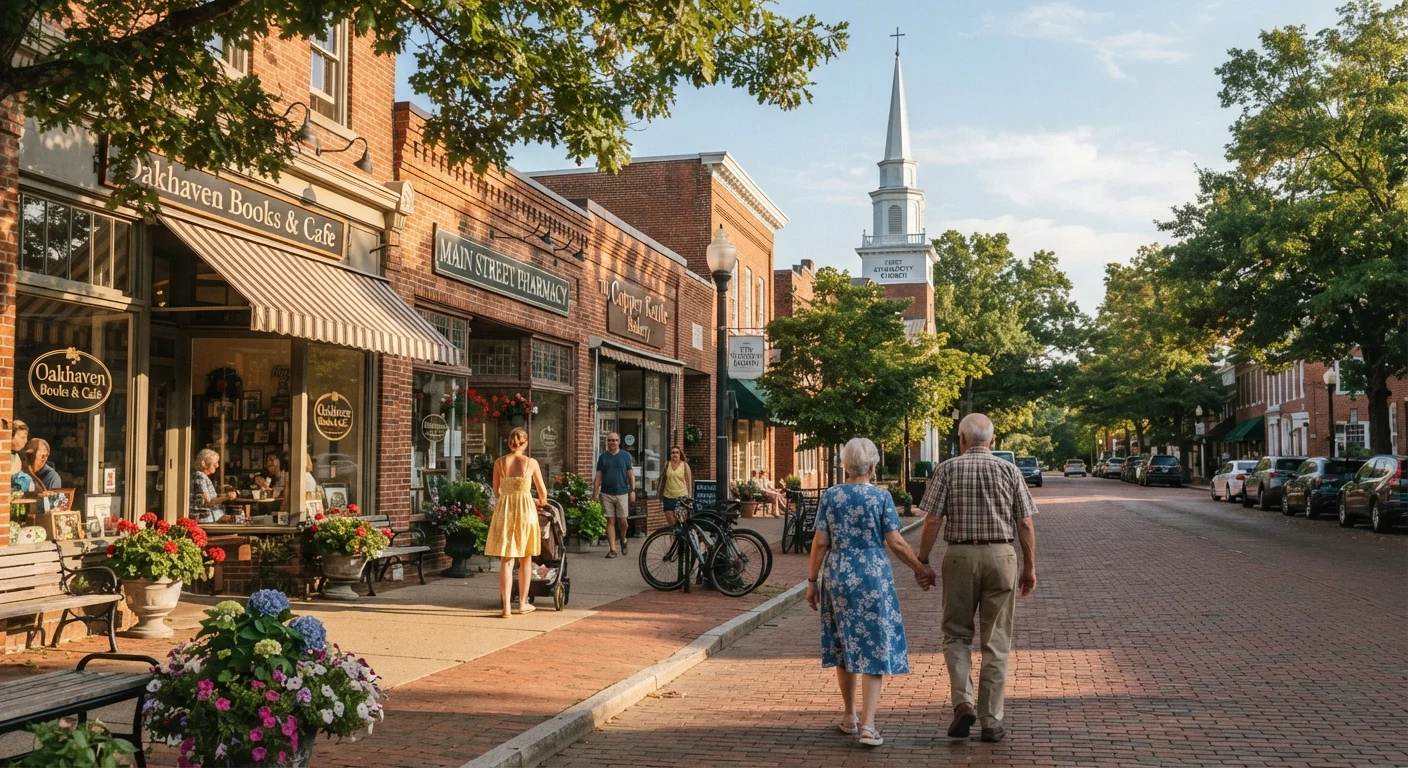
Photo credit: ExploreRoute.net | Travel Made Simple
In this article
Basing a whole trip around a little-known town has real rewards — and real limitations. A balanced look at what you gain and what you give up.
Key Takeaways
- Anchoring a trip in a small town trades convenience for depth of experience and genuine local connection.
- Logistics — limited transit, fewer restaurants, sparse accommodation options — require more advance planning.
- Small-town travel rewards flexible itineraries and self-directed exploration over structured tourist programming.
- The absence of crowds often means richer access to local culture, history, and landscape.
- Infrastructure gaps are real; researching what's available before you arrive prevents frustration.
Genuine local encounters replace scripted tourism
Without a visitor economy mediating every interaction, conversations and experiences happen on the town's own terms — unpredictable, often memorable, and rarely available at well-touristed destinations.
No crowds competing for the same moments
Whether it's a riverside trail, a local diner at breakfast, or a small museum, the absence of mass tourism means you experience places at their actual pace rather than in a queue.
Deeper sense of place emerges over multiple days
Anchoring rather than day-tripping lets patterns emerge — the weekly farmer's market, the regulars at the coffee shop — giving you a more complete picture of what daily life actually looks like.
Historic and cultural sites feel personally accessible
Smaller communities often maintain their heritage sites through direct volunteer or local custodian involvement, which can produce candid, expert-level conversations unavailable at larger, more managed attractions.
Slower pace clarifies what you actually value in travel
Without a programmatic itinerary filling every hour, you make active choices about how to spend your time — a useful corrective for travelers who've started to feel like tourists rather than travelers.
Accommodation options are limited and variable in quality
A small town may offer only one or two lodging choices, and those options rarely have the reliability signals — consistent reviews, brand standards — that help travelers calibrate expectations in advance.
Dining hours and variety are often restricted
Restaurants in small towns tend to serve the community, not visitors — meaning limited hours, fewer cuisine options, and occasional full closures mid-week that can catch unprepared travelers off guard.
Getting around without a car is often impractical
Public transit rarely connects small towns in any useful way. Without a personal vehicle — or a willingness to arrange alternatives in advance — your mobility is significantly constrained.
Rainy-day or backup options may be almost nonexistent
When weather or circumstance disrupts your plan, a small town offers few fallback activities. A single indoor cultural site, if it exists at all, can be exhausted in an hour.
The town may not deliver the depth you anticipated
Not every overlooked place is overlooked for interesting reasons. Some small towns are simply quiet, and without the honest pre-trip research, disappointment is a real possibility.
The Appeal of the Overlooked
There is a particular kind of quiet that settles over a small town that tourism hasn't yet claimed — the kind where a diner counter conversation turns into an impromptu local history lesson, and where the person who sells you a newspaper also knows which creek trail nobody bothers to mention online. That texture is exactly what draws a growing number of frequent travelers away from the obvious and toward the forgotten.
But choosing to anchor an entire trip — not just a day excursion — around a little-known town is a different proposition. It means committing your mornings, evenings, and contingency plans to a place without a tourism infrastructure built to catch your fall. Understanding what keeps certain towns off the tourist map is the first honest step before you decide whether to go all in.
This isn't a guide to a specific destination. It's a clear-eyed look at what you actually gain — and what you genuinely give up — when you plant your flag in a town that most travelers drive right through.
What You Gain
Genuine local encounters replace scripted tourism
Without a visitor economy mediating every interaction, conversations and experiences happen on the town's own terms — unpredictable, often memorable, and rarely available at well-touristed destinations.
No crowds competing for the same moments
Whether it's a riverside trail, a local diner at breakfast, or a small museum, the absence of mass tourism means you experience places at their actual pace rather than in a queue.
Deeper sense of place emerges over multiple days
Anchoring rather than day-tripping lets patterns emerge — the weekly farmer's market, the regulars at the coffee shop — giving you a more complete picture of what daily life actually looks like.
Historic and cultural sites feel personally accessible
Smaller communities often maintain their heritage sites through direct volunteer or local custodian involvement, which can produce candid, expert-level conversations unavailable at larger, more managed attractions.
Slower pace clarifies what you actually value in travel
Without a programmatic itinerary filling every hour, you make active choices about how to spend your time — a useful corrective for travelers who've started to feel like tourists rather than travelers.
The absence of tour buses and curated walking routes forces a different kind of attention. When a town hasn't been pre-interpreted for visitors, you have to read it yourself — noticing the civic pride in a renovated library, the local argument embedded in a piece of public art, the way a neighborhood shifts character between the hardware store and the feed supply shop. Forgotten mill towns that have quietly reinvented themselves are a good illustration: the story of economic reinvention is written right into the streetscape, if you slow down enough to read it.
Access also changes. At a heritage site or landmark embedded in a small town, you're often speaking directly with the person who maintains the place, not a seasonal docent reading from a pamphlet. That informality — messy as it sometimes is — produces encounters that stick. The case for visiting forgotten historic sites before they're discovered rests partly on exactly this quality of access.
What You Give Up
Accommodation options are limited and variable in quality
A small town may offer only one or two lodging choices, and those options rarely have the reliability signals — consistent reviews, brand standards — that help travelers calibrate expectations in advance.
Dining hours and variety are often restricted
Restaurants in small towns tend to serve the community, not visitors — meaning limited hours, fewer cuisine options, and occasional full closures mid-week that can catch unprepared travelers off guard.
Getting around without a car is often impractical
Public transit rarely connects small towns in any useful way. Without a personal vehicle — or a willingness to arrange alternatives in advance — your mobility is significantly constrained.
Rainy-day or backup options may be almost nonexistent
When weather or circumstance disrupts your plan, a small town offers few fallback activities. A single indoor cultural site, if it exists at all, can be exhausted in an hour.
The town may not deliver the depth you anticipated
Not every overlooked place is overlooked for interesting reasons. Some small towns are simply quiet, and without the honest pre-trip research, disappointment is a real possibility.
The limitations aren't trivial. A small town that hasn't oriented itself around visitors means you're working against the grain of daily life rather than being carried along by it. Restaurants close early or don't open on Mondays. The one lodging option you found online has three reviews, two of which are ambiguous. Public transit, where it exists at all, may not align with anywhere you actually want to go.
Arriving in an unfamiliar small town without a tour group demands a different mental posture than most travel prepares you for. The absence of structure that makes these places compelling is the same quality that makes them hard to navigate when things don't go as planned. And accommodation trade-offs deserve their own honest reckoning — when unique stays fall short, you feel it most acutely in places where alternatives don't exist.
A Note on Safety and Entry Considerations
Small towns in unfamiliar regions — particularly those outside the U.S. — may have specific entry requirements, local regulations, or safety conditions that differ meaningfully from those of larger nearby cities. Infrastructure for emergencies (medical, consular, or otherwise) may be limited. Before traveling, verify current conditions, visa requirements, and any relevant travel advisories with official government sources such as the U.S. Department of State's travel portal. Conditions can change, and general travel content cannot substitute for up-to-date official guidance.
Planning the Trip So the Gaps Don't Surprise You
The travelers who get the most from small-town anchoring tend to share one habit: they research what's not there as carefully as what is. Before committing to a town as a base, it's worth mapping out a radius — what larger city or transport hub lies within a reasonable drive, what day-trip options exist if your primary destination turns out to be exhausted in half a day, and whether the road network between your planned stops is the kind that rewards slow travel. Blue highways offer a slower, richer kind of American travel, and small-town trips often work best when the drive itself is part of the logic.
~60%
U.S. travelers prioritizing "authentic local experience"
According to a 2023 Expedia Group travel trends report, roughly six in ten American travelers said experiencing local culture authentically was among their top priorities when choosing a destination.
3–4x
Longer average stay in off-peak small-town destinations
Travel researchers studying dispersal tourism have observed that visitors who base themselves in smaller, lesser-known towns tend to stay significantly longer than those visiting major urban or resort destinations.
It's also worth addressing a common mental block early: the assumptions that keep travelers away from small towns — that there's nothing to do, that you'll feel conspicuous as an outsider, that the experience won't justify the extra logistics — are more often wrong than right. But planning with clear eyes means you won't need to talk yourself into enjoying something that genuinely isn't working.

Author
Hidden Destinations Editorial Team
Hidden Destinations Editorial Team is the collective byline for our editorial team and contributor network. Articles published under this byline or an editorial pen name are researched, written, and reviewed according to our editorial standards for clarity, consistency, and independence before publication.
View all articles →