
The Case for Visiting Forgotten Historic Sites Before They're 'Discovered'
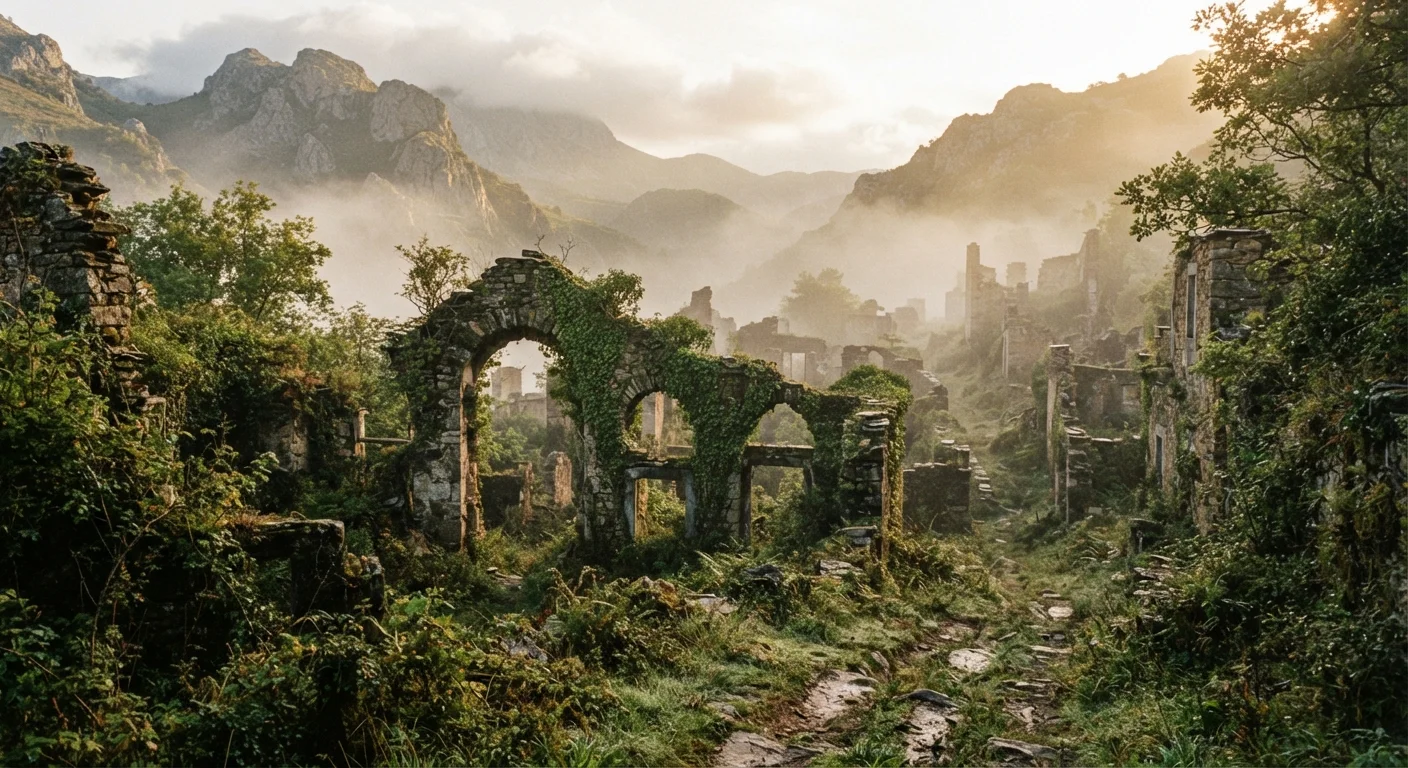
Photo credit: ExploreRoute.net | Travel Made Simple
In this article
Solitude, lower environmental pressure, and richer encounters with local custodians — but also real risks. An honest look at both sides of early-adopter heritage travel.
Key Takeaways
- Visiting overlooked historic sites before they gain mainstream attention offers genuine solitude and richer encounters with local custodians.
- Early-adopter heritage travel carries real logistical and safety challenges that require thorough preparation.
- Low visitor numbers can reduce environmental pressure on fragile sites — but unmanaged access can cause its own damage.
- Many 'forgotten' sites are already well known to the communities living beside them; that context demands cultural respect.
- Thorough pre-trip research — permits, seasonal conditions, emergency contacts — is essential, not optional.
Genuine solitude at historically significant places
Without crowds, you engage with a site on your own terms — spending time where curiosity leads rather than where queue management directs. That freedom is increasingly rare at recognized heritage destinations.
Richer access to local knowledge and custodians
When outside visitors are few, local historians, residents, and site guardians are far more likely to share interpretive depth that never makes it into published guides or official audio tours.
Lower environmental and structural pressure on fragile sites
Erosion, moisture accumulation from breath, and compaction from foot traffic are cumulative and measurable. Fewer visitors, managed responsibly, can slow deterioration at sites that lack conservation resources.
Travel experiences that resist easy replication
A site's character shifts permanently once it enters the mainstream travel circuit — infrastructure arrives, access is formalized, and the atmosphere changes. Visiting earlier preserves a quality of encounter that later travelers will not find.
Economic benefit flows more directly to local communities
Before large operators enter a destination, spending on accommodation, guides, and food reaches local providers more directly, with less extraction by intermediary tourism businesses.
Minimal or absent visitor infrastructure
Signage, restrooms, parking, and safe pathways are often nonexistent at overlooked sites. Travelers who expect the amenities of a managed heritage park will frequently be disappointed or caught off-guard.
Physical safety risks at unconsolidated ruins
Structures that have not been assessed or stabilized for public access can be genuinely dangerous. Remote locations compound risk by placing distance between any incident and emergency services.
Permit and access rules can be opaque or unenforced
Entry requirements at lesser-known sites are sometimes unclear, inconsistently applied, or only available in the local language. Arriving without the right documentation can mean being turned away after significant travel.
Risk of inadvertently accelerating unwanted 'discovery'
Widely sharing a location on social media or in travel forums can flood a community or fragile site with visitors before any management framework exists, creating exactly the problem early visitors hoped to avoid.
Limited published context and interpretation
Academic fieldwork and local documentation on overlooked sites is often incomplete, hard to access, or untranslated — making it harder to understand what you are seeing without investing significant research time in advance.
Community may not want or be prepared for outside visitors
Some sites sit within or adjacent to communities that have not sought tourism and may find uninvited visitors disruptive. Assuming welcome where none has been extended is a form of disrespect.
What 'Forgotten' Actually Means
The word forgotten is doing a lot of work in heritage travel conversations, and it's worth slowing down to interrogate it. A hilltop citadel in central Anatolia or a pre-Columbian earthwork complex in the American Midwest may be absent from popular itineraries, but the villages clustered around them have never stopped knowing exactly what those stones mean. As our companion piece explores, the myth of the truly undiscovered place ignores the knowledge and ongoing presence of local communities.
For the purposes of this article, forgotten means overlooked by mainstream international tourism — sites that have not yet attracted the coach-tour infrastructure, the social-media pilgrimage, or the souvenir economy that follows sustained outside attention. That definition matters because it shapes both the opportunity and the responsibility involved in going.
A Note on the Language of 'Discovery'
Describing a historic site as undiscovered or forgotten is a perspective that belongs to outside travelers, not to the communities who have lived alongside these places for generations. Using that framing carelessly can reinforce a colonial travel narrative that erases ongoing local relationships with heritage. A more accurate phrase — 'overlooked by international tourism' — keeps the framing honest and shifts accountability to the traveler's own limited awareness rather than implying the place was ever truly absent from human attention.
The Real Advantages of Going Early
The case for visiting these places before the crowds arrive is not merely about bragging rights. The advantages are substantive and, in some cases, time-limited.
Genuine solitude at historically significant places
Without crowds, you engage with a site on your own terms — spending time where curiosity leads rather than where queue management directs. That freedom is increasingly rare at recognized heritage destinations.
Richer access to local knowledge and custodians
When outside visitors are few, local historians, residents, and site guardians are far more likely to share interpretive depth that never makes it into published guides or official audio tours.
Lower environmental and structural pressure on fragile sites
Erosion, moisture accumulation from breath, and compaction from foot traffic are cumulative and measurable. Fewer visitors, managed responsibly, can slow deterioration at sites that lack conservation resources.
Travel experiences that resist easy replication
A site's character shifts permanently once it enters the mainstream travel circuit — infrastructure arrives, access is formalized, and the atmosphere changes. Visiting earlier preserves a quality of encounter that later travelers will not find.
Economic benefit flows more directly to local communities
Before large operators enter a destination, spending on accommodation, guides, and food reaches local providers more directly, with less extraction by intermediary tourism businesses.
Solitude changes the quality of attention you can bring to a site. Without guided groups and audio-wand queues, you can spend an hour at a single carved lintel, or follow a wall's logic across a hillside without being redirected. The ecological case for low visitor numbers applies equally to built heritage: foot traffic, exhaled moisture, and casual touching degrade stone, pigment, and earthen structures incrementally. Fewer visitors, managed thoughtfully, can mean slower deterioration.
Encounters with local custodians — the farmer who has been pulling tourists out of his field for a decade, the municipal archivist who knows where the unpublished survey photographs are kept — are qualitatively different when you are one of a handful of outside visitors rather than one of thousands. These conversations are where the real interpretive richness lives, well beyond what any interpretive panel could convey. Our guide on engaging respectfully with communities in undervisited towns offers a practical framework for this kind of exchange.
~900
UNESCO World Heritage Sites currently listed
UNESCO's World Heritage List includes roughly 900 cultural properties globally, yet thousands of significant archaeological and historic sites worldwide remain outside formal international recognition or major tourism circuits.
80%+
Heritage tourism concentrated at minority of sites
Research on heritage tourism distribution consistently finds that the overwhelming majority of international visitors concentrate on a small fraction of listed sites, leaving the remainder with very low visitation.
The Honest Disadvantages
Early-adopter heritage travel demands an equally honest accounting of what you are walking into.
Minimal or absent visitor infrastructure
Signage, restrooms, parking, and safe pathways are often nonexistent at overlooked sites. Travelers who expect the amenities of a managed heritage park will frequently be disappointed or caught off-guard.
Physical safety risks at unconsolidated ruins
Structures that have not been assessed or stabilized for public access can be genuinely dangerous. Remote locations compound risk by placing distance between any incident and emergency services.
Permit and access rules can be opaque or unenforced
Entry requirements at lesser-known sites are sometimes unclear, inconsistently applied, or only available in the local language. Arriving without the right documentation can mean being turned away after significant travel.
Risk of inadvertently accelerating unwanted 'discovery'
Widely sharing a location on social media or in travel forums can flood a community or fragile site with visitors before any management framework exists, creating exactly the problem early visitors hoped to avoid.
Limited published context and interpretation
Academic fieldwork and local documentation on overlooked sites is often incomplete, hard to access, or untranslated — making it harder to understand what you are seeing without investing significant research time in advance.
Community may not want or be prepared for outside visitors
Some sites sit within or adjacent to communities that have not sought tourism and may find uninvited visitors disruptive. Assuming welcome where none has been extended is a form of disrespect.
Infrastructure at overlooked sites is, almost by definition, minimal. Signage may be absent or only in the local language. Facilities — toilets, parking, potable water, shade — may not exist. As we detail in assumptions that ruin a visit to a forgotten historic site, expecting the interpretive amenities of a well-funded heritage park and finding a padlocked gate instead is a genuinely common experience.
Physical safety is a real variable. Unconsolidated ruins can be structurally unstable. Remote locations may sit far from emergency services. And the ethical burden deserves plain acknowledgment: early visitors who share locations widely on social media can inadvertently accelerate the very 'discovery' they sought to avoid, sometimes overwhelming communities and sites before any management framework is in place. The decision to visit — and how you talk about it afterward — carries weight.
How to Tip the Balance in Your Favor
The gap between a rewarding visit and a damaging one — to the site, the community, or yourself — is almost entirely a function of preparation. A pre-visit checklist for obscure historic sites covers the logistical essentials: permits, seasonal access windows, local emergency contacts, and cultural protocols. Beyond logistics, consider what kind of footprint your visit leaves.
Hiring a local guide rather than navigating independently keeps economic benefit in the community and reduces the likelihood of accidental damage. Understanding the difference between preserved ghost towns and active archaeological digs shapes what you can reasonably do on-site. And consulting a guide to visiting a forgotten ruin responsibly before you go is not optional due diligence — it is the baseline for ethical heritage travel.
Accessibility is its own planning axis. Some overlooked ruins require days of difficult travel; others sit beside paved roads. The trade-offs involved are explored in depth in our piece on remote access versus easy infrastructure. Matching a site's access profile to your own physical capability and risk tolerance is as important as any cultural or logistical consideration.
Travel conditions, access permissions, visa requirements, and site regulations vary by country and can change without notice. Always verify entry requirements and any relevant advisories with official government and local authority sources before making travel plans.

Author
Hidden Destinations Editorial Team
Hidden Destinations Editorial Team is the collective byline for our editorial team and contributor network. Articles published under this byline or an editorial pen name are researched, written, and reviewed according to our editorial standards for clarity, consistency, and independence before publication.
View all articles →