
How Overtourism in Famous Villages Is Quietly Redirecting Travelers Elsewhere
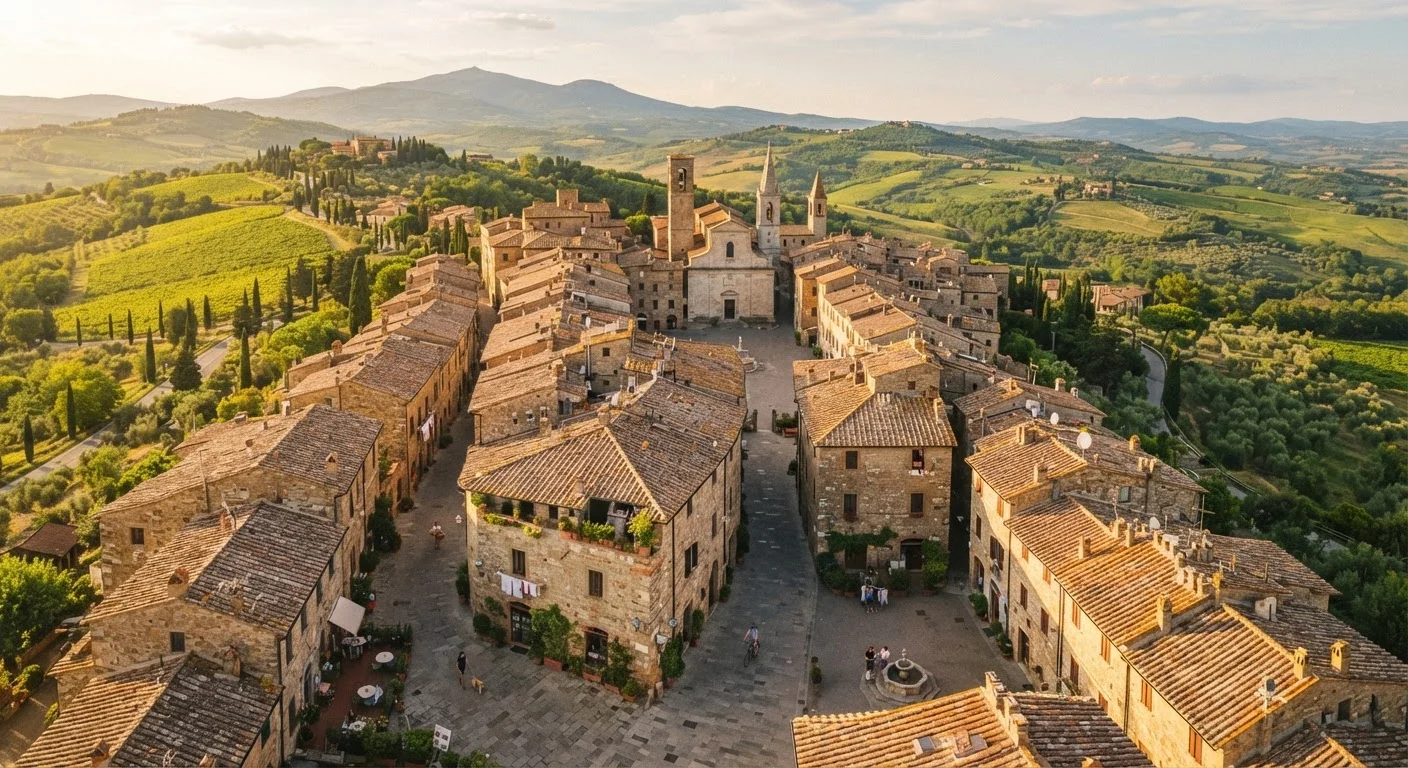
Photo credit: ExploreRoute.net | Travel Made Simple
In this article
As crowding pressures reshape popular sites, a growing number of travelers are finding their way to lesser-known towns — and changing them in the process.
Key Takeaways
- Overtourism at famous villages is prompting travelers to seek out smaller, lesser-known alternatives nearby.
- This redirection is reshaping previously quiet communities that may not be prepared for new visitor attention.
- Dispersal can benefit overlooked towns economically, but it also carries risks of repeating the same crowding cycle.
- Travelers who arrive with cultural curiosity and local respect are better positioned to experience a place authentically.
- Understanding what keeps a town 'underrated' can help travelers make more intentional and sustainable choices.
When the Postcard Village Becomes Unbearable
There is a specific kind of disappointment that strikes when you finally arrive at the village you have been imagining for months — and discover that several thousand other people had the same idea, on the same weekend, in the same summer. The lanes are gridlocked with selfie sticks. The bakery has a forty-minute queue. The famous view is obscured by a tour group in matching orange hats.
This is overtourism in its most personal form: not an abstraction about visitor numbers, but a felt experience of a place overwhelmed by its own reputation. And increasingly, it is the quiet engine pushing a meaningful share of travelers to look beyond the headliner destinations — toward towns that haven't yet appeared on anyone's algorithmic radar.
Understanding this shift requires looking honestly at how fame works in travel. A village earns its postcard status through some combination of genuine beauty, a well-timed magazine feature, and — in the past decade — the self-reinforcing logic of social media, where photographs of a place generate more photographs, which generate more visitors, which generate more photographs. The cycle accelerates until the very qualities that made the place photogenic — its quietness, its authentic daily life — have been consumed by the audience that came to find them.
56%
Travelers reporting overcrowding as a key dissatisfier
A 2023 Euromonitor International survey found that more than half of leisure travelers identified overcrowding at popular sites as a significant negative factor in their travel experience.
2–3×
Visitor growth rate in alternative towns near saturated hotspots
Research published in the journal Tourism Management has documented that towns located within two hours of over-visited destinations often experience visitor growth rates two to three times the national average in the years following a saturation event at the primary site.
1 in 3
Travelers who altered plans due to crowd concerns
According to a Skift Research report on traveler behavior, roughly one in three respondents said they had changed a planned destination in the previous two years specifically because of anticipated or experienced overcrowding.
The Mechanics of Dispersal: How Travelers Redirect
Dispersal rarely happens by grand design. More often, it begins with a traveler who researched an overvisited destination, arrived to find it impossible, and on the way home stopped in a smaller town for lunch — and liked it better. That story gets told. The smaller town earns a mention in a travel forum. A writer visits and files a piece. The cycle begins again, just one town removed from the original.
Tourism geographers refer to this as visitor dispersal, and destination managers in countries like Croatia, Iceland, and the Netherlands have attempted to engineer it deliberately — routing visitors away from Dubrovnik's old city or Amsterdam's canal center toward less-visited regions. But organic dispersal, driven purely by traveler dissatisfaction, operates on its own unpredictable timeline and tends to concentrate newcomers in a handful of the most accessible alternatives rather than distributing them evenly.
The result is a kind of rolling wave. The famous village was once the alternative to an even more famous city. Now a quieter village becomes the alternative to the famous one. What keeps certain towns off the tourist map for so long is often precisely what makes them appealing once people discover them — and what makes them vulnerable once that discovery accelerates.
“Tourism dispersal is often discussed as a planning tool, but in practice it happens messily — driven by traveler frustration, social media recommendations, and chance encounters rather than coordinated strategy. The villages that benefit are rarely the ones planners intended.”
— Harold Goodwin, Professor of Responsible Tourism, Manchester Metropolitan University
What Redirected Travelers Actually Find
The towns that absorb overflow visitors are rarely a perfect replica of the place that became too crowded. They tend to be less polished, with fewer translated menus and less reliable Wi-Fi. The hotel stock may run to family-run guesthouses rather than boutique properties. This is not necessarily a disadvantage — many travelers find that the absence of tourism infrastructure forces a more genuine form of engagement — but it does require recalibrated expectations.
Inland towns especially tend to offer richer cultural texture than coastal alternatives that have already developed tourism economies of their own. A hill town in an unfashionable province, or a market town in a region skipped by the main rail line, may have sustained a living local economy — weekly markets, family-run workshops, neighborhood festivals — that the overvisited village traded away years ago in exchange for souvenir shops and aperitivo bars aimed at outsiders.
The risk, of course, is that the traveler who arrives seeking authenticity is also, by definition, beginning to erode it. This is not a reason to avoid these towns — isolation is not an inherently virtuous state, and many communities genuinely welcome visitors and the economic activity they bring. It is, however, a reason to think carefully about how you show up. How you engage with communities unaccustomed to tourism matters enormously when you are one of only a handful of outside visitors rather than one of thousands.
Arriving in an Undiscovered Town Well-Prepared
Before visiting a town with little tourism infrastructure, research whether local businesses prefer cash, whether there are seasonal closures, and what the primary local language or dialect is. Small gestures — a greeting in the local language, buying from a neighborhood market rather than a convenience store — signal respect and create more genuine exchanges. Verify entry requirements and any relevant travel advisories through official government sources before you go.
The Cycle's Next Turn — And How to Think About It
There is a temptation to treat the discovery of a lesser-known town as a kind of travel victory — proof of discernment and independence from the crowds. But the logic that makes a place feel like a discovery today is the same logic that made the now-overcrowded village feel like one a decade ago. The question worth sitting with is not simply where to go, but how to go.
Certain trip-planning habits consistently lead to disappointing small-town visits — chasing viral imagery, arriving in peak season without a plan, or mistaking a town's quietness for a lack of things worth understanding. The antidote is not a secret list of places not yet discovered, but a more considered orientation toward place itself: curiosity about local history, willingness to spend time rather than collect sights, and enough humility to recognize that a town's life was not waiting for your arrival to begin.
For travelers genuinely interested in what makes overlooked places worth visiting — and what keeps them that way — the broader patterns of forgotten historic sites and hidden scenic routes offer a useful framework: these are places that have survived outside the tourism economy, often for structural reasons that a single viral moment can undo. Approaching them with that awareness is the closest thing to a guarantee that the experience will be worth having.
Frequently Asked Questions

Author
Hidden Destinations Editorial Team
Hidden Destinations Editorial Team is the collective byline for our editorial team and contributor network. Articles published under this byline or an editorial pen name are researched, written, and reviewed according to our editorial standards for clarity, consistency, and independence before publication.
View all articles →