
Inland vs. Coastal Small Towns: Where Fewer Tourists Actually Go
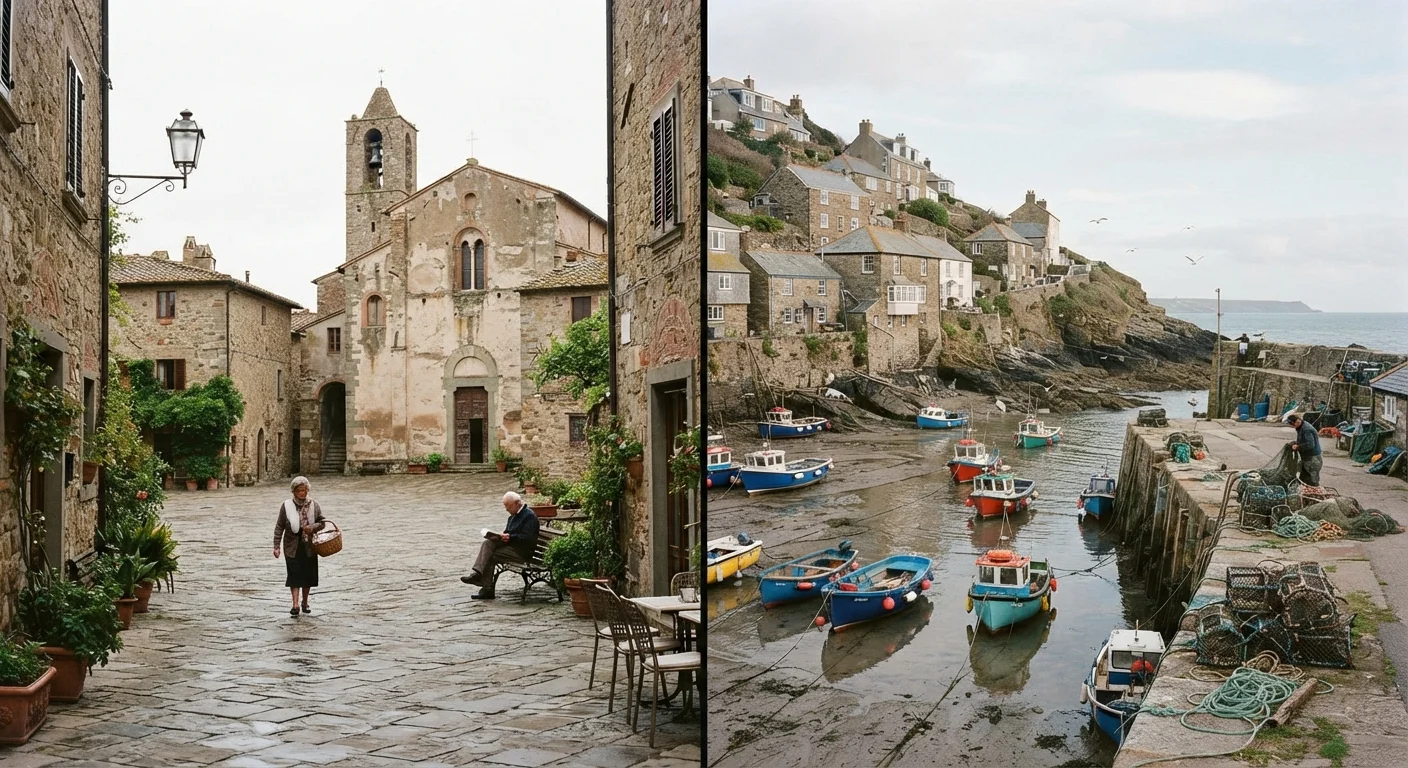
Photo credit: ExploreRoute.net | Travel Made Simple
In this article
Coastal villages steal the headlines, but inland towns often offer richer culture and quieter streets. Here's how the two experiences really differ.
Key Takeaways
- Inland towns typically see far fewer seasonal visitors than even minor coastal destinations, making them reliably quieter year-round.
- Coastal small towns offer distinct maritime culture — working harbors, seafood traditions, and tidal landscapes — that inland places simply cannot replicate.
- Inland towns often preserve older, less commodified local traditions because economic pressure from tourism has been lower for longer.
- Accessibility varies significantly: coastal towns often have more transport links, while inland towns may require a rental car or regional train.
- Both types can be genuinely underrated, but the factors that keep them overlooked differ — geography for inland, overshadowing by famous neighbors for coastal.
Why This Comparison Matters for Off-the-Beaten-Path Travelers
The instinct to seek quieter places is well-founded — but not all quiet places are quiet for the same reasons, and that distinction shapes everything about your experience on the ground. Before choosing a direction, it helps to understand what keeps certain towns off the tourist map in the first place.
Inland towns tend to stay overlooked because they lack an obvious visual hook in the age of social media. Coastal towns that remain uncrowded are typically overshadowed by a more famous neighbor — think the village two bays over from a celebrated resort strip. The mechanism is different, and so is the texture of what you find when you arrive.
This contrast also plays out in how rapidly a place can change. Overtourism in famous villages is gradually pushing travelers toward lesser-known alternatives, and coastal small towns are particularly vulnerable to this spillover effect. Inland towns absorb that pressure more slowly, if at all.
Side by Side: How Inland and Coastal Small Towns Compare
Understanding the structural differences between these two types of destination helps calibrate expectations before you book a single night's lodging.
| Criterion | Inland Small Towns | Coastal Small Towns |
|---|---|---|
| Typical tourist density | Very low, year-round | Low to moderate; seasonal spikes |
| Primary cultural draw | Historical architecture, agrarian traditions | Maritime culture, seafood, working harbors |
| Transport accessibility | Often requires rental car or local bus | Frequently served by ferry or coastal rail |
| Risk of rapid gentrification | Lower — slower discovery curve | Higher — scenic coastline drives attention |
| Landscape variety | Forests, farmland, valleys, hill towns | Beaches, cliffs, tidal flats, harbors |
| Local food scene character | Land-based: cured meats, cheeses, wine | Sea-based: fresh catch, shellfish, preserved fish |
| Accommodation options | Guesthouses, agriturismo, family inns | Fishermen's cottages, small harbor hotels |
One dimension the table cannot fully capture is sensory atmosphere. An inland town in central Portugal's Alentejo region — whitewashed walls, cork oak groves, the sound of a distant church bell — occupies a completely different register than a small fishing village on the Galician coast of Spain, where the smell of brine and the creak of boat rigging define the morning. Neither is superior; they are simply different emotional geographies. For a closer look at how these landscapes diverge in their most dramatic forms, the comparison of inland versus coastal wilderness explores similar terrain through a nature-travel lens.
What Inland Towns Do Better
Inland small towns excel at something that is increasingly rare in travel: the feeling of arriving somewhere that was not arranged with your arrival in mind. Markets operate on agricultural rhythms, not tourist schedules. Restaurants may close on Mondays because the owner's family always has. The local festival calendar follows religious or harvest traditions rather than peak booking seasons.
This unperformed quality of daily life is what many frequent travelers are actually chasing when they say they want "authentic" experience. Common misconceptions about small-town travel — that there is nothing to do, or that language barriers make access difficult — tend to be most overstated about inland destinations, which often carry surprising depth once a visitor slows down enough to find it.
The hill towns of southern Italy offer a telling example. Places in Basilicata or Molise, explored in depth in our piece on hill towns beyond Cinque Terre, preserve medieval street patterns and local dialects that coastal popularity long ago eroded in more accessible towns.
~80%
Tourism concentrated in top destinations
The UNWTO has noted that the vast majority of international tourist arrivals concentrate in a small fraction of global destinations, leaving most inland towns structurally undervisited.
3–5x
Price difference: coastal vs. inland lodging
Travel researchers and destination economists have broadly observed that comparable accommodations in inland rural towns often cost significantly less than in nearby coastal areas during peak season.
60%+
Travelers who regret over-touristed choices
Surveys by travel research organizations have found that a majority of experienced travelers report wishing they had chosen less crowded destinations on at least one significant trip.
What Coastal Small Towns Offer That Inland Cannot
A working harbor is a kind of theater that operates entirely on its own terms. Fishermen sorting nets at 5 a.m., the auction logic of a small fish market, the informal economics of a community organized around tidal windows — these rhythms produce a living culture that is completely distinct from anything found inland.
Small coastal towns that remain genuinely uncrowded — as opposed to merely less crowded than Santorini — tend to sit along stretches of coastline that are either logistically inconvenient or visually understated by mainstream travel standards. They reward travelers willing to arrive by regional ferry or rural road rather than by high-speed rail to a famous terminus. The network of hidden scenic drives running along lesser-known coastal corridors often connects exactly these kinds of places.
It is also worth noting that coastal small towns offer a natural counterpoint to the curated shore excursion experience. Travelers who have explored celebrated port regions — say, comparing Baltic ports against Norwegian fjord villages — often find that the most memorable moments happen in the smaller, unscheduled stops between headline destinations.
Travel conditions, entry requirements, and local access can change. Always verify current information with official government sources and relevant local authorities before planning your trip.

Author
Hidden Destinations Editorial Team
Hidden Destinations Editorial Team is the collective byline for our editorial team and contributor network. Articles published under this byline or an editorial pen name are researched, written, and reviewed according to our editorial standards for clarity, consistency, and independence before publication.
View all articles →