
What Makes a Town 'Underrated'? The Geography of Overlooked Places
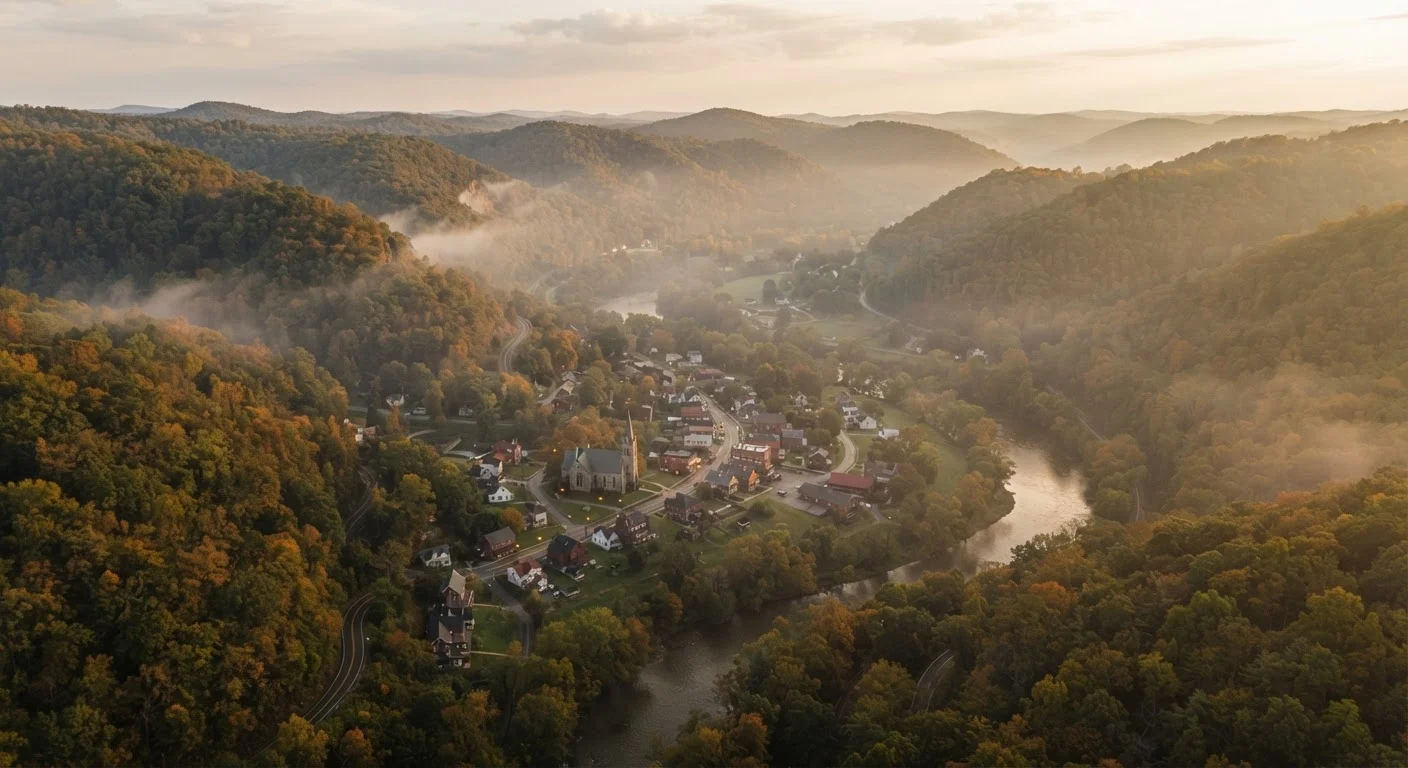
Photo credit: ExploreRoute.net | Travel Made Simple
In this article
Why do some towns stay off the tourist map? Explore the geographic, economic, and cultural factors that keep charming places wonderfully uncrowded.
Key Takeaways
- Geographic isolation from major transport hubs is the single biggest factor keeping towns off the tourist map.
- A town's perceived lack of a 'flagship' attraction often obscures a richer, more layered experience.
- Economic history — including post-industrial decline — frequently explains why some places lost their tourist identity.
- Traveler assumptions and outdated reputations can persist long after a town has quietly reinvented itself.
- Underrated towns often offer more authentic cultural exchanges precisely because tourism hasn't yet reshaped local life around visitor expectations.
The Invisible Filter Between Travelers and Great Places
Every seasoned traveler has experienced it: you arrive somewhere that wasn't on anyone's itinerary and wonder, genuinely puzzled, why on earth nobody talks about this place. The food is extraordinary. The architecture tells a story in stone and tile that no museum could replicate. The main square hums with actual local life rather than the performance of it. And yet the town is absent from every travel list you've ever read.
Understanding why requires thinking less like a tourist and more like a geographer. The forces that elevate some destinations to household names while leaving equally compelling places in obscurity are rarely about merit. They are about infrastructure, history, perception, and — perhaps most importantly — the compounding effect of existing attention. Fame, in travel, tends to concentrate rather than spread.
A Note on Responsible Discovery
Labeling a place a 'hidden gem' carries real responsibility. Communities that have long managed without significant tourism may have limited infrastructure for visitors, and rapid attention can change local character faster than residents can shape that change. Traveling with awareness of this dynamic — spending locally, respecting community rhythms, and avoiding overcrowded or sensitive sites — matters as much as the discovery itself. For a deeper look at how this applies to natural places, see why so-called undiscovered wonders are never truly undiscovered.
Geography and the Logistics of Access
The most powerful predictor of visitor volume is not a town's beauty or cultural depth — it's how easily a traveler can reach it from a major airport or highway corridor. Towns that sit outside the catchment area of a hub city, or that require a change of regional train and a local bus, shed the majority of potential visitors at each additional step. This friction is not accidental; it is infrastructure as destiny.
Consider how many celebrated destinations became famous partly because a railway terminus or interstate exit happened to land nearby. The towns one valley over, reachable only by a winding country road, received the same geological gifts and the same centuries of human history — but not the same foot traffic. Over time, the visited places developed hotels, restaurants, and visitor economies, widening the gap further.
Hidden scenic drives offer one of the best frameworks for finding these road-less-traveled towns: the communities tucked between more famous stops are often the most revealing.
~80%
Share of global tourists visiting just a handful of destinations
Research in tourism geography consistently finds that international visitor flows concentrate heavily in a small number of marquee destinations, leaving the vast majority of places with little or no tourist economy.
2–3×
Typical visitor multiplier near a major transport hub
Studies of regional tourism patterns suggest towns within comfortable distance of a major airport or interstate junction can receive several times more visitors than comparable towns just slightly farther from the same infrastructure.
The 'Flagship Attraction' Problem
Modern travel media operates on a logic of landmarks. A town with a single iconic sight — a photogenic castle ruin, a UNESCO-listed old city, a particular mountain view — earns a place in the itinerary. A town with a dozen quieter pleasures, none of them individually camera-ready, gets passed over. This creates a systematic bias toward spectacle and away from texture.
The irony is that texture is what experienced travelers consistently say they value most. The bakery that has operated from the same corner for four generations. The local museum staffed by volunteers who actually remember the industrial era it documents. The weekly market where the produce isn't arranged for photographs. These are the details that make a place feel real — and they rarely appear in the headline slot.
Common misconceptions about small towns often center on this exact problem: visitors assume that a place without a famous landmark has nothing to offer, a conclusion that routinely turns out to be wrong.
Economic History as a Shaping Force
Many of today's most underrated towns were, at some earlier point, economically significant — mining centers, river-trade hubs, market towns serving agricultural regions. When those economic engines stalled, the towns contracted. Tourism infrastructure that might have developed didn't. The wider world moved on, and the towns were quietly removed from the mental map of places worth visiting.
What that contraction left behind is often extraordinary: historic built environments that were never demolished and redeveloped because there was no financial pressure to do so, artisan traditions that survived because local demand kept them alive, and a pace of life that reflects the community rather than the visitor economy. Post-industrial towns across Appalachia, the American Midwest, and the rural South contain layers of history and craft that forgotten historic sites enthusiasts spend years trying to locate in more celebrated places.
“The places that time forgot are often the places that history preserved. Economic stagnation, for all its costs, is sometimes the reason an entire streetscape survives intact into the present century.”
— Dolores Hayden, Architectural historian and author on the preservation of ordinary American landscapes
Reputation Lag and the Persistence of Old Stories
Perhaps the subtlest force keeping towns overlooked is reputation lag — the gap between what a place is now and what people believe it to be. A town that experienced economic hardship in the 1980s may carry that image in the public mind long after local investment, a revitalized arts scene, or a new generation of residents has quietly transformed it. Travelers avoid it based on an outdated story, and without visitors to contradict the narrative, the story persists.
This is why assumptions about small-town travel deserve regular re-examination. The most genuinely rewarding discoveries often lie in places that were written off years ago and have since been quietly, unhurriedly, getting on with being interesting.
For travelers ready to pursue this kind of discovery more systematically, overlooked regions that reward curious travelers offer a broader canvas — proof that the geography of the underrated extends well beyond individual towns into entire landscapes waiting to be read.
Look One Step Beyond the Famous Stop
When planning a trip around a well-known destination, pull up a regional map and identify the towns within 30–50 miles that share the same geography or historical era. These neighbors often carry the same assets — old-growth forests, river crossings, agricultural heritage — without the crowds or the prices that fame attracts. The detour is almost always worth it.
Frequently Asked Questions

Author
Hidden Destinations Editorial Team
Hidden Destinations Editorial Team is the collective byline for our editorial team and contributor network. Articles published under this byline or an editorial pen name are researched, written, and reviewed according to our editorial standards for clarity, consistency, and independence before publication.
View all articles →