
Eight Overlooked Regions That Reward the Truly Curious Traveler
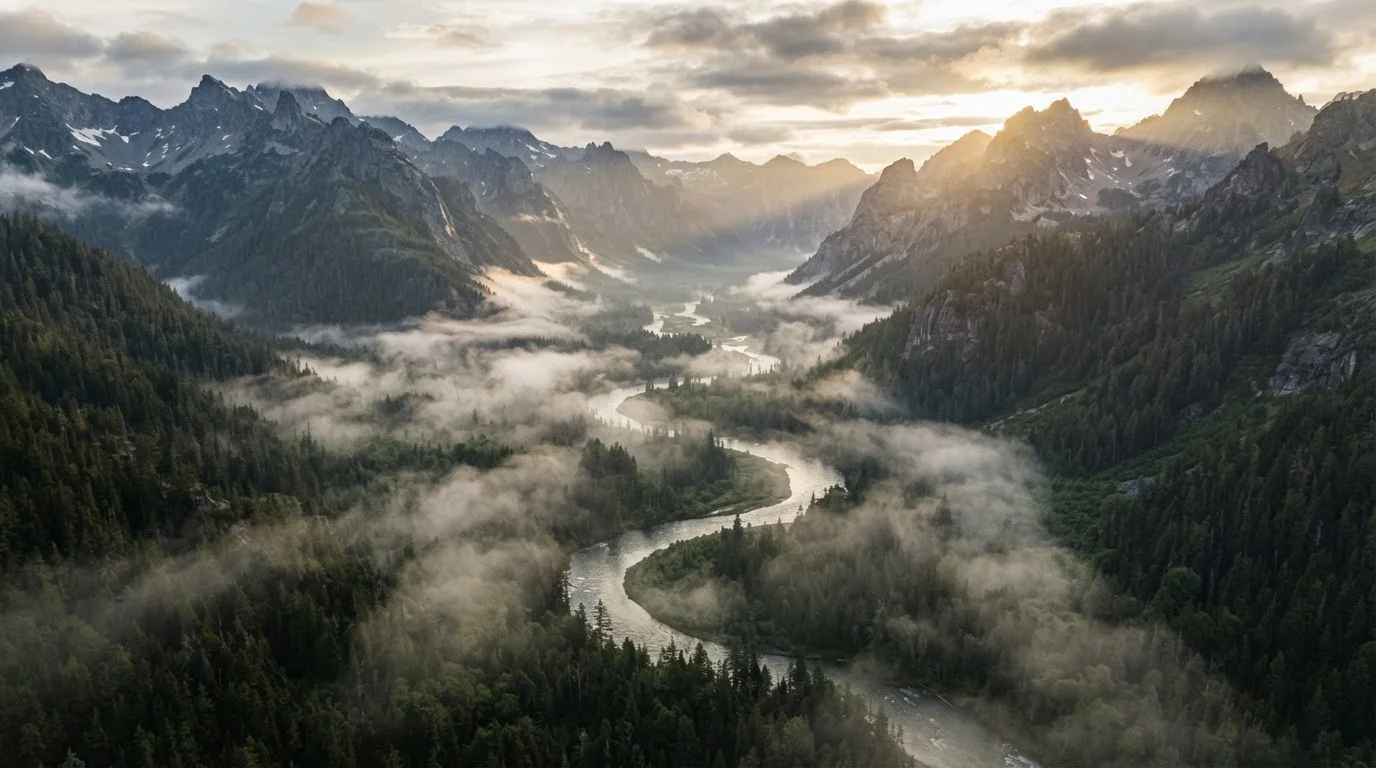
Photo credit: ExploreRoute.net | Travel Made Simple
Beyond the marquee trails and famous peaks lie landscapes most travelers never reach. Eight regions offering genuine wilderness and cultural depth.
Key Takeaways
- Eight under-visited regions across multiple continents offer genuine wilderness depth unavailable in mainstream destinations.
- Cultural immersion and ecological richness are highest where visitor infrastructure remains minimal.
- Seasonal timing, local permits, and official guidance shape whether these places are accessible and safe to visit.
- Off-season travel can unlock solitude but introduces meaningful logistical trade-offs worth weighing carefully.
- Researching access barriers — geography, permits, political conditions — is essential before committing to remote travel.
Why the Overlooked Places Matter Most
Every well-traveled itinerary has a gravitational center — Paris, Machu Picchu, Yellowstone — places so thoroughly mapped and marketed that arrival can feel less like discovery and more like confirmation. For experienced travelers, the antidote isn't novelty for its own sake. It's depth: landscapes and cultures that require genuine effort to reach and reward that effort in proportion.
The eight regions below don't appear on most shortlists. Several lack developed tourism infrastructure; others are protected by geography, language barriers, or permit systems that quietly filter out casual visitors. What they share is an uncommon combination of ecological richness, cultural texture, and the particular silence that comes when a place hasn't yet been smoothed into a product. For a fuller picture of what genuinely keeps wild places unknown, see what makes a natural wonder truly secret.
Research Access Barriers Before You Book
The regions on this list vary widely in how they're accessed — some require government permits, others demand specific vehicle types or guided entry. Before committing to flights and accommodation, spend time with official national park or protected-area websites, current travel advisories, and in-region logistics providers. Flexibility on dates is one of the most valuable assets a traveler can bring to remote destinations.
The Wakhan Corridor, Tajikistan
Squeezed between Afghanistan, China, and Pakistan at altitudes that regularly exceed 4,000 meters, the Wakhan Corridor is one of Central Asia's most dramatically isolated valleys. Wakhi and Kyrgyz communities have herded yaks here for centuries, largely undisturbed by outside tourism. Permit requirements, limited road infrastructure, and the logistical demands of high-altitude travel keep visitor numbers very low. Those who make it encounter Pamir landscapes and a living tradition of nomadic hospitality that feels genuinely unmediated.
The Wakhan Corridor rewards persistence with Pamir landscapes and nomadic hospitality most travelers will never witness.
The Kimberley, Western Australia
Australia's northwest corner is roughly the size of California, contains fewer than 40,000 permanent residents, and shelters some of the continent's oldest rock art alongside gorges, waterfalls, and sandstone formations that have no real analog elsewhere. The Gibb River Road — unsealed and seasonally impassable during the wet season — acts as a natural filter. Visit during the dry season (May through October), hire a high-clearance 4WD, and expect stretches of genuine solitude punctuated by station stays and Indigenous-led cultural tours where available.
The Kimberley's sheer scale and unsealed access roads ensure the crowds that define most Australian destinations simply don't materialize.
Svalbard's Eastern Archipelago, Norway
Most visitors to Svalbard orbit Longyearbyen and its accessible day trips. The archipelago's eastern reaches — Nordaustlandet, Edgeøya, Barentsøya — demand expedition-level logistics: ice-capable vessels, mandatory guide requirements outside the settlement zone, and polar bear safety protocols. The payoff is Arctic wilderness at a scale that reframes scale itself: glaciers calving into open water, walrus haul-outs, and light conditions that shift from polar night to midnight sun with no middle ground. Verify current regulations with the Governor of Svalbard before planning any independent excursion.
Svalbard's eastern islands demand expedition logistics but deliver Arctic wilderness with almost no other human presence.
The Darien Gap, Colombia–Panama Border Region
The Darien is frequently cited and rarely visited, partly because its reputation for danger has historically been accurate in portions of the region. Colombian entry points near Capurganá and Acandí, accessible by boat from Turbo, offer coastal and jungle experiences within the broader Darien ecosystem without requiring illegal or unsafe border crossing. The region contains extraordinary biodiversity — one of the highest per-hectare bird species counts in the Americas — and Emberá and Kuna community-based tourism initiatives in accessible areas. Consult current US State Department advisories and travel only with vetted local operators.
Accessible coastal entry points near Capurganá offer genuine Darien biodiversity without the serious risks of interior border crossings.
The Faroe Islands' Outer Reaches
Tórshavn and the main island cluster now appear on enough travel lists that their discoverable quality has diminished. The outer islands — Mykines, Gásadalur, Kirkjubøur — still require ferry schedules that answer to weather rather than convenience, and the hiking routes on Mykines in particular demand respect for genuine Atlantic cliff-edge conditions. The islands' cultural texture — a Norse-derived language spoken by around 50,000 people, turf-roofed farmsteads, and a fishing economy that visibly shapes daily life — remains entirely authentic and deeply engaging for travelers willing to slow down.
Faroese outer islands operate on ferry schedules determined by weather, which remains the most effective crowd filter in the North Atlantic.
Ethiopia's Omo Valley
Southern Ethiopia's Omo Valley is home to more than a dozen distinct ethnic groups — including Mursi, Hammer, and Karo peoples — living in ways that have evolved largely outside global economic integration. The region is reachable by road from Addis Ababa, though distances are significant and road conditions variable by season. Community-based tourism frameworks have improved in recent years, offering more equitable interactions than older, extractive photography-tour models. Regional food cultures here are as distinctive as the visual culture, rooted in sorghum, fermented beverages, and livestock-centered ceremonial life.
The Omo Valley's cultural diversity — spanning more than a dozen ethnic groups in one river corridor — has no real equivalent in accessible Africa.
The Azores' Outer Islands: Corvo and Flores
The western Azorean islands of Corvo and Flores sit roughly 2,200 kilometers from mainland Portugal, connected to the rest of the archipelago by inter-island flights that run on schedules sensitive to Atlantic fog. Corvo, with a permanent population of around 400, contains a single village and a vast caldera at its center. Flores features waterfalls, hydrangea-lined crater lakes, and some of the archipelago's most dramatic coastal scenery. For travelers already drawn to Atlantic island culture, our piece on Atlantic island ports provides useful context on what sets the Azores apart from its Macaronesian neighbors.
Corvo's population of around 400 makes it one of the smallest permanently inhabited islands in the Atlantic — and one of the most quietly spectacular.
The Greater Sandhills Region, Nebraska
Closer to home and almost entirely ignored by travelers who associate the American interior with monotony: Nebraska's Sandhills constitute the largest stabilized sand dune system in the Western Hemisphere, covering roughly 20,000 square miles with native prairie grass, alkaline lakes critical to migratory crane populations, and a ranching culture that has remained largely unchanged for generations. The region has no national park designation and virtually no tourism infrastructure, which means accessing it is a matter of driving state highways through a working landscape rather than following a visitor guide. It extends naturally into the kind of territory explored in our feature on underrated Great Plains drives.
Nebraska's Sandhills are the largest stabilized dune system in the Western Hemisphere — and almost entirely unknown to travelers outside the region.
Plan Thoughtfully, Travel Responsibly
Remote travel amplifies both reward and risk. Entry requirements, seasonal road conditions, permit quotas, and political situations change — sometimes quickly. Verify current visa, health, and safety guidance through your government's official travel advisory portal and in-country embassies before booking. Travelers considering shoulder- or off-season visits should read our honest assessment of off-season access to remote wilderness before committing to a timeline.
Many of these destinations also intersect with living cultures and sensitive ecosystems. Responsible access means hiring local guides where possible, observing protected-area regulations, and spending in ways that benefit communities directly. For travelers whose curiosity extends to the roads connecting these places, the hidden scenic drives hub surfaces overlooked corridors that can turn transit into the journey itself.
Wilderness Rarely Appears on Any Map
Some of the most significant natural areas in these regions — subterranean waterways, forgotten plateaus, and landscapes with no formal designation — remain outside mainstream cartography. For a broader introduction to this phenomenon, wilderness areas that rarely appear on any map explores why certain places stay genuinely unknown even to experienced travelers. Understanding this geography helps set appropriate expectations for logistics and solitude.

Author
Specialty Travel Editorial Team
Specialty Travel Editorial Team is the collective byline for our editorial team and contributor network. Articles published under this byline or an editorial pen name are researched, written, and reviewed according to our editorial standards for clarity, consistency, and independence before publication.
View all articles →