
The Misconceptions That Keep Travelers Away from Small Towns
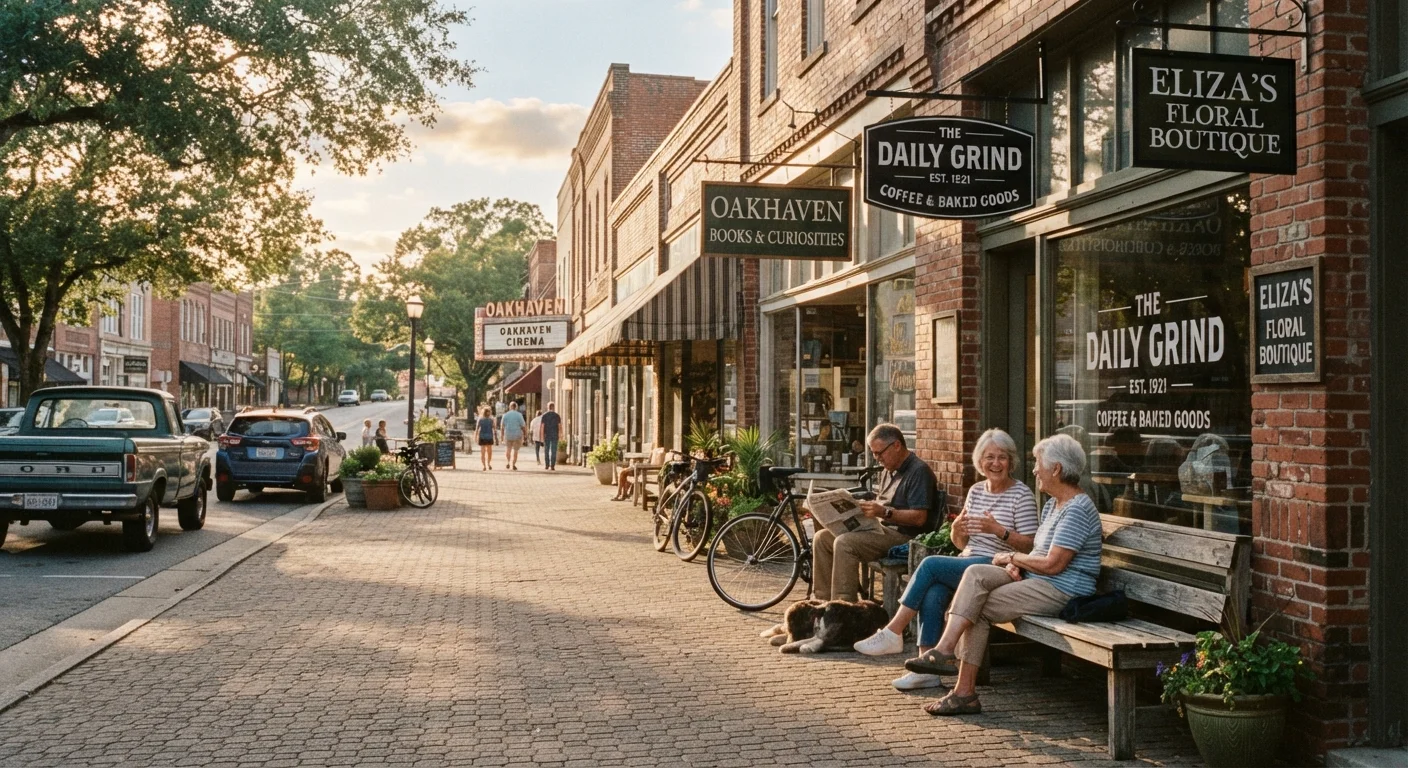
Photo credit: ExploreRoute.net | Travel Made Simple
In this article
From 'nothing to do' to 'no English spoken,' common assumptions about small-town travel often turn out to be completely wrong. Here's the reality.
Key Takeaways
- Small towns frequently offer rich cultural programming, local festivals, and historic landmarks that rival larger destinations.
- English is widely spoken across small-town America and in many internationally recognized off-the-beaten-path destinations.
- Accommodation and dining options in overlooked towns are often more varied and characterful than travelers assume.
- Slower, quieter paces are a feature of small-town travel, not a sign of a destination lacking substance.
- Many so-called 'nothing towns' sit near scenic drives, forgotten historic sites, and natural wonders worth the detour.
Why Small Towns Get a Bad Reputation Before You Even Arrive
The mental image is familiar: a shuttered diner, a single blinking traffic light, a gas station attendant who eyes strangers with mild suspicion. It's a caricature drawn from road-movie shorthand and reinforced by travelers who never actually stopped to look around. For frequent travelers accustomed to navigating Rome or Kyoto, the idea of anchoring a trip to a town of four thousand people can feel like a deliberate act of deprivation.
But that instinct — useful as it is in some contexts — tends to be driven by assumptions that simply don't hold up to scrutiny. The same research habits that send travelers chasing viral photos and peak-season queues also nudge them away from the places most likely to deliver something genuinely surprising. As our exploration of overlooked places notes, the factors that keep a town off the tourist map are rarely about quality — they're about visibility, geography, and timing.
Below, we address the most persistent misconceptions head-on.
Myth
There's nothing to do in a small town — you'll be bored within an afternoon.
Fact
Small towns frequently host local festivals, historic architecture, working farms, artisan studios, and access to natural landscapes that larger cities simply don't offer.
This assumption conflates the absence of mass-market entertainment — theme parks, stadium concerts, celebrity-chef restaurants — with the absence of meaningful experience. Many small towns in the American South, the rural Midwest, and the Mountain West anchor entire ecosystems of culture: heritage museums staffed by people whose grandparents built the exhibits, weekly farmers markets that have operated continuously for decades, and regional food traditions that never made it to a food-hall replica elsewhere.
The forgotten historic sites scattered across rural America alone could fill several dedicated itineraries. The issue isn't scarcity of things to do — it's that small-town offerings rarely appear in the search results travelers rely on.
Myth
You won't be able to communicate — locals won't speak English or be welcoming to outsiders.
Fact
English is the dominant language in the vast majority of American small towns, and international small towns in popular travel regions are often more accustomed to visitors than their size suggests.
The language barrier concern is most often raised about international destinations, where it conflates 'remote' with 'linguistically inaccessible.' In practice, small towns along well-traveled routes in Europe, Latin America, and Southeast Asia frequently have residents who speak functional to fluent English — particularly those involved in hospitality, local government, or trade.
The hospitality concern is more nuanced. Some small communities do hold outsiders at a comfortable arm's length, particularly at first. But this is qualitatively different from hostility, and it tends to dissolve quickly when travelers approach with genuine curiosity rather than extractive tourism instincts. Asking a local what they recommend for lunch — and actually going there — opens more doors than any guidebook entry.
Myth
There's nowhere decent to stay — it's either a chain motel or someone's spare room.
Fact
Small towns increasingly offer boutique inns, restored historic properties, working farm stays, and character-rich bed-and-breakfasts that chain hotels structurally cannot replicate.
The lodging landscape in overlooked towns has shifted considerably. Platforms that aggregate independent properties have made it far easier to find well-maintained, thoughtfully designed accommodation in places that once had only a highway motel to offer. Historic courthouses converted to inns, renovated mill buildings, and farmhouses with genuine acreage all appear with increasing regularity across rural America and abroad.
That said, travelers should verify amenities carefully and set realistic expectations about Wi-Fi reliability, parking logistics, and check-in hours — small operations often run lean. Our guide to off-grid lodging myths addresses several related assumptions that apply equally to small-town accommodation.
Myth
Small towns are just quieter versions of cities — the culture is the same, just smaller.
Fact
Small towns often preserve regional dialects, culinary traditions, craft practices, and social rhythms that have been absorbed or erased in urban centers.
This is perhaps the most consequential misconception because it leads travelers to discount small-town visits as inherently lesser experiences rather than genuinely different ones. A small Appalachian town isn't a miniature version of Asheville. A fishing village on the Oregon coast isn't Portland with fewer coffee shops. Each carries cultural residue — in its architecture, its food, its pace — that urban growth tends to sand away.
Travelers who approach small towns looking for what's missing will miss what's actually there. Those who approach asking what has persisted here that hasn't persisted elsewhere tend to find exactly what they came for. That reframing is also central to understanding what you gain and give up when you make a lesser-known town the centerpiece of a trip.
Myth
If a place were worth visiting, it would already be on everyone's radar.
Fact
Tourist visibility is driven by marketing budgets, infrastructure investment, and algorithm amplification — not by the inherent quality or appeal of a destination.
This assumption quietly does a lot of damage. It creates a circular logic where popularity validates itself: the towns that appear on 'top destinations' lists receive more visits, generate more content, and rise further in search rankings — while equally compelling towns with smaller promotional footprints remain invisible. It has almost nothing to do with what's actually there.
The factors that keep a town off the map are explored in depth in our piece on the geography of overlooked places. Geographic isolation, lack of a regional airport, absence of a single 'anchor' attraction, and limited English-language travel writing all contribute — none of which speaks to whether a place is worth your time.
What You're Actually Likely to Find — and How to Go In Ready
Correcting these myths isn't just an academic exercise. It changes how you plan, what you pack, and how open you are when you arrive. Travelers who go in expecting nothing often notice everything — the hand-lettered menus, the courthouse square that hasn't changed in sixty years, the local musician playing to an audience of twelve in a tavern that smells of cedar and old upholstery.
~30%
U.S. population living in rural or small-town areas
According to U.S. Census Bureau data, roughly 30% of Americans live outside metropolitan areas — representing an enormous swath of cultural geography that receives a fraction of travel attention.
4 in 10
Travelers reporting trip disappointment tied to overcrowding
Surveys by travel research organizations consistently find that overcrowding at popular sites is among the leading sources of traveler dissatisfaction — a problem small towns structurally avoid.
60%+
U.S. National Historic Landmarks located outside major cities
The majority of America's federally designated historic landmarks sit in smaller communities and rural areas, according to the National Park Service registry.
Preparation still matters. Small towns reward travelers who do the work: reading local newspaper archives, checking community event calendars, understanding seasonal rhythms. If you're planning a full week, our end-to-end planning guide walks through how to build an itinerary when almost no existing travel content exists for your destination.
It's also worth understanding that the inland versus coastal distinction shapes the experience significantly — inland towns often carry deeper cultural layers but require more self-directed exploration. And if a small town anchors a road trip rather than serving as a destination unto itself, the network of hidden scenic drives surrounding many overlooked communities can become the journey's spine.
Check Seasonal Closures Before You Go
Many small towns operate on tight seasonal schedules — local restaurants, museums, and attractions may close entirely during off-peak months. Confusing 'quiet' with 'open' is one of the most common small-town travel planning mistakes. Always verify operating hours directly with venues before building them into your itinerary. Our look at recurring trip-planning patterns covers this and other avoidable pitfalls in detail.
Small towns don't need to be rescued from obscurity to be worth visiting. They simply need travelers willing to set aside the assumptions that have kept them off the itinerary for too long. That's a surprisingly low bar — and the rewards tend to be proportionate to the willingness to clear it.

Author
Hidden Destinations Editorial Team
Hidden Destinations Editorial Team is the collective byline for our editorial team and contributor network. Articles published under this byline or an editorial pen name are researched, written, and reviewed according to our editorial standards for clarity, consistency, and independence before publication.
View all articles →