
Myths About Driving Route 66 That Need Correcting
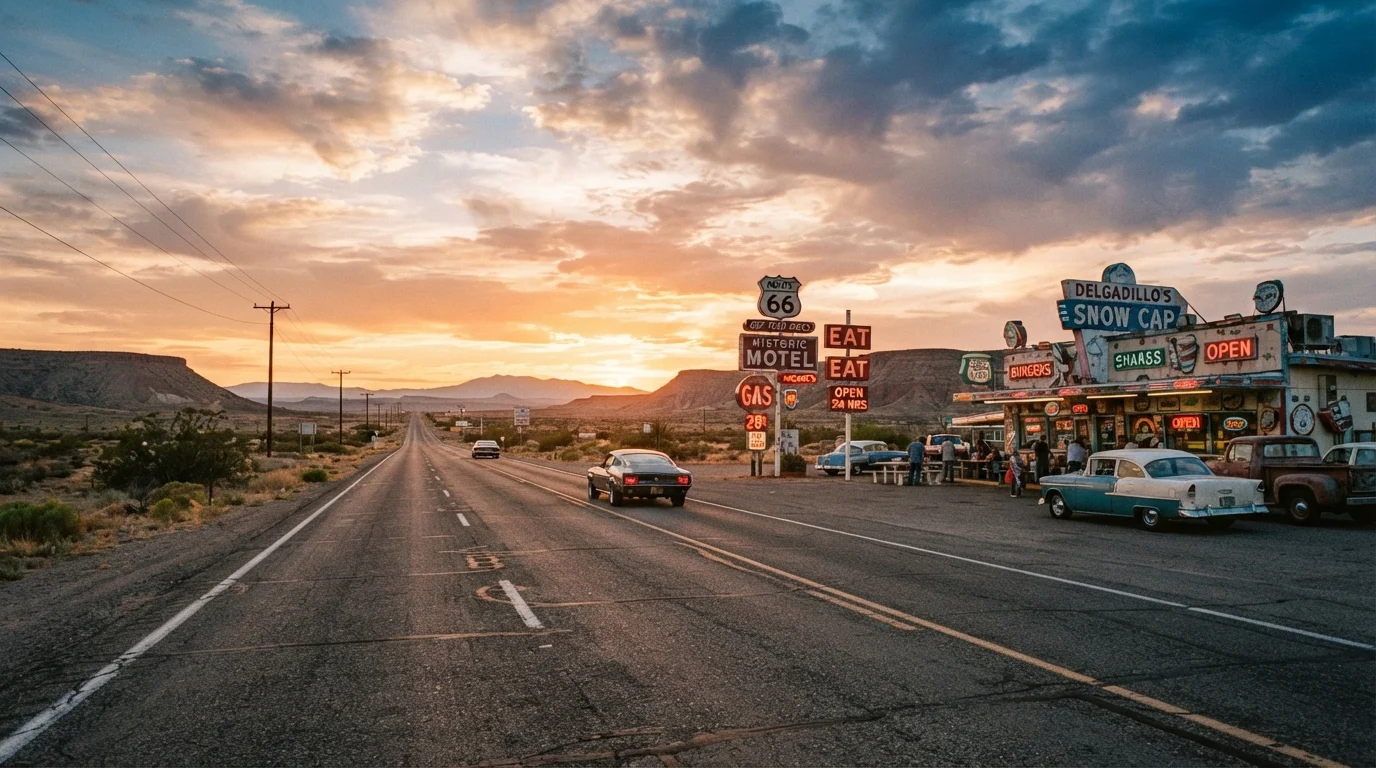
Photo credit: ExploreRoute.net | Travel Made Simple
Is Route 66 fully driveable? Is it all desert? Common misconceptions about America's most famous highway, clarified.
Key Takeaways
- Route 66 is not fully continuous — significant gaps require detours or interstate segments.
- The route passes through diverse terrain including plains, forests, and mountains, not just desert.
- Much of the original road's historic character survives and is accessible with careful planning.
- The full drive is roughly 2,400 miles and realistically takes two to three weeks to appreciate.
- Spring and fall typically offer the most comfortable driving conditions across the full route.
Why Route 66 Myths Persist
Route 66 has been romanticized in films, songs, and travel magazines for decades — which means it's also been oversimplified. The real road is messier, more complex, and far more interesting than the postcard version suggests. Whether you're planning your first drive or correcting assumptions you've held for years, separating myth from reality makes for a better trip.
For a broader look at the road's cultural legacy, see our piece Route 66: The Road That Built America's Wandering Spirit.
Myth
You can drive Route 66 from start to finish without any interruptions or detours.
Fact
Route 66 was officially decommissioned in 1985, and significant sections have been paved over, erased, or absorbed by interstates — a continuous drive is impossible without navigating around gaps.
When the federal highway system expanded, many original Route 66 alignments were bypassed by wider interstates. In some states — particularly parts of Illinois and California — multiple alignments exist from different eras, and not all are intact. Dedicated driver guides and GPS overlays from Route 66 preservation organizations help navigate the gaps, but travelers should expect to use I-40 and other interstates to bridge missing segments. The experience of hunting down surviving sections is part of the adventure, not a disappointment.
Myth
Route 66 is basically all desert — flat, dry, and monotonous.
Fact
The route spans eight states and crosses prairies, the Ozark highlands, New Mexico's high desert plateau, Painted Desert, and pine forests in Arizona — it's one of the most geographically varied drives in the country.
Starting in Chicago, the road cuts through the flat agricultural plains of Illinois and the rolling hills of Missouri's Ozark region before opening into Oklahoma's grasslands. New Mexico introduces genuine desert at altitude — Albuquerque sits above 5,300 feet. Arizona's stretch passes through ponderosa pine forests near Flagstaff before descending into the Mojave. Anyone bracing for unbroken sand dunes will be pleasantly surprised by how much the scenery shifts every few hours.
Myth
The classic Route 66 diners, motels, and roadside attractions are mostly gone.
Fact
While many businesses have closed since the route's heyday, hundreds of genuinely historic stops — neon-lit motels, vintage gas stations, quirky roadside sculptures — remain operating or preserved across all eight states.
Oklahoma alone retains multiple original alignments with working mid-century diners. Tucumcari, New Mexico is celebrated for its intact neon motel strip. The Blue Swallow Motel, for instance, has operated since 1939. In Arizona, the town of Williams still gives visitors a functioning gateway to the Grand Canyon with historic commercial architecture intact. Preservation groups, local governments, and passionate small-business owners have invested significantly in keeping the Mother Road's character alive. The closures get the headlines; the survivors deserve more credit.
Myth
Driving Route 66 takes about a week if you're doing it properly.
Fact
The full historic route covers approximately 2,400 miles; a realistic itinerary that includes notable stops and side roads requires two to three weeks minimum.
Many first-timers underestimate the mileage because they're thinking of the interstate distance, not the original alignment with its detours, town loops, and multiple historic segments. Adding even a short side trip — to the Petrified Forest National Park, the Cadillac Ranch near Amarillo, or the Wigwam Motel in Holbrook — adds meaningful time. Rushing through in under ten days almost guarantees skipping the stops that make the drive worth doing. Budget generously for time, and treat the slow pace as the point.
Myth
Route 66 is only interesting for history buffs and nostalgia seekers.
Fact
The route offers genuine natural landmarks, Native American cultural sites, active arts communities, and outdoor recreation alongside its historic commercial strip — it appeals to a wide range of travelers.
Petrified Forest and Painted Desert in Arizona offer geological spectacle that stands on its own outside any nostalgic context. The Pueblo of Acoma in New Mexico — one of the oldest continuously inhabited communities in North America — sits near the route. Flagstaff is a thriving mountain town with access to the San Francisco Peaks and proximity to Grand Canyon's south rim. Oklahoma's Green Country offers kayaking and lake recreation. History gives Route 66 its frame, but the landscape and living communities inside that frame are compelling entirely on their own terms.
Planning Your Drive With Accurate Expectations
Knowing what Route 66 actually is — patchy, varied, long, and layered — turns frustration into discovery. Gaps in the route aren't failures; they're invitations to cross-reference old alignments against modern maps. Much of the most rewarding driving happens on unsigned historic segments that parallel the interstates.
Remote Segments Require Real Preparation
Some surviving historic alignments — particularly in the New Mexico and Arizona desert — pass through genuinely isolated stretches with no cell signal, no services, and extreme summer heat. Carry extra water, a physical map or downloaded offline route, and a charged device. Do not rely solely on live GPS navigation in areas where connectivity drops. Check our guide on myths about driving remote terrain before heading into these sections.
Timing matters enormously. The New Mexico and Arizona sections can be brutally hot in July and August, while northern Illinois and Missouri can be bitterly cold in winter. Spring and early fall hit the sweet spot for most drivers. If you're weighing Route 66 against another legendary drive, Pacific Coast Highway vs. Route 66: Which Classic Drive Suits You? can help you decide. And before any iconic route, run through our preparation checklist to make sure you're ready for the miles ahead.
~2,400
Total miles of historic Route 66
The original alignment ran from Chicago, Illinois to Santa Monica, California across eight states.
8
States crossed by the route
Illinois, Missouri, Kansas, Oklahoma, Texas, New Mexico, Arizona, and California each offer distinct landscapes and historic stops.
1926
Year Route 66 was officially established
The road was one of the original highways in the U.S. numbered highway system, becoming a symbol of American mobility and migration.

Author
Road Trip Culture Editorial Team
Road Trip Culture Editorial Team is the collective byline for our editorial team and contributor network. Articles published under this byline or an editorial pen name are researched, written, and reviewed according to our editorial standards for clarity, consistency, and independence before publication.
View all articles →