
Mastering the Airport Experience End to End: From Booking Confirmation to Baggage Reclaim
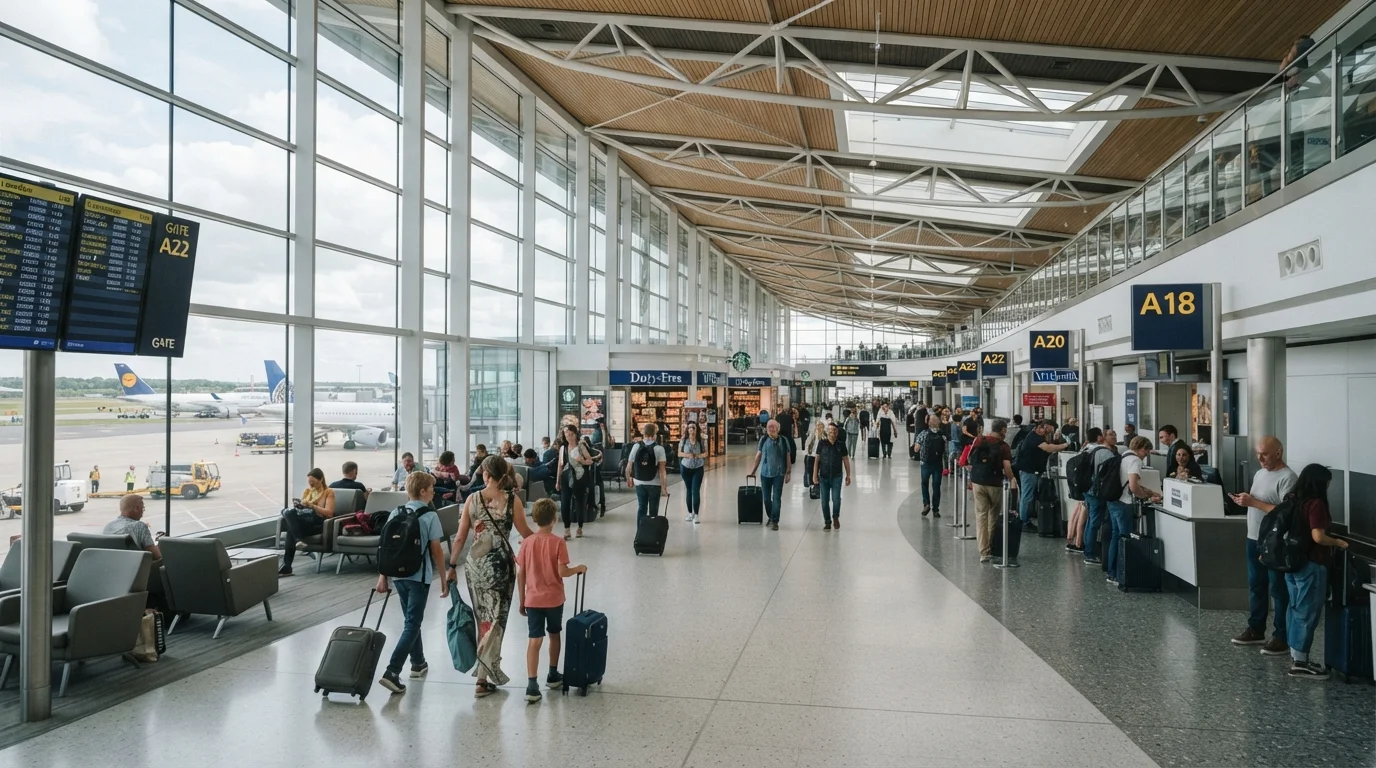
Photo credit: ExploreRoute.net | Travel Made Simple
In this article
Everything that happens between your booking confirmation and leaving the arrivals hall — check-in, security, lounges, boarding, and beyond — in one authoritative resource.
Key Takeaways
- Online check-in and mobile boarding passes reduce queue time and processing delays significantly.
- TSA PreCheck or Global Entry enrollment pays dividends across hundreds of future trips.
- Arrive at the airport knowing your terminal, gate area, and connection minimum connection time.
- Baggage reclaim is faster when you identify your carousel before landing using the airline app.
- Proactive planning — not luck — is what separates chaotic airport experiences from smooth ones.
Before You Arrive: The Pre-Airport Checklist
The airport experience is won or lost in the hours before you set foot in a terminal. Frequent flyers know that reactive travelers queue longer, miss gates, and check bags unnecessarily — while prepared travelers move through the same building like it's a second home.
Start with document verification. Confirm your passport expiry, visa status, and any entry requirements well before travel day. Official government sources — not third-party aggregators — are the authoritative reference. For a deep dive on research methodology, see our trip research hub.
Next, consolidate your travel documents into one digital wallet: boarding pass, passport photo, hotel confirmation, and any required health or customs declarations. Many international airports now accept digital passports or ID apps, but always carry the physical document as backup.
Finally, check your airline's app the morning of departure. Gate assignments change, delays are posted earlier than departure boards update, and airline apps often surface upgrade or seat-change opportunities that disappear at the counter.
Screenshot Everything Before You Fly
Download your boarding pass as a PDF and screenshot your booking reference, gate, and hotel confirmation. Airport Wi-Fi is unreliable, and apps fail at the worst moments. Offline access to your key documents costs nothing and eliminates a common source of travel-day panic.
Check-In: Online, Kiosk, and Counter Strategies
Online check-in — typically available 24 hours before departure on most U.S. carriers — is the single most effective time-saver at the airport. It locks in your seat, generates your boarding pass, and in most cases eliminates any interaction with a staffed counter entirely.
If you're traveling with checked luggage, most airports offer dedicated bag-drop lanes for passengers who've already checked in online. These move substantially faster than full-service queues. At major hubs, some airlines operate remote bag-drop at train stations or downtown locations — worth exploring if your city offers it.
Kiosk check-in serves travelers who need to check a bag or change seats but want to avoid a full counter interaction. Counters remain essential for itinerary changes, oversized items, unaccompanied minors, and complex international routing — plan for extra time in those situations.
Set your airline app to push notifications for your specific flight the evening before departure — gate changes and delay alerts arrive faster via app than through airport display boards.
Airlines push operational updates to their apps ahead of display-board systems, giving enrolled travelers a meaningful head start in reacting to changes.
Pack your carry-on so that the items you'll need at security — liquids bag, laptop, jacket — are in the outermost pocket or top layer, accessible in under ten seconds.
Fumbling at the security bin line is one of the most consistent causes of stress and slowed throughput; practiced packing eliminates this entirely.
For everything related to flight booking tactics and route strategy, our flight strategy hub covers the upstream decisions that shape your airport experience.
Clearing Security Without the Stress
Security is where most airport stress originates — and where preparation creates the starkest difference in outcomes. The TSA PreCheck program (for domestic and many international U.S. departures) allows enrolled travelers to use dedicated lanes with shoes, laptops, and liquids remaining in bags. Global Entry extends this benefit to international arrivals. Both programs require a background check and enrollment fee, but the time savings across dozens of annual trips is substantial.
Verify Entry Requirements Before Every International Trip
Visa rules, passport validity requirements, and health documentation requirements change without notice. Never rely on information from booking confirmations or third-party sites as a definitive source. Always verify current entry requirements directly with the official embassy, consulate, or government immigration authority of your destination country before departure.
Even without trusted traveler programs, throughput improves dramatically with a practiced routine: wear slip-on shoes, avoid metal belt buckles, place liquids in an accessible outer pocket, and have your ID and boarding pass ready before you reach the document checker — not at the bin.
At major hub airports — where security queues can stretch considerably — TSA's app and airport websites often publish real-time wait estimates. Checking these before leaving for the airport lets you calibrate your departure time rather than guess.
85M+
TSA PreCheck-eligible travelers enrolled
As of TSA's published program data, over 85 million travelers are enrolled in TSA PreCheck, reflecting its mainstream adoption among frequent U.S. flyers.
~10 min
Average PreCheck security wait time
TSA reports that the vast majority of PreCheck passengers wait under 10 minutes in dedicated lanes, compared to standard lane averages that can exceed 30 minutes at peak periods.
Making the Most of Your Time Airside
Once through security, the priority is confirming your gate and walking the route — especially at large connecting hubs where gate assignments shift and terminal distances are deceptive on maps. For a structured approach to navigating complex airports, our hub airport navigation checklist walks you through every step.
Airport lounges — accessible via airline status, premium cabin tickets, or day-pass programs — provide a meaningful quality-of-life upgrade: quieter environments, reliable power outlets, better food options, and staff who can rebook you faster during irregular operations. If lounge access isn't available, most modern terminals have quiet zones near end gates.
“The airport is not where your journey begins — preparation at home is. By the time seasoned travelers reach the terminal, every decision has already been made.”
— Smart Air Travel Editorial Team, Air travel strategy and frequent flyer expertise
Use gate wait time productively: hydrate, eat a proper meal if your flight is long, and review your in-flight comfort checklist to ensure your carry-on is configured for immediate access to what you'll need after takeoff.
Boarding, Connections, and Arrivals
Boarding groups exist for a reason: overhead bin space fills front-to-back, and later groups frequently gate-check carry-ons. If bin space matters to you, board as early as your group allows. Conversely, if you travel light and prefer to board last, the cabin is calmer and boarding is faster.
For connections, the moment you land, open your airline app to confirm your onward gate — it often differs from what was printed at origin. At international hubs, factor in terminal transfers and re-security if connecting between carriers or alliances. Published minimum connection times are operational minimums, not comfortable ones; tight connections at unfamiliar airports warrant extra caution.
Never Rely on Minimum Connection Times Alone
Published minimum connection times are set by airlines for operational purposes and assume ideal conditions — no gate changes, no immigration queues, no terminal transfers. Budget at least 90 minutes for domestic connections and 2–3 hours for international ones at unfamiliar or large hub airports. Missing a connection due to an overly tight itinerary is one of the most disruptive — and preventable — airport experiences.
At the destination, arrivals halls require patience and a plan. International arrivals involve sequential processing — immigration, baggage claim, and customs — each with its own queue dynamics. Our international arrivals guide decodes every step in detail. Domestically, identify your baggage carousel from the flight information display boards before joining the crowd at the belt — this simple habit saves unnecessary waiting in the wrong spot.
The airport experience, end to end, rewards preparation over improvisation. Every element — from document readiness to knowing your carousel number — is within your control before you leave home.

Author
Smart Air Travel Editorial Team
Smart Air Travel Editorial Team is the collective byline for our editorial team and contributor network. Articles published under this byline or an editorial pen name are researched, written, and reviewed according to our editorial standards for clarity, consistency, and independence before publication.
View all articles →