
The In-Flight Comfort Checklist: What to Pack, Wear, and Do Before You Board
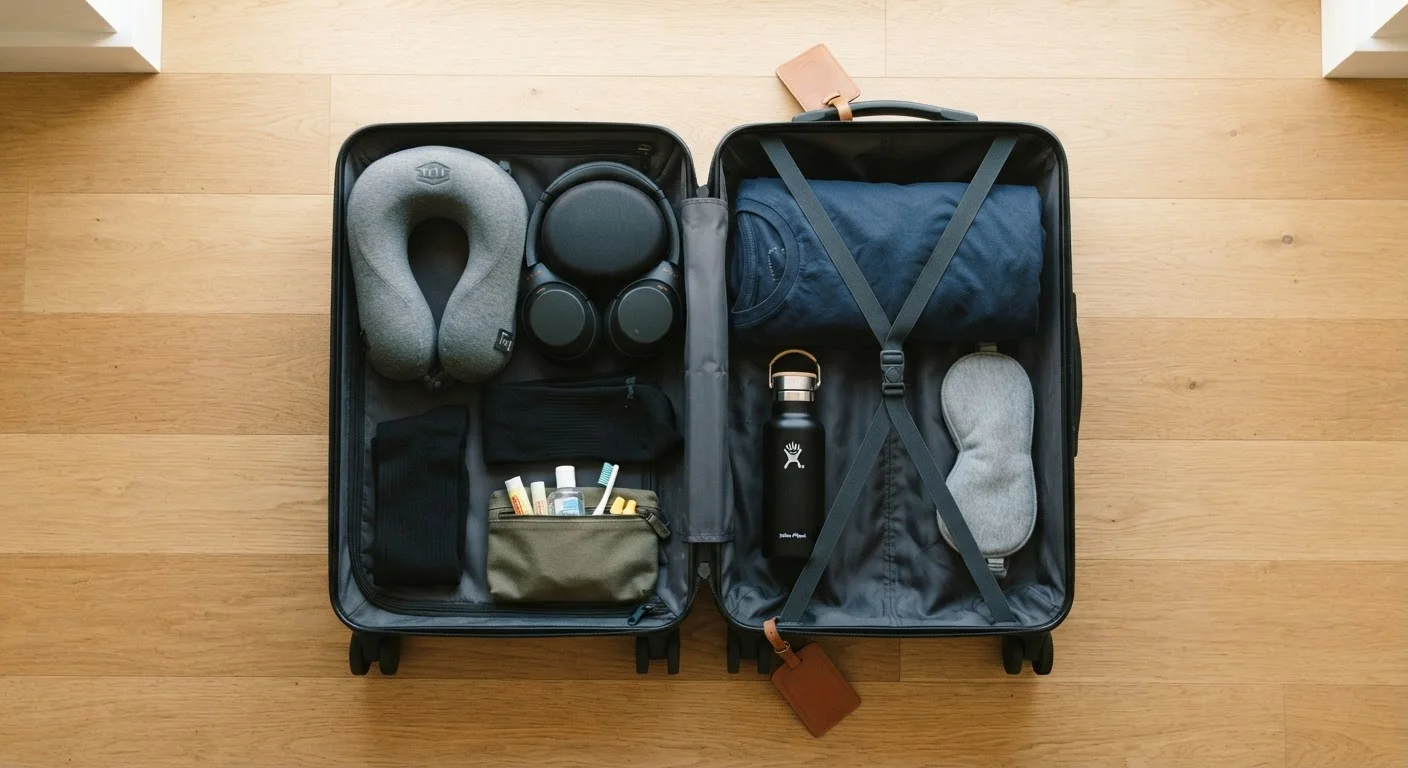
Photo credit: ExploreRoute.net | Travel Made Simple
In this article
A practical pre-flight checklist covering clothing, carry-on essentials, eating, hydration, and seat setup so nothing is left to chance.
Key Takeaways
- Clothing choices directly affect circulation and temperature regulation on long flights.
- Hydration strategy should begin well before boarding, not after takeoff.
- A structured carry-on setup reduces mid-flight rummaging and disruption.
- Pre-flight eating habits have a measurable impact on how you feel at altitude.
- Simple seat setup steps taken at boarding create a more controlled environment for the duration.
Why a Pre-Flight Comfort Checklist Pays Off
Most in-flight discomfort is preventable. Dry skin, headaches, poor sleep, and stiff joints are not inevitable consequences of flying — they are typically the result of decisions made before the aircraft door even closes. This checklist organises those decisions into four manageable categories: what to wear, what to pack, how to eat and drink, and how to set up your seat environment from the moment you settle in.
For a broader look at the physiology and environment behind in-flight wellbeing, the complete in-flight comfort overview covers the full picture. Use this checklist as your operational companion — the practical audit you run every time you fly.
What to Wear
What to Pack in Your Carry-On
Eating and Drinking Before and During the Flight
Seat Setup and In-Flight Routine
Tools You'll Want in Your Arsenal
The items below are not a shopping list — they are a reference for what categories of gear are genuinely useful versus what clutters your bag. Prioritise function over novelty.
Compression Socks
Support venous return in the lower legs during prolonged sitting, reducing swelling and discomfort.
Noise-Cancelling Headphones or Earplugs
Reduce auditory fatigue from sustained engine noise, making rest and concentration significantly easier.
Reusable Water Bottle
Enables consistent hydration throughout the flight without depending on infrequent cabin service rounds.
Eye Mask
Blocks cabin lighting and screen glow to support sleep onset, particularly on daytime or eastbound flights.
Travel Neck Pillow
Supports cervical alignment during sleep to prevent the neck stiffness common after dozing upright.
Facial Mist or Moisturiser
Counteracts the low-humidity cabin environment that dries skin and mucous membranes within the first hour of flight.
Portable Power Bank
Ensures your devices remain charged regardless of whether your seat has a functioning power outlet.
Setting Up Your Seat and Managing the Cabin Environment
Boarding is your window to establish a comfortable base before the cabin fills and overhead bins close. Use the first few minutes intentionally.
Overhead Bin Space Fills Fast
On full flights, overhead bin space near your seat can be claimed before you board, particularly in mid-cabin rows. If your carry-on contains items you need during the flight, consider using a smaller personal item that fits under the seat in front. Checking a bag at the gate is common on busy routes, but a bag in the hold is inaccessible for the duration — plan accordingly.
Once seated, identify what you will need within the first two hours and place it in the seat pocket or under the seat in front — not in the overhead bin. This single habit eliminates the need to stand and rummage during turbulence or when the seatbelt sign is on. Adjust your vent to a low, indirect airflow directed past your face rather than at it; this reduces the rate at which cabin air dries your mucous membranes.
For long-haul flights especially, movement through the cabin is as important as your physical setup. The in-flight movement and circulation routine provides a practical, space-conscious sequence you can follow without disturbing fellow passengers. Pair it with the eating and drinking guidance in common in-flight food and drink missteps and you address the three biggest sources of mid-flight discomfort in one pass.
If you are preparing for your first extended journey, everything first-time long-haul flyers should know offers foundational context that complements every item on this checklist. And if your carry-on organisation is still a work in progress, packing your carry-on so security doesn't slow you down will help you get your bag cleared faster and your essentials more accessible once you're airborne.
Medications Must Travel with You
Any prescription medication you need during or immediately after your flight must be in your carry-on bag, not checked luggage. Checked bags can be delayed, misrouted, or held in customs. Keep medications in their original labelled packaging and carry documentation from your prescribing clinician if travelling internationally. Always consult your healthcare provider about managing time-sensitive medications across time zones.

Author
Smart Air Travel Editorial Team
Smart Air Travel Editorial Team is the collective byline for our editorial team and contributor network. Articles published under this byline or an editorial pen name are researched, written, and reviewed according to our editorial standards for clarity, consistency, and independence before publication.
View all articles →