
Staying Hydrated in the Air
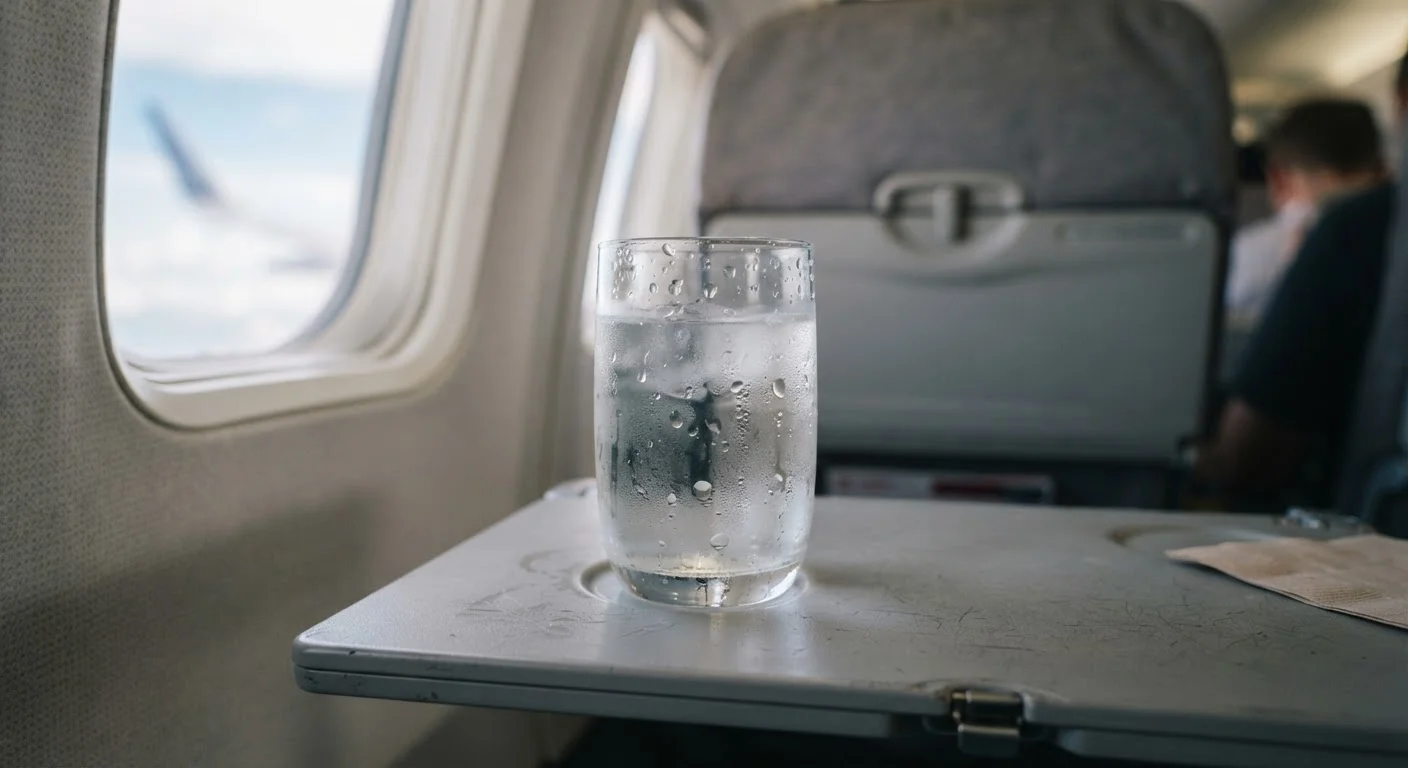
Photo credit: ExploreRoute.net | Travel Made Simple
In this article
Aircraft cabins are drier than most deserts. Understand why dehydration happens so easily in flight and how to manage it sensibly.
Key Takeaways
- Aircraft cabin humidity typically sits between 10–20%, significantly lower than normal indoor air.
- Dehydration in flight develops gradually and is easy to underestimate without deliberate water intake.
- Alcohol and caffeine accelerate fluid loss and should be consumed moderately during flights.
- Hydrating before boarding and maintaining intake throughout the flight reduces post-arrival fatigue.
- Saline nasal spray and eye drops can help protect mucous membranes in ultra-dry cabin environments.
Why Cabin Air Is So Dehydrating
Commercial aircraft cabins are pressurized to an equivalent altitude of roughly 6,000–8,000 feet above sea level. At that pressure, the air circulated through the cabin — drawn from outside the aircraft — contains very little moisture. Relative humidity in a typical cabin sits between 10% and 20%, which is considerably drier than most desert environments and well below the 40–60% range considered comfortable for indoor air quality.
This isn't a design flaw so much as a physical reality: the extremely dry air at cruising altitude is what's available to be conditioned and recirculated. The result is that your respiratory tract, skin, eyes, and nasal passages are continuously exposed to air that draws moisture from them. On a short flight this is a minor inconvenience; on a multi-hour long-haul route, cumulative fluid loss becomes meaningful.
What makes in-flight dehydration easy to underestimate is that it rarely feels dramatic. Unlike exercising in heat, you aren't sweating visibly. The loss is gradual, ambient, and largely invisible — which is precisely why a deliberate approach is more effective than responding to symptoms after they appear. For a broader look at food and drink decisions that affect how you feel in the air, see our guide on common in-flight eating and drinking missteps.
This Is General Wellness Information Only
The guidance in this article is intended for general informational purposes and does not constitute medical advice. Individual hydration needs vary based on health status, medications, and other factors. If you have a medical condition that affects fluid balance — such as kidney disease, heart conditions, or diabetes — consult a qualified healthcare professional before adjusting your fluid intake for air travel.
What You'll Need
Good hydration in the air requires very little equipment, but having the right items on hand makes the strategy much easier to follow consistently.
What you will need
Refillable water bottle (500–750 ml)
Allows consistent, measured water intake throughout the flight without depending solely on cabin service.
Saline nasal spray
Moisturizes nasal passages dried out by low cabin humidity, reducing irritation and supporting respiratory comfort.
Preservative-free eye drops (artificial tears)
Relieves dry, irritated eyes caused by low cabin humidity, particularly useful for contact lens wearers.
Hydrating lip balm
Prevents lip cracking and discomfort from prolonged exposure to dry cabin air.
Pack a Refillable Bottle for Security
An empty, TSA-compliant refillable bottle lets you pass through security without issue and fill up at an airside water station or fountain. Many modern airports have filling stations post-security, and flight attendants can typically refill your bottle from their water supply on request. This approach is both practical and reduces single-use plastic waste.
Step-by-Step: Managing Hydration From Departure to Arrival
Follow these steps across your pre-flight window and the duration of your journey. The approach is applicable to any flight length, though steps become especially important on routes exceeding three hours.
Hydrate well before you board
Start your hydration strategy on the ground. Aim to drink a reasonable amount of water in the hours leading up to departure — not to the point of discomfort, but enough to begin your flight in a well-hydrated state. Avoid starting the journey in a deficit caused by rushing through an airport without drinking anything.
Set a water intake schedule for the flight
Rather than drinking reactively, establish a rough schedule. A practical approach is to target roughly 250 ml (about 8 oz) of water per hour of flight time. Adjust based on your size, activity level, and how the cabin feels. Ask for water during every meal or snack service and don't hesitate to request additional cups or a bottle between service rounds.
Limit alcohol and caffeinated beverages
Both alcohol and caffeine have diuretic properties — they increase urine output and can accelerate fluid loss. In a low-humidity cabin environment, this effect is compounded. If you choose to drink alcohol or coffee, pair each serving with an equivalent or larger amount of water to offset the impact.
Address external moisture loss — skin, eyes, and nasal passages
Hydration isn't only about what you drink. Cabin air dries out exposed mucous membranes and skin. Apply a saline nasal spray periodically on longer flights to keep nasal passages comfortable. If you wear contact lenses or have sensitive eyes, use preservative-free artificial tear drops as needed. Apply a light moisturizer or lip balm before and during the flight to reduce surface dryness.
Continue rehydrating after landing
The effects of cabin dehydration don't end at the gate. Fatigue, headaches, and difficulty concentrating after arrival are commonly linked — at least in part — to cumulative fluid loss during the flight. Prioritize water intake in the first few hours after landing, and recognize that post-flight tiredness may be partially hydration-related rather than purely a sleep issue.
Don't Rely on Thirst as Your Only Signal
At altitude, the body's thirst mechanism can be a lagging indicator — you may already be mildly dehydrated before you feel noticeably thirsty. Set a deliberate schedule for drinking rather than waiting for a strong thirst signal, particularly on flights longer than three hours.
If you find that staying comfortable and focused in flight is a recurring challenge, it may be worth also reviewing how you manage your physical activity during long journeys. Our guide to staying focused and productive in the air covers complementary strategies for maintaining mental clarity at altitude.
This article is for general informational purposes only and does not constitute medical advice. Consult a qualified healthcare professional for guidance specific to your health circumstances.

Author
Smart Air Travel Editorial Team
Smart Air Travel Editorial Team is the collective byline for our editorial team and contributor network. Articles published under this byline or an editorial pen name are researched, written, and reviewed according to our editorial standards for clarity, consistency, and independence before publication.
View all articles →