
Eating and Drinking Before and During a Flight: Common Missteps
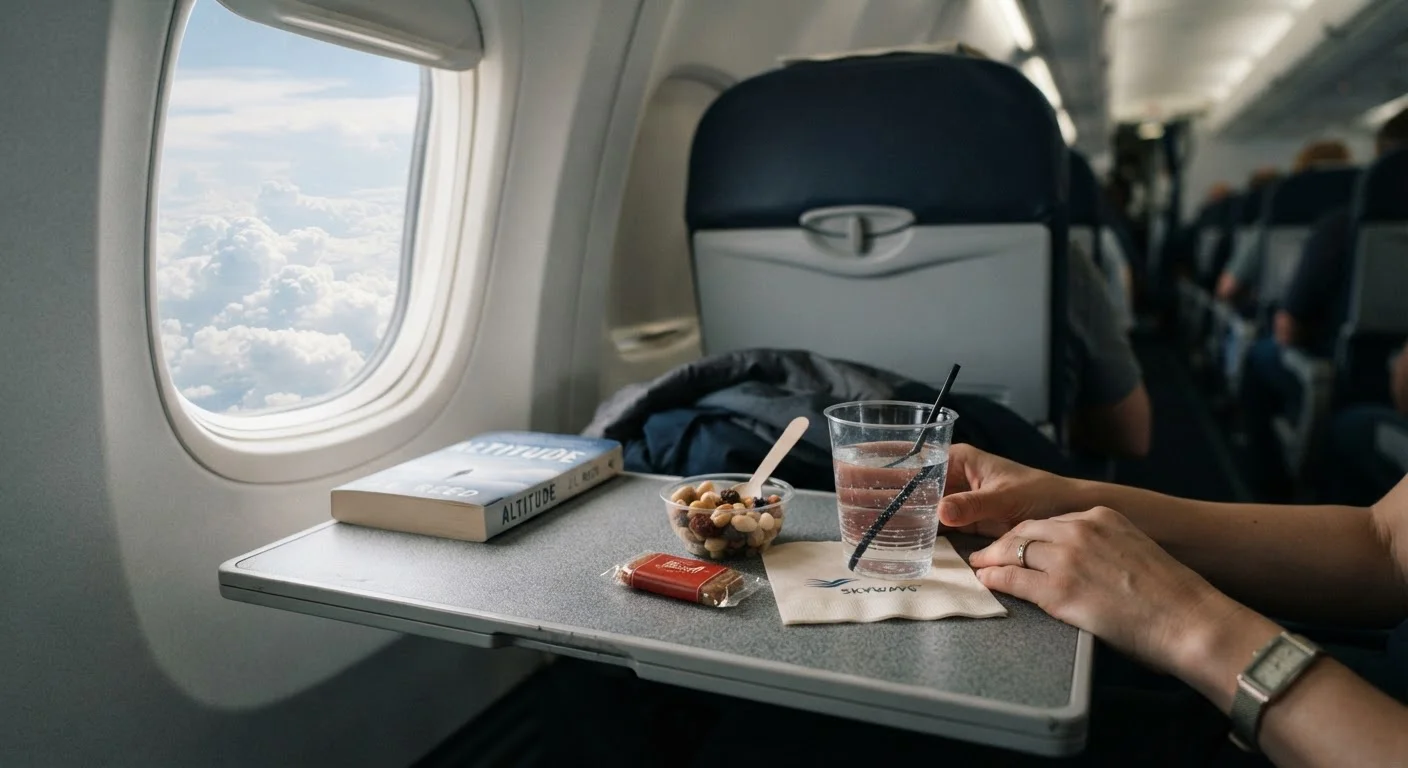
Photo credit: ExploreRoute.net | Travel Made Simple
In this article
Carbonated drinks, heavy meals, and skipping water are among the food and drink habits that quietly make flying harder than it needs to be.
Key Takeaways
- Cabin air at cruising altitude is significantly drier than most land-based environments, accelerating dehydration.
- Carbonated beverages and gas-producing foods expand in lower cabin pressure, causing noticeable discomfort.
- Heavy, high-fat meals before boarding slow digestion and amplify fatigue during long flights.
- Alcohol dehydrates faster at altitude and disrupts sleep quality more than it would on the ground.
- Eating and drinking strategically before and during a flight meaningfully improves how you feel on arrival.
Why In-Flight Food and Drink Choices Matter More Than You Think
Most frequent flyers focus their pre-flight energy on seat selection, lounge access, and carry-on packing. What goes into the body before and during the flight rarely gets the same attention — yet it has an outsized effect on how you feel from gate to landing and well into the day after arrival.
Aircraft cabins are pressurized to an equivalent altitude of roughly 6,000–8,000 feet, a level that lowers blood oxygen slightly, slows digestion, and causes gases in the body to expand. Combine that with humidity levels that can drop below 20 percent — drier than many desert environments — and the physiological stress of flying becomes significant. The foods and drinks you choose either compound that stress or help offset it. Understanding the most common missteps is the first step toward arriving in genuinely better shape.
For a broader look at how the cabin environment affects your body, see the complete in-flight comfort overview.
<20%
Typical cabin relative humidity at cruising altitude
Aircraft cabin humidity commonly drops below 20%, compared to the 30–60% typical in most indoor environments on the ground.
6,000–8,000 ft
Effective altitude of pressurized aircraft cabins
Most commercial aircraft cabins are pressurized to an equivalent of 6,000–8,000 feet, which measurably affects digestion, oxygen absorption, and gas expansion in the body.
The Most Common Eating and Drinking Mistakes on Flights
The errors below are not obscure. They are made routinely by experienced travelers because they feel natural or harmless in everyday life. At altitude, each one quietly takes a toll.
Drinking carbonated beverages during the flight.
Why it happens: Passengers reach for sodas and sparkling water out of habit, and airlines make them readily available. The refreshment feels familiar and harmless.
Eating a large, heavy meal immediately before boarding.
Why it happens: Airport dining options and pre-flight nerves can lead travelers to eat more than usual, often as a way to pass time or because they are unsure of in-flight meal quality.
Relying on alcohol to ease anxiety or improve sleep.
Why it happens: Alcohol is widely available in airport lounges and on board, and many passengers use it to relax. It feels like an efficient solution to nerves or an irregular sleep schedule.
Skipping water because of limited access or restroom inconvenience.
Why it happens: Window-seat passengers often avoid drinking to reduce trips over neighboring seats. Others simply forget, especially on shorter flights.
Eating gas-producing foods in the hours before or during a flight.
Why it happens: Foods like beans, cruciferous vegetables, and certain dairy products are healthy everyday choices and travelers do not naturally connect them to in-flight discomfort.
Drinking excess caffeine to counter early-morning departures or fatigue.
Why it happens: Early flights demand early alarms, and coffee is the default response. Travelers carry the habit from the airport into the cabin without adjusting for altitude.
This article is for general informational purposes only and does not constitute medical or dietary advice. Consult a qualified healthcare professional regarding any specific health concerns before travelling.
Building Better Habits: Before You Board and Once You're Seated
Adjusting your eating and drinking approach does not require dramatic changes — it requires awareness and a few deliberate substitutions. In the hours before departure, prioritize easily digestible meals: lean proteins, cooked vegetables, and whole grains tend to fare better than rich sauces, fried foods, or large portions. Eat earlier rather than immediately before boarding so digestion is underway before you sit down for an extended period.
Once seated, treat water as your primary in-flight drink. The guidance on staying hydrated in the air is clear: the cabin dries you out faster than normal conditions, and most passengers drink far less than they should. Bring an empty reusable bottle through security and fill it before boarding. Sip steadily rather than relying on the service cart alone.
If you are preparing for a long-haul trip, the long-haul flight preparation guide covers how to structure meals, sleep timing, and hydration across extended journeys. For a pre-flight checklist that integrates eating and drinking with clothing and gear, see the in-flight comfort checklist.
Dehydration Is the Overlooked Variable
Most passengers significantly underestimate how much fluid they lose during a flight. Even without visible sweating, the combination of dry cabin air and normal respiration creates steady fluid loss throughout the journey. Arriving dehydrated worsens jet lag, cognitive performance, and general wellbeing. Making steady water intake a non-negotiable habit — rather than an afterthought — is one of the highest-return adjustments any frequent flyer can make.

Author
Smart Air Travel Editorial Team
Smart Air Travel Editorial Team is the collective byline for our editorial team and contributor network. Articles published under this byline or an editorial pen name are researched, written, and reviewed according to our editorial standards for clarity, consistency, and independence before publication.
View all articles →