
Staying Focused and Productive in the Air
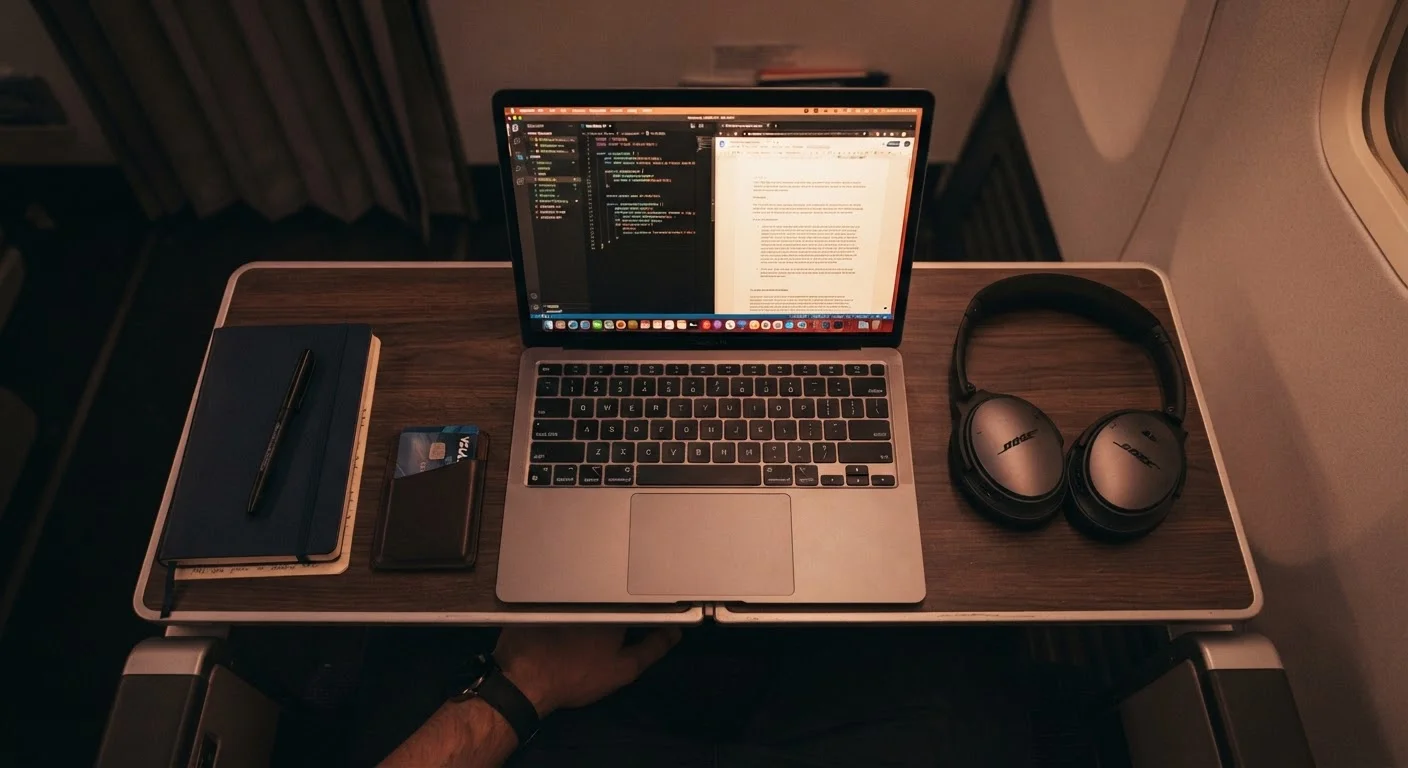
Photo credit: ExploreRoute.net | Travel Made Simple
In this article
Long flights can be genuinely useful work time — if you set them up correctly. Practical approaches for deep focus in a cramped, high-altitude environment.
Key Takeaways
- Pre-loading work offline and structuring tasks before boarding is the single biggest productivity lever.
- Noise-canceling headphones and a consistent audio environment significantly reduce cognitive load mid-flight.
- Short, defined work blocks with planned breaks outperform marathon unstructured sessions in the air.
- Physical comfort — hydration, posture, movement — directly affects cognitive performance at altitude.
- The absence of connectivity is a feature, not a bug: flights are ideal for deep, distraction-free work.
Why Flights Are Underrated Work Environments
Frequent flyers often treat flight time as dead time — hours to endure rather than use. That framing is worth revisiting. A long-haul flight, approached deliberately, offers conditions that most open-plan offices cannot: enforced disconnection, a fixed seat, and a finite block of uninterrupted time. The key is engineering those conditions rather than hoping they emerge spontaneously.
The challenge is real. Cabin pressure, low humidity, engine noise, and limited ergonomics all tax the body and brain. But these are manageable variables, not disqualifying ones. Travelers who do their best airborne work tend to have built repeatable pre-flight and in-flight systems — not exceptional willpower.
This guide covers the practices that consistently make the difference, drawing on established principles of cognitive performance and what seasoned frequent flyers have found to work in practice. For broader context on what shapes how you feel throughout a flight, see the complete in-flight comfort overview.
Core Practices for Deep Work at Altitude
The practices below are sequenced roughly in order of impact — start with the first two before worrying about the rest.
Pre-load all files, documents, and reference materials before boarding.
In-flight Wi-Fi is unreliable, slow, and often unavailable on international routes. Discovering mid-task that a key file is cloud-only is a productivity-ending interruption. Downloading everything you might need eliminates this failure mode entirely.
Define your two or three specific work objectives before takeoff.
Open-ended intentions like 'catch up on emails' rarely produce meaningful output. Pre-defining concrete deliverables — a draft completed, a deck reviewed, a document outlined — gives your brain a target and makes it easier to resist distraction.
Use noise-canceling headphones with a consistent audio profile.
Engine noise and cabin chatter impose a continuous low-level cognitive load that accumulates over a long flight. Active noise cancellation removes the bulk of this burden, and a fixed audio environment — whether silence, white noise, or instrumental music — reduces the mental effort of filtering distractions.
Structure work in defined blocks with built-in rest intervals.
Attempting to work continuously for four or five hours typically produces diminishing returns after the first 90 minutes. Structured intervals — focused work followed by a deliberate pause — sustain output quality better than unbroken marathon sessions, particularly at altitude where fatigue sets in faster.
Treat the lack of connectivity as an asset rather than a constraint.
The absence of notifications, chat pings, and social media access is one of the most valuable features of a long flight — a condition most knowledge workers cannot replicate in a normal office day. Reframing disconnection as protected deep-work time, rather than an inconvenience, changes how productively you use it.
Managing Your Body to Protect Your Mind
Cognitive performance is downstream of physical state, and the aircraft cabin is physiologically hostile in several specific ways. Cabin altitude is typically pressurized to the equivalent of 6,000–8,000 feet above sea level, which reduces blood-oxygen levels modestly but measurably. Combined with low humidity and recirculated air, this accelerates mental fatigue faster than most travelers expect.
Eat Light Before and During Deep Work
Heavy in-flight meals trigger a digestive response that competes with cognitive performance — most frequent work travelers report noticeably sharper focus when they eat lightly during planned work blocks. Consider saving a larger meal for after you've completed your primary objective. This is general guidance; individual responses to food and altitude vary, and anyone with dietary health considerations should consult a qualified professional.
Staying well-hydrated is one of the most evidence-supported ways to maintain cognitive performance in flight — aircraft cabins are significantly drier than most indoor environments. Understand why dehydration happens so easily in flight and how to manage it before it affects your output.
Periodic movement also matters. Sitting still for extended periods reduces circulation and compounds fatigue. Brief aisle walks or in-seat mobility exercises — even every 90 minutes — help sustain alertness. A practical routine is outlined in this in-flight movement guide.
Quick Wins You Can Act On Before Your Next Flight
The most impactful changes happen before you board, not after. Use the pre-flight window — even 20 minutes at the gate — to set yourself up rather than scrambling once airborne.
If you regularly work across long-haul routes, these habits compound quickly. For parallel strategies during extended airport waits, the long-layover playbook covers how to structure productive time between flights as well.

Author
Smart Air Travel Editorial Team
Smart Air Travel Editorial Team is the collective byline for our editorial team and contributor network. Articles published under this byline or an editorial pen name are researched, written, and reviewed according to our editorial standards for clarity, consistency, and independence before publication.
View all articles →